

Last Updated: November 14, 2026
Quick Summary
Sustainable fishing means taking fish in a way that leaves populations, habitat, and the food web healthy enough to recover. In remote wilderness you are the only check on your own behavior, so ask whether the population can absorb the loss, whether you can release fish unharmed, and whether the spot will be better or worse when you leave.
- Walk the bank instead of the streambed, and cross at a riffle rather than a pool tail.
- Circle hooks hook the corner of the mouth but are less effective on a hard, immediate hookset.
- Pinch barbs flat with pliers, but check state rules because some waters require barbless hooks.
- Use the lightest sinker that holds bottom so less lead is left behind.
- Pack two extra days of food beyond your itinerary and treat fish as a bonus.
Table of Contents
- What Sustainable Fishing Means When You're Miles From the Road
- Reading the Water: Fish Populations, Spawning Grounds, and Sensitive Habitat
- Low-Impact Fishing Gear That Spares Habitat and Non-Target Species
- Catch-and-Release Best Practices for Fish That Swim Away Strong
- Aquatic Invasive Species Prevention Fishing: Clean, Drain, Dry
- Fishing Line and Tackle Disposal: Pack It Out, Every Time
- Knowing the Rules: Catch Limits, Size Limits, and Local Stewardship
- A Wilderness Fishing Checklist and Food Plan for Remote Trips
- Frequently Asked Questions
What Sustainable Fishing Means When You're Miles From the Road
Sustainable fishing means taking fish in a way that leaves populations, habitat, and the food web healthy enough to recover. In remote wilderness, that gets harder to honor. There is no enforcement officer on the bank and no boat ramp chatter to tell you what's biting.
This guide sticks to field decisions: the three questions that govern every cast, plus the gear, handling, and camp habits that keep wild water wild.
The Three Questions That Decide Every Cast
Ask these before the first cast, not after the fish is in the net.
- Can this population absorb the loss? Small, high-elevation streams recover slowly.
- Am I set up to release this fish unharmed? Gear choice decides that.
- Will this spot be better or worse when I leave? That covers bank, fire ring, and line.
Get those right and most regulations take care of themselves. Get them wrong and a legal limit still does damage.
Reading the Water: Fish Populations, Spawning Grounds, and Sensitive Habitat
Spawning grounds are the most fragile real estate in a watershed. Fish stack into shallow gravel runs at predictable times, and those runs are easy to wade through without noticing.
Learn to spot the signs before you step in:
- Clean gravel with visible redds, the cleared nests fish build
- Shallow riffles at the head and tail of pools
- Cold tributary mouths where groundwater seeps in
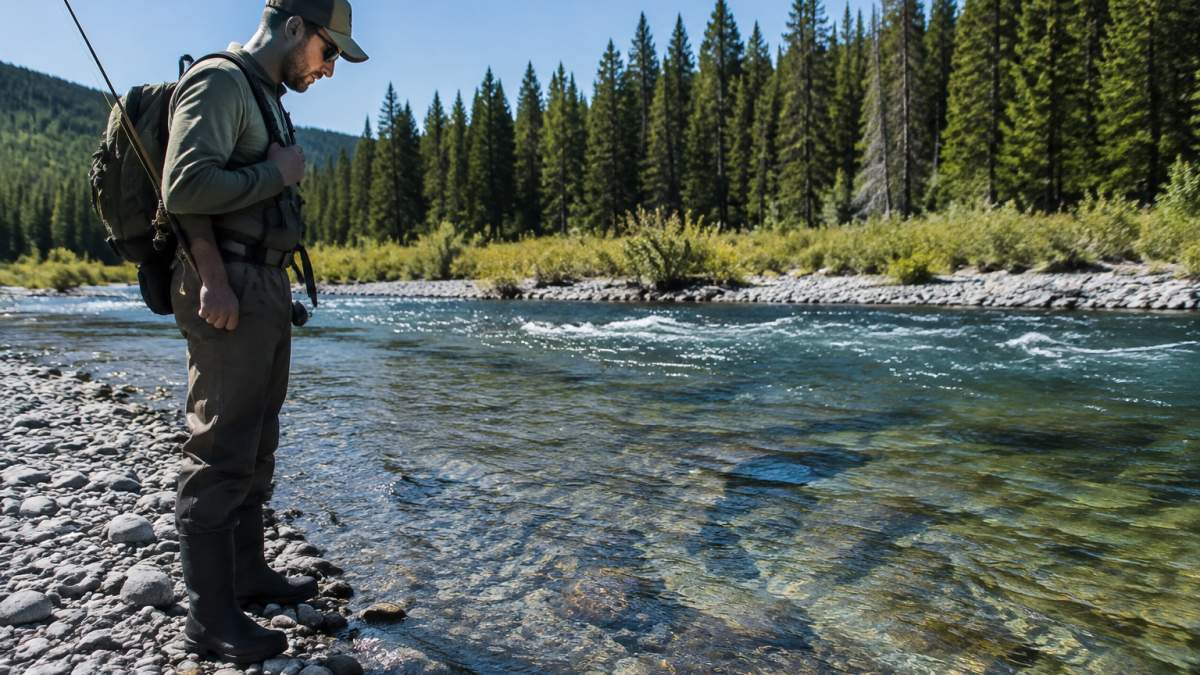
Walk the bank instead of the streambed when you can. For tackle and wading choices on small water, essential tackle for mountain stream fishing covers the setup side.
Low-Impact Fishing Gear That Spares Habitat and Non-Target Species
Low-impact fishing gear is tackle that hooks what you intend and comes back out with you. In remote water, that means fewer deep hooks, fewer break-offs, and less gear on the bottom. Three changes do most of the work, each with a trade-off.
Hooks: Circle, Barbless, and When Each Matters
Circle hooks turn the point back toward the shank, so a fish that takes and turns away usually gets hooked in the corner of the mouth instead of the gut. You can browse circle hook options in a range of sizes for bait fishing.
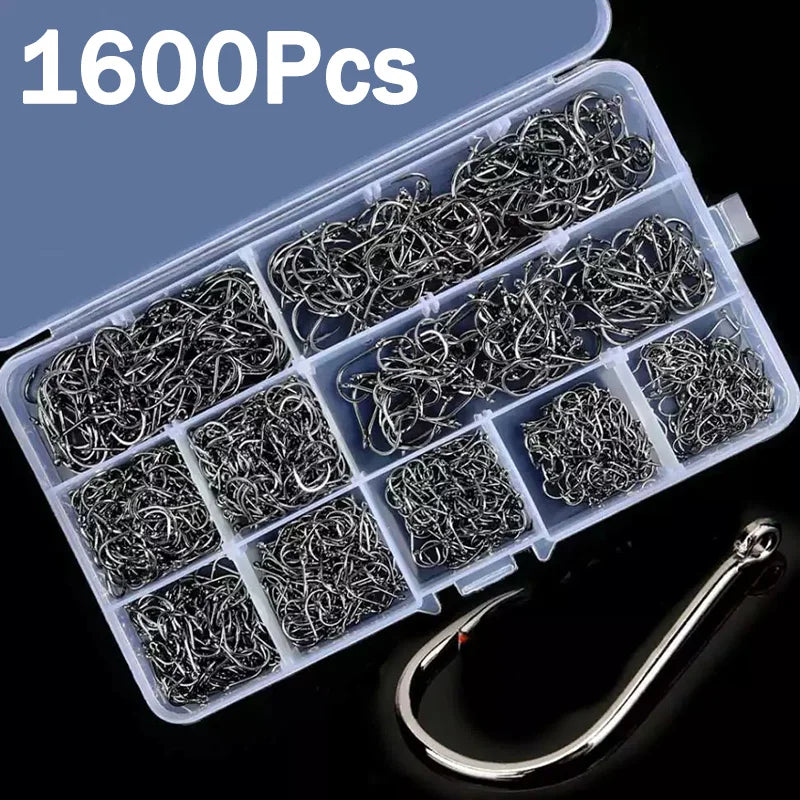
Barbless hooks come out fast and cut handling time. Pinch the barb flat on hooks you own with pliers. Check state rules first, because some waters require barbless and some prohibit modifying certain hook types. Barbless also means more lost fish during the fight.
Sinkers and Weights: Lightest That Holds
Sinkers snag and break off, and lead on the bottom is a real risk to birds and fish that pick it up. Use the lightest weight that holds bottom. If you fish the same run repeatedly, note where you snag and adjust weight and position rather than donating more lead to the same rock.
Line: The Biggest Litter Item You Carry
Line is the biggest litter item in most fisheries. Cut every tag end into a pocket, not the water. Retie when line is nicked, because a break-off leaves line and a hook in the fish. Match line class to the species you expect, not the biggest fish you hope for.
Nets and Handling Tools
Use a rubber or knotless net, forceps for backing out hooks, and nippers to keep line tags short.
What to Buy and What to Skip
You do not need a specialty kit to fish low-impact. If you want one purchase to cover the hook side, the 187pc Ultimate Fishing Kit includes an assortment of hooks and terminal tackle, though you should check the hook styles against your local rules before relying on it.
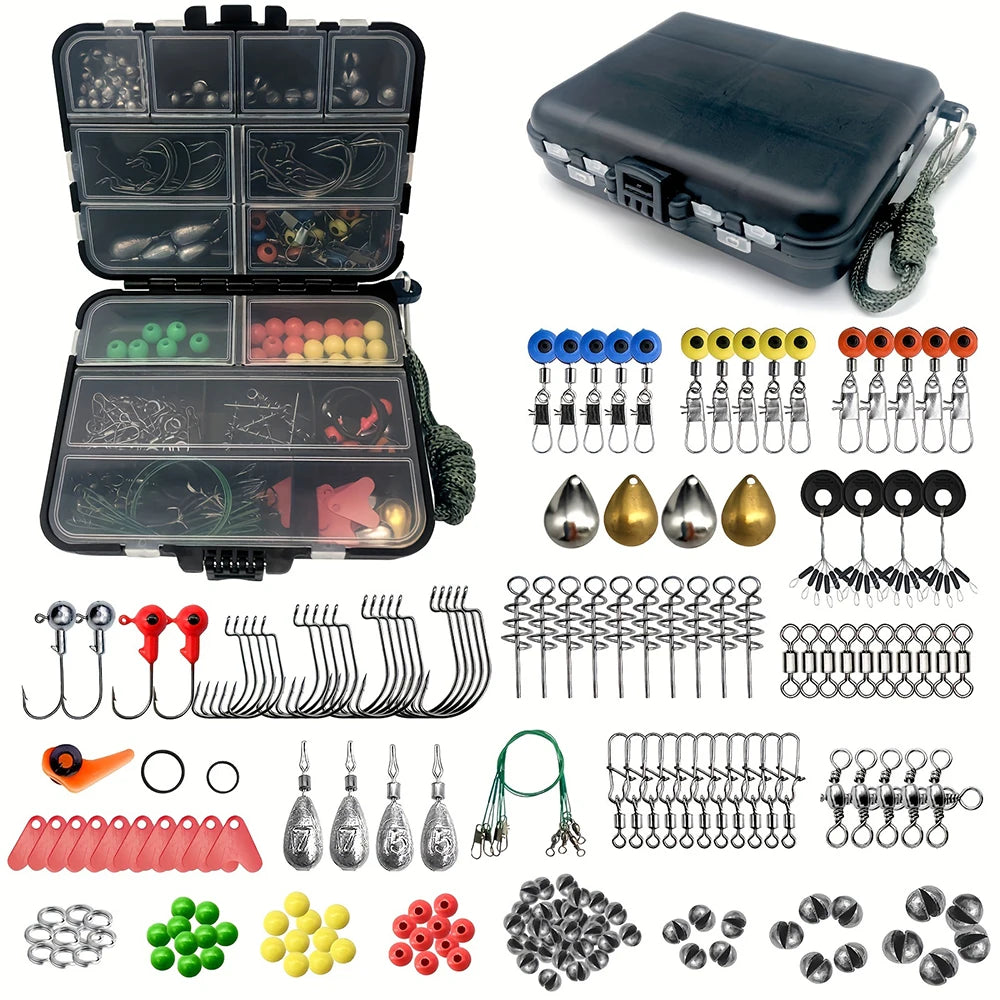
🛒 Shop the 187pc Ultimate Fishing Kit →
For sinkers, the 30pc Fishing Sinkers Kit covers a range of sizes so you can choose the lightest weight for the water.
🛒 Shop the 30pc Fishing Sinkers Kit →
A tackle storage box can help keep used line and spent hooks separate from the gear you are still fishing.
Here is how the three main gear choices compare on what they protect and what they cost you.
| Gear choice | Best for | Key difference |
|---|---|---|
| Circle hooks | Bait fishing | Corner-of-mouth hookups; less effective on a hard, immediate hookset |
| Barbless hooks | Releasing everything | Come out fast and cut handling time; more lost fish during the fight |
| Barbed hooks | Keeping a fish for dinner | May land it with less stress overall |
| Lightest sinker that holds | Snaggy bottom | Less lead left on the bottom for birds and fish |
| Line matched to expected species | All fishing | Break-offs leave line and a hook in the fish |
| Rubber or knotless net | All handling | Sparing compared with knotted nylon |
Catch-and-Release Best Practices for Fish That Swim Away Strong
Catch-and-release goes best when handling is quick and the fish stays wet. Keep the fish in the water, support it horizontally, and skip the grip-and-grin photo if the fish is out of the water more than a few seconds.
The short version:
- Wet your hands first; dry hands strip the slime coat
- Never hold a fish vertically by the jaw
- Use a rubber or knotless net, not knotted nylon
Watch out: a fish held out of the water for a photo then dropped back often swims off and dies later. If you want the picture, keep the fish in the net, in the water.
Aquatic Invasive Species Prevention Fishing: Clean, Drain, Dry
Aquatic invasive species prevention means cleaning, draining, and drying every piece of gear that touches water before it touches new water. Felt-soled wading boots are the classic carrier. Mud and plant fragments move between watersheds on boots, nets, and boat hulls.
The routine is short:
- Clean mud, plants, and debris off boots, waders, and nets at the access point
- Drain any standing water from boots, buckets, and live wells
- Dry gear completely before the next trip, ideally in sun
Some waters require additional steps, and rules vary by state. Check the state fish and wildlife agency site for the water you're headed to before you drive.
Fishing Line and Tackle Disposal: Pack It Out, Every Time
Fishing line and tackle disposal comes down to one habit: everything that goes in the pack comes out, including the scraps.
What to do with the waste:
- Cut line into short lengths and bag it
- Carry a small container for used hooks and lead
- Recover snagged line when it's safe to reach
A tackle storage box with removable inserts keeps used line and spent hooks separate from the gear you're still fishing.
Knowing the Rules: Catch Limits, Size Limits, and Local Stewardship
Catch limits, size limits, and seasons are the floor, not the ceiling. They are set from stock assessments and vary by water, species, and year. In remote country, the rules are layered: a single drainage can include state water, federal land, and tribal or reserved rights, each with different limits, gear restrictions, or closures. Read the current regulations for every water you fish before you leave, not at the trailhead.
How to Check Rules for a Remote Water
Start with the state fish and wildlife agency that manages the water. Most publish regulations online and many offer a mobile-friendly version you can save before you lose signal. Look for four things:
- Species-specific limits and size slots. A limit for one species does not transfer to another that looks similar.
- Gear restrictions. Some waters require barbless hooks, single hooks, or prohibit bait. Bait restrictions often exist to protect released fish, not to make your life harder.
- Season and closure dates. Spawning closures can be short and specific to a stretch of river.
If the water sits on federal land, check the managing agency's rules as well. National parks, national forests, and wildlife refuges can each have their own fishing rules on top of state rules. If the water is on or near tribal land, check the tribe's fisheries department. Tribal fisheries often set their own seasons and limits, and those rules apply to everyone fishing those waters, not only tribal members.
Species Decisions in Unfamiliar Water
You will not always know what you have hooked. Build a simple process before the trip:
- Identify the fish before you decide to keep it. If you cannot identify it confidently, release it.
- Check whether it is a species of concern. Some waters hold native fish that look similar to stocked species. If you are unsure, release.
- Check the size slot. Many regulations protect a middle range of sizes so fish can spawn at least once. A fish outside the slot may be legal to keep, but a fish inside it is not.
- Decide before you net. If you plan to release, keep the fish in the water and skip the photo.
A common pattern in remote fisheries is that the fish most vulnerable to overharvest are the ones that are easiest to catch. If you find a spot where every cast produces a fish, that is a sign to take fewer, not more.
Local Stewardship and Customary Rights
Local stewardship matters as much as the printed regs. Many watersheds have volunteer groups and tribal fisheries departments doing redd counts and habitat work. Ask at the local fly shop or check the managing agency's page for volunteer days.
If a limit feels generous, take less. A limit is a maximum, not a target.
Watch out: regulations change between the time you plan and the time you fish.
A Wilderness Fishing Checklist and Food Plan for Remote Trips
Remote trips fail on planning, not on fish. Build the kit around what you'll actually use, and plan food so you're not depending on the catch.
Gear checklist:
- Rod, reel, and a spare spool of line
- Hook assortment, including barbless and circle patterns
- Split shot and a few sinker sizes
Food plan: pack two extra days of food beyond your itinerary. Treat fish as a bonus, not a ration. A packing guide for wilderness fishing trips walks through the full load-out, and satellite communication devices for remote fishing covers the safety side.
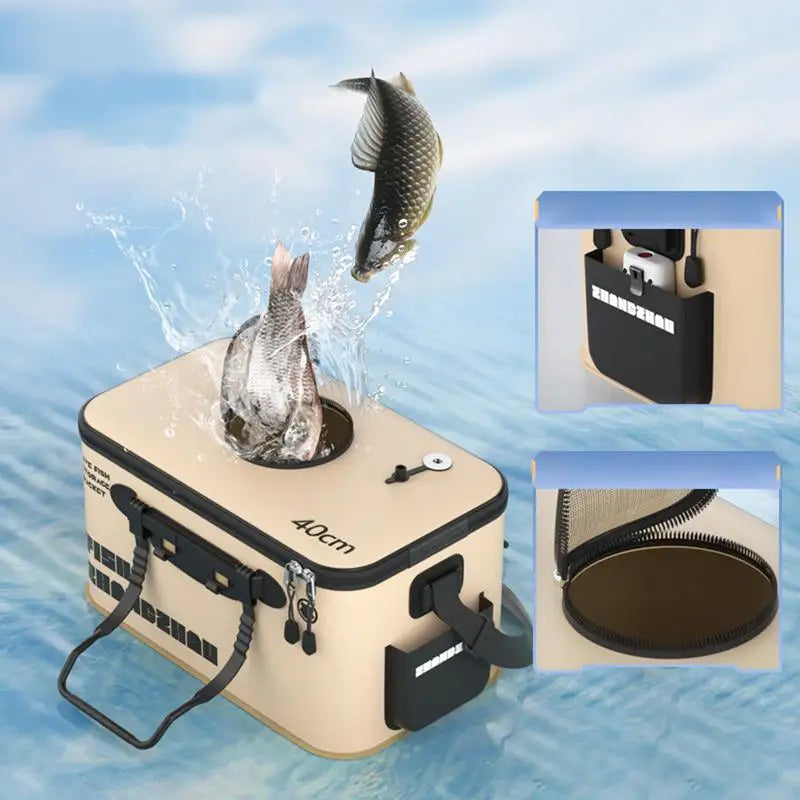
A folding bucket can hold bait and packs flat. 🛒 Shop the Folding Live Fish Bucket →
Good wilderness fishing comes down to restraint: take less, handle better, and leave the water as you found it.
Frequently Asked Questions
What are sustainable fishing practices?
They're the choices that keep fish populations and habitat healthy while you fish. In practice that means following state catch and size limits, releasing fish you don't plan to eat, using gear that limits bycatch and habitat damage, and leaving shoreline and camp sites as you found them. For remote trips it also means planning how many fish you actually need to eat, so you don't catch more than you can use. Sustainable fishing is a set of decisions made before and during the trip, not a label on a rod.
Is catch-and-release fishing always sustainable?
No. Released fish can still die from stress, injury, or poor handling, and release mortality varies by species, water temperature, and how long the fish was fought. Fishing in warm water, deep hooking, and dry hands all raise the risk. Catch-and-release best practices, like barbless hooks, wet hands, quick fights, and keeping the fish in the water, reduce that risk but don't eliminate it. If you're fishing water where a species is stressed, the more sustainable choice may be not to target it at all.
How can anglers prevent the spread of aquatic invasive species?
Clean, drain, and dry everything that touched the water. That includes boots, waders, nets, and the hull of any boat or float tube. Remove visible plants and mud at the access point before you leave, drain all water, and let gear dry completely before the next waterbody. Some states require additional steps or inspections, so check the rules for the water you're fishing. Aquatic invasive species prevention fishing starts with treating every piece of wet gear as a possible carrier.
How do you know which fish you can keep?
Check the current regulations for that specific water before you fish. State fish and wildlife agencies publish species limits, size limits, seasons, and closed areas, and rules often differ between neighboring lakes or rivers. Many agencies post this online and at access points. If you can't confirm the rule, release the fish. Carrying a printed or downloaded copy of the local rules is worth the space in a tackle bag on remote trips where cell service drops out.
