

Table of Contents
- What Separates a Field Tested Dog Bed From a Regular One
- Quick Comparison: Top Field Tested Dog Beds
- The Leash the Wilderness Orthopedic Dog Bed Mat: Full Review
- Waterproof Dog Beds for Camping: What Actually Matters
- Chew Proof Dog Beds for Hunting Dogs: Separating Fact From Marketing
- How to Match Bed Size and Fill Density to Your Dog
- Common Mistakes When Buying a Field Tested Dog Bed
- Conclusion: Pick the Bed That Fits Your Dog's Real Life
- Frequently Asked Questions
Last Updated: September 17, 2026
What Separates a Field Tested Dog Bed From a Regular One
A field tested dog bed has survived mud, water, truck beds, kennel floors, and a bored chewer.

Quick Comparison: Top Field Tested Dog Beds
The table below compares bed types by what matters in the field, not by brand name.
| Bed Type | Best For | Cover | Base | Watch Out For |
|---|---|---|---|---|
| Orthopedic foam mat | Working dogs, seniors | Removable, washable | Anti-slip Oxford | Costs more upfront |
| Elevated cot | Hot climates, chewers | Hose-off mesh | Steel frame | No joint cushioning |
| Memory foam bolster | Nesting dogs | Often spot-clean only | Fabric bottom | Slides on tile |
| Poly-fill pillow | Budget, light use | Varies | Thin | Flattens fast |
The Leash the Wilderness Orthopedic Dog Bed Mat: Full Review
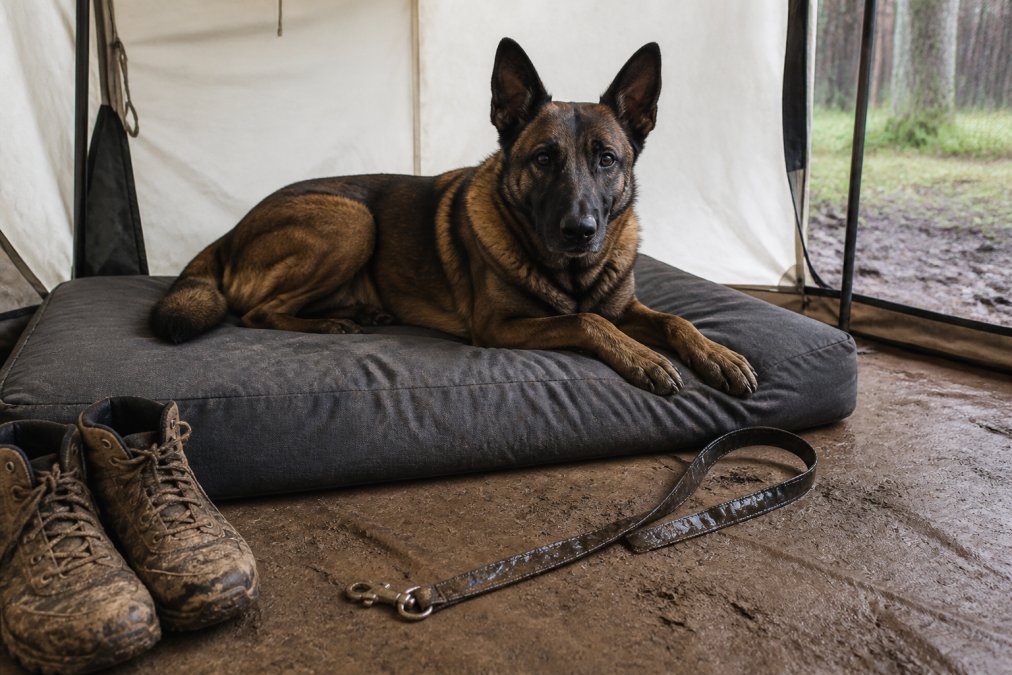
Our top pick for field use is the Orthopedic Dog Bed Mat from Leash the Wilderness. It gives you the three things that matter: a thick sponge foam core, a zippered machine-washable cover, and an anti-slip Oxford bottom that stays put on hardwood, tile, or an RV floor.
🛒 Shop the Orthopedic Dog Bed Mat →
Foam Core and Joint Support
The core is dense sponge foam, not loose fill. It spreads weight across the hips and elbows instead of bottoming out. If your dog is stiff after a hunt, a supportive base is the cheapest joint help you'll buy.
Cover, Base, and Real-World Durability
The cover zips off and goes in the machine, the difference between a bed that lasts years and one that smells like a wet kennel by fall. The anti-slip Oxford bottom keeps it from sliding when your dog steps on it wet. Sizes run L, XL, and 2XL for breeds up to about 110 lbs.
Waterproof Dog Beds for Camping: What Actually Matters
Waterproof dog beds for camping need two things: a liner that keeps moisture out of the foam, and a cover that dries fast. A bed that soaks through mildews in your truck by the second trip.
What to look for in the cover
- Denier rating. 600D Oxford is the practical floor for field use. 1680D resists abrasion from claws and gravel better, but it's stiffer and dries slower. Below 600D, the fabric pills and tears at the seams within a season.
- Coating. PU (polyurethane) backing sheds water and stays flexible in cold. PVC is cheaper and fully waterproof but cracks below freezing and gets slick when wet.
- Seam treatment. Taped or welded seams beat stitched seams for water resistance. Stitched seams wick water into the foam through the needle holes.
- Zipper placement. A zipper on the top face lets water pool and seep in. A zipper on the side or bottom keeps the opening out of the weather.
Drying time matters more than waterproofing claims
A cover that dries in 30 minutes on a line beats a "fully waterproof" cover that holds water in its padding for two days. Mesh-backed covers dry fastest. Quilted covers with batting dry slowest, wrong pick for a wet-climate camp.
Match the bed to your climate, not just the trip
A bed that works in a July float trip is the wrong bed for a November deer camp.
- Hot and humid (southeast, summer). Elevated cot with hose-off mesh. Air moves under the dog, nothing absorbs sweat, and it dries in minutes. Add a thin mat on top only if your dog is older.
- Cold and dry (northern plains, winter). Insulation matters more than waterproofing. A closed-cell foam pad under an orthopedic mat keeps ground cold from pulling heat out of your dog's joints. Memory foam stiffens below about 40°F, so a sponge foam core is the better winter pick.
- Wet and cool (Pacific Northwest, spring/fall). You need both. Waterproof liner, fast-drying cover, and a mat profile low enough to fit in a crate or truck box.
Cooling vs. warming: two different beds
If your dog overheats in summer, a cooling mat with gel or phase-change material pulls heat off the belly and chest. If your dog is a senior with stiff hips in winter, a thermal-retention bed or a heated pad on low is the better call. Don't buy one bed that does both, you'll get a mediocre version of each.
Post-surgery and recovery
If your dog is coming off orthopedic surgery, the spec changes. You want a low-profile mat (under 4 inches tall) so your dog can step on without a ramp, a firm core so the incision site isn't sinking into a soft hollow, and a cover you can wash daily without pulling the foam out.
Chew Proof Dog Beds for Hunting Dogs: Separating Fact From Marketing
No soft bed is truly chew proof. A determined dog will get through fabric. What you can buy is a bed that resists tearing long enough to matter. Anyone selling a "chew proof" soft bed is selling a warranty claim waiting to happen.
What actually resists teeth
Chew resistance comes down to fabric weight, weave, and seam construction.
Orthopedic Dog Bed Mat – Washable →
- Fabric weight. Denier is thread thickness. 600D is the minimum for a dog that mouths its bed. 1000D and 1680D hold up longer but are stiffer and less comfortable for a nester. Ballistic nylon (often 1050D or 1680D) is the toughest common cover fabric.
- Weave. Ripstop weaves have a grid of thicker threads that stop a tear from running. Plain-weave Oxford tears in a straight line once a tooth gets purchase. Ripstop is the better pick if your dog has already destroyed one bed.
- Seams. Double-stitched or bar-tacked seams at stress points (corners, handle attachments, zipper ends) hold up. Single-stitched seams with decorative topstitching are the first thing to fail.
- Zippers. A covered or recessed zipper is harder to grab. An exposed zipper pull is a chew toy.
Why dogs chew beds, and what actually fixes it
Most bed destruction isn't a fabric problem. It's a behavior problem.
- Boredom. A dog left alone for 10 hours with nothing to do will find something to do. More exercise and a puzzle toy solve more beds than any fabric upgrade.
- Teething. Puppies under 8 months chew everything. Don't buy an expensive bed for a teething puppy. Buy a cheap one, or use a cot.
- Separation anxiety. If your dog only chews when you leave, the bed isn't the problem. Talk to your vet about the behavior before you spend money on a tougher cover.
- Bed as toy. If you've played tug with a bed or let your dog carry it around, it's a toy now. Don't do that.
The elevated cot first rule
If your dog has destroyed two soft beds, stop buying soft beds. Switch to an elevated cot. There's no foam to pull out, no fill to scatter, and the deck is replaceable on most cots. A cot also gets your dog off the ground, which helps in heat and on wet ground.
When to move back to a soft bed
Once your dog has gone 60 to 90 days without chewing a bed, try a soft bed again. Start cheap. If it survives a month, upgrade to an orthopedic mat. If it doesn't, you've learned something about your dog for the cost of one bed instead of three.
What we'd actually recommend
For a dog that chews: elevated cot first, then a heavy-denier mat once the behavior stops. For a dog that doesn't chew: skip the chew-proof marketing and put your money into foam density and a washable cover, the specs that affect your dog's joints and your truck's smell.
How to Match Bed Size and Fill Density to Your Dog
Match the bed to how your dog sleeps, not just body weight. A curler needs a bed it can wrap around. A sprawler needs length.
Use this checklist before you buy:
- Measure your dog nose to tail while stretched out, then add 6 to 8 inches
- Weigh your dog and check the bed's weight rating
- Note sleep posture: curler, sprawler, or nester
- Check fill density: denser foam for seniors and heavy dogs, lighter fill for puppies
- Confirm the cover is removable and machine washable
- Check the base grips your floor type
Common Mistakes When Buying a Field Tested Dog Bed
The biggest mistake is trusting the label. "Field tested" and "heavy duty" mean nothing without a foam spec, a washable cover, and a grippy base behind them.
Other mistakes we see often:
- Buying too small, which puts pressure on joints all night
- Choosing a bed with a cover that can't be removed
- Ignoring the base, then watching the bed slide across a hard floor
- Buying memory foam for a chewer, who pulls the core apart
- Skipping a waterproof layer for camping and hunting trips
Conclusion: Pick the Bed That Fits Your Dog's Real Life
The right bed comes down to your dog, not the label. Working dogs and seniors need dense orthopedic foam. Campers need a waterproof liner and a fast-drying cover. Chewers need an elevated cot first.
Frequently Asked Questions
What features make a dog bed truly field tested?
Field tested means the bed survived mud, water, rough ground, and heavy use, not just a lab test. Look for a removable, machine washable cover, a waterproof liner or base, dense foam that holds loft under a heavy dog, and a non-slip bottom. The Leash the Wilderness Orthopedic Dog Bed Mat checks these boxes with a sponge foam core, zippered washable cover, and anti-slip Oxford bottom, and it comes in L, XL, and 2XL for dogs up to about 110 lbs.
Are chew proof dog beds for hunting dogs actually durable in the field?
No fabric is fully chew proof, so treat the label as a durability claim, not a guarantee. What holds up is heavy denier fabric, reinforced seams, and a cover that resists tearing when a dog paws or drags it. If your dog is a determined chewer, supervise the bed for the first few days and redirect chewing to a toy. For most hunting dogs, a tough, tear-resistant cover plus a dense foam core lasts far longer than a cheap poly-fill bed.
How do you clean a dog bed after a muddy camping trip?
Unzip the cover and shake off loose dirt outside first, then machine wash the cover on a gentle cycle and air dry it. Sponge the foam core with a damp cloth and let it dry fully before the cover goes back on. A waterproof dog bed for camping makes this easier because moisture stays on the surface instead of soaking into the fill. The Leash the Wilderness Orthopedic Dog Bed Mat has a removable, washable cover built for exactly this kind of cleanup.
Do portable dog beds provide enough joint support for working dogs?
It depends on the fill. Thin mats and poly-fill cushions flatten under a 70 lb dog and give little joint relief. A high-density or sponge foam base keeps its loft and cushions pressure points, which matters for older dogs and dogs that run hard all day. Match the size to your dog so the foam does not compress at the edges, and check that the bed fits your crate or tent footprint before you buy.