

Table of Contents
- Why Orthopedic Support Matters for Active Dogs
- Key Features to Look for in Hunting Dog Beds
- Orthopedic Dog Beds That Deliver Field Performance
- Joint Support for Active Dogs: What the Research Shows
- Post-Hunt Recovery Tips for Dogs
- Sizing Guide for Large and Extra-Large Breeds
- Cleaning and Maintenance Instructions
- Field-Specific Durability: What Sets Hunting Beds Apart
Last Updated: August 15, 2026
Why Orthopedic Support Matters for Active Dogs
Your hunting dog's joints take a beating. Every field sprint, every jump into a truck bed, every wet camp night spent on hard ground compounds the wear. By the time your dog hits their mid-years, that accumulated impact shows up as stiffness, reluctance to move, or a noticeable shift in their gait. This is where best orthopedic dog beds for hunting dogs become more than comfort, they become injury prevention.

Orthopedic support works by distributing a dog's body weight evenly across a supportive surface, reducing pressure on joints, hips, and the spine. For active hunting dogs, this matters because their work demands explosive movement and sustained exertion. A quality orthopedic bed absorbs impact that would otherwise transfer directly to cartilage and bone, especially during the recovery hours when your dog is resting between hunts.
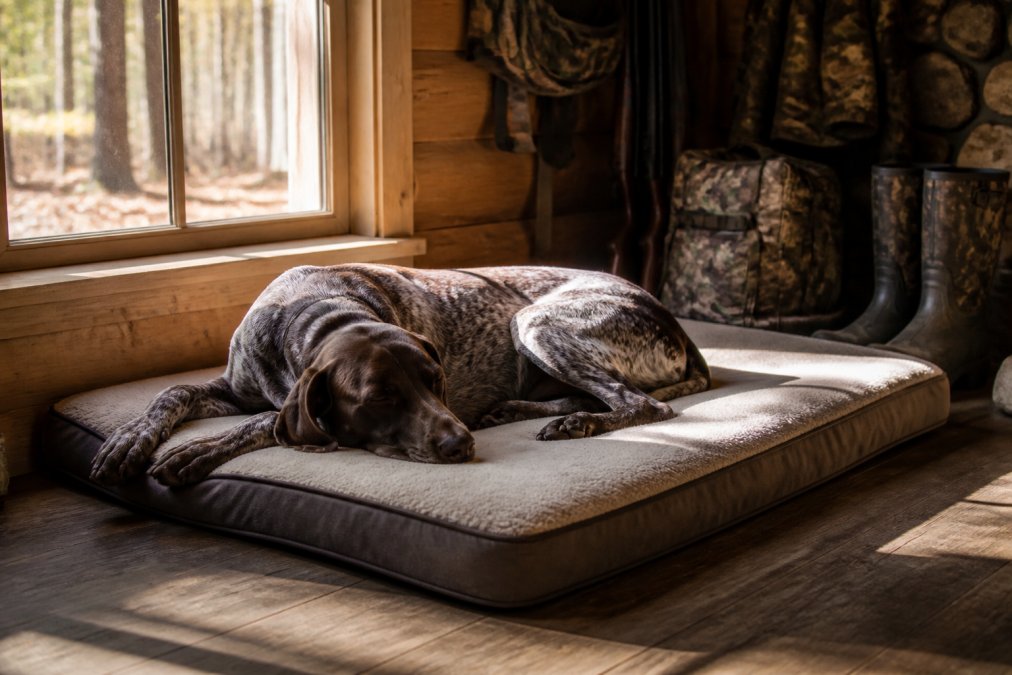
The difference shows up fastest in older dogs or those with existing joint issues. Dogs sleeping on inadequate bedding often wake stiff, take longer to warm up, and show visible lameness on cold mornings. Research from veterinary orthopedic studies on canine joint health confirms that proper pressure point relief reduces inflammation and improves mobility in working dogs. For hunters who rely on their dogs to perform, this translates to more reliable field performance and a longer working life.
Key Features to Look for in Hunting Dog Beds
Not all dog beds are built the same. A bed designed for a couch dog won't survive the demands of a working dog's life. When evaluating best orthopedic dog beds for hunting dogs, focus on these core features that separate field-ready gear from marketing hype.
Memory Foam Density and Pressure Point Relief
The foam inside matters more than the cover. High-density memory foam (typically 4-5 pounds per cubic foot) maintains its shape through repeated compression and provides genuine pressure point relief. Cheap foam compresses flat after a few weeks, leaving your dog sleeping on what's essentially a thin mat.
Pressure point relief specifically targets areas where a dog's body weight concentrates: hips, shoulders, elbows, and the spine. Quality orthopedic beds conform to your dog's body shape, cradling these pressure points rather than forcing them into a flat surface. This reduces the micro-movements dogs make throughout the night as they try to find a comfortable position, the fewer adjustments, the deeper the rest.
For hunting dogs, this matters because recovery quality directly impacts performance. A dog that sleeps poorly moves stiffly the next morning. A dog that sleeps deeply recovers faster and maintains the explosive power hunting demands.
Durability and Chew-Resistant Materials
Your hunting dog isn't a house pet. They live around gear, trucks, camps, and field conditions. A bed that tears after three months of real use is worthless.
Look for beds with ballistic nylon or heavy-duty polyester covers rated for durability. Ballistic nylon is the same material used in tactical gear and outdoor equipment, it resists punctures, tears, and abrasion. The stitching matters equally; double-stitched seams hold up far longer than single-stitched alternatives.
Chew resistance is often overlooked until your dog decides the bed is a toy. Some dogs chew when anxious or bored in camp. A quality bed uses non-toxic, unappealing materials that discourage chewing rather than invite it. The Orthopedic Dog Bed Mat from Leash the Wilderness uses Oxford cloth construction with reinforced seams, built specifically for dogs that live hard.
Waterproof and Moisture-Wicking Covers
Hunting happens in wet conditions. Rain, mud, river crossings, and morning dew are part of the job. A bed that absorbs water becomes a cold, damp sleeping surface, the opposite of what your dog needs for recovery.
Waterproof covers prevent moisture from soaking through to the foam core. Moisture-wicking fabrics pull sweat and damp away from your dog's coat, keeping them dry even after exertion. This combination matters in camps where ventilation is limited and your dog spends hours recovering in the same spot.
Removable, washable covers are essential. Field conditions mean mud, debris, and the occasional accident. A cover you can zip off and wash keeps the bed hygienic without requiring a full replacement. The Orthopedic Dog Bed Mat includes a zippered, removable cover designed for machine washing, critical for dogs that work in dirty conditions.
Orthopedic Dog Beds That Deliver Field Performance
When you're selecting a bed for a working dog, you're not buying comfort, you're buying reliability. The best orthopedic dog beds for hunting dogs combine genuine orthopedic support with the durability to survive real field conditions.
Orthopedic Dog Bed Mat - Washable Removable Cover
The Orthopedic Dog Bed Mat from Leash the Wilderness is built for dogs that run hard and still deserve a soft landing. This is the bed we recommend first for hunting dogs because it addresses the exact problems field dogs face: impact recovery, moisture exposure, and the need for easy maintenance in camp.
What makes this bed stand out: the thick sponge foam core provides genuine orthopedic support, not just padding. The anti-slip Oxford cloth bottom prevents the bed from sliding on hardwood, tile, or RV floors, critical when your dog is moving around camp or in a truck. The removable, zippered cover handles machine washing, which matters when you're cleaning off mud and debris after a week in the field.
Available in L, XL, and 2XL sizes to fit dogs up to 110 pounds, the bed costs $166.99. For hunters running multiple dogs or operating on a budget, the Dog Care Kit bundles this bed with feeding and hydration gear, a smarter investment than buying pieces separately.
The one limitation: this bed is sized for medium to large dogs. Smaller hunting breeds (Brittanys, Pointers under 40 pounds) may find the XL size excessive. For those dogs, a smaller orthopedic option makes sense, though the LTW lineup focuses on larger working breeds.
Joint Support for Active Dogs: What the Research Shows
Joint health directly impacts a dog's ability to work. According to American Veterinary Medical Association research on canine joint health, dogs that receive proper orthopedic support show measurable improvements in mobility and reduced inflammation markers. For hunting dogs, this translates to more consistent performance and fewer off-days due to stiffness.
The mechanism is straightforward: orthopedic support reduces the repetitive micro-trauma that accumulates during high-impact activity. Each jump, sprint, or hard landing creates small amounts of joint stress. Over time, these stresses compound into inflammation and cartilage wear. A quality bed interrupts this cycle by absorbing impact during recovery hours when your dog is most vulnerable.
Active hunting dogs benefit from joint support earlier than sedentary dogs. A five-year-old hunting dog has experienced more cumulative joint stress than a ten-year-old house dog. Providing orthopedic support now prevents or delays the joint degradation that would otherwise emerge in their later years.
Post-Hunt Recovery Tips for Dogs
Recovery isn't just about the bed. The hours after a hunt determine how quickly your dog bounces back and how well they perform the next day.
Start with cooling and hydration immediately after exertion. Your dog's core temperature stays elevated after hard work. Provide cool (not cold) water and allow 20-30 minutes of calm rest before feeding. A dog that eats immediately after intense exercise risks bloat and digestive upset.

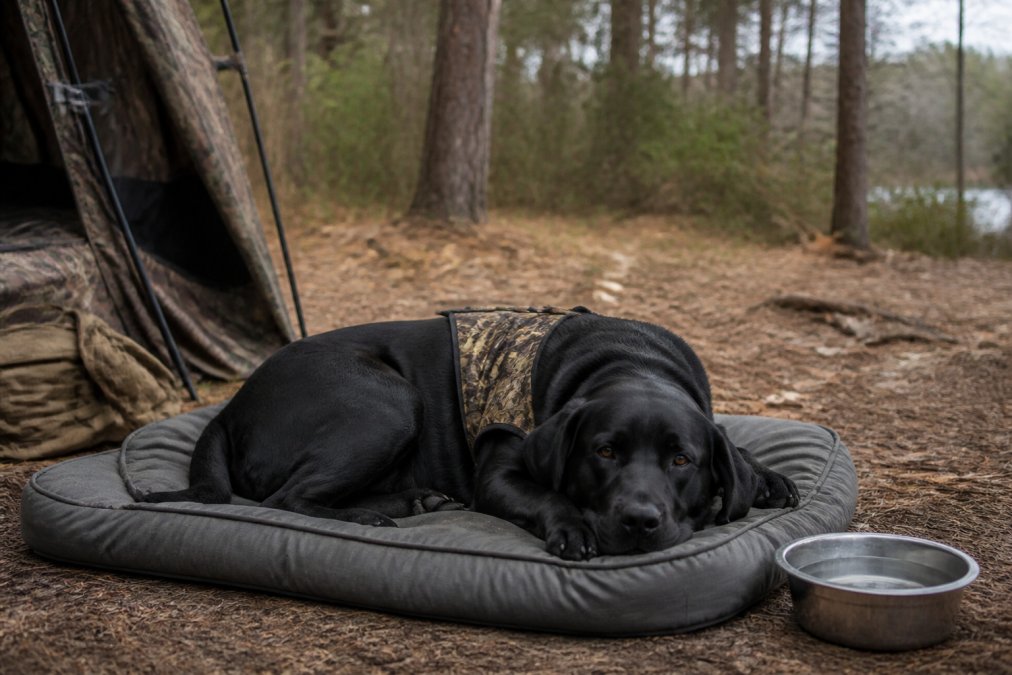
Once your dog has cooled, place them on their orthopedic bed in a quiet area. This is where the bed earns its value. The next 8-12 hours determine recovery quality. A dog sleeping on a proper orthopedic surface experiences reduced inflammation and faster muscle recovery compared to one on thin bedding or bare ground.
Monitor for signs of soreness the next morning. Stiffness that improves within 30 minutes of movement is normal. Stiffness that persists or lameness in a specific leg signals potential injury and warrants rest or veterinary evaluation. Many hunters miss early injury signals because they're focused on the hunt itself, not the recovery period.
Consider supplemental joint support if your dog shows age-related stiffness. Products like joint supplements or omega-3 fatty acids support cartilage health, but they work best in combination with proper bedding and controlled activity. Recovery bedding is the foundation, everything else builds on that.
Sizing Guide for Large and Extra-Large Breeds
Most hunting dogs fall into the large to extra-large category. Labrador Retrievers, Pointers, Setters, and mixed hunting breeds typically weigh 50-110 pounds. Getting the right bed size matters for both comfort and durability.
A bed that's too small forces your dog to curl up or hang limbs off the edge, neither provides the full-body support orthopedic beds are designed for. A bed that's too large wastes space and money. The ideal bed allows your dog to stretch out fully in their natural sleeping position while maintaining contact with the supportive foam.
For dogs 50-80 pounds, an XL bed typically provides the right balance. For dogs 80-110 pounds, a 2XL bed ensures full coverage. The Orthopedic Dog Bed Mat from Leash the Wilderness offers both sizes, allowing you to match the exact dimensions of your dog.
Measure your dog's length from nose to tail (in their natural stretched position) and add 6-12 inches. This gives you the minimum bed length needed. Width should accommodate your dog lying on their side without limbs hanging off. Most hunting dogs sleep on their sides or back, not curled in a ball, so length matters more than you might initially think.
Cleaning and Maintenance Instructions
A bed that can't be cleaned becomes unsanitary and loses its effectiveness. The removable cover design on quality orthopedic beds exists for this exact reason.
Remove the cover by unzipping the zipper (typically located on one or two sides) and pulling it away from the foam core. Machine wash the cover in cold or warm water using mild detergent. Hot water can damage certain fabrics and reduce the lifespan of the cover. Dry the cover on low heat or air dry to prevent shrinking.
The foam core itself should not be machine washed. Instead, spot-clean visible dirt or stains using a damp cloth and mild soap. Allow the foam to air dry completely before replacing the cover, moisture trapped in the foam promotes mold and mildew.
For stubborn odors (common after extended field use), sprinkle baking soda on the foam, let it sit for 2-4 hours, then vacuum thoroughly. This neutralizes odors without chemicals that might irritate your dog's skin.
Inspect the bed monthly for damage. Small tears in the cover can be patched with fabric tape or needle and thread. Significant damage to the foam core usually means replacement is more practical than repair. A well-maintained bed lasts 3-5 years with regular use; a neglected bed deteriorates in 12-18 months.
Field-Specific Durability: What Sets Hunting Beds Apart
Not all orthopedic beds are designed for hunting dogs. Most are made for house dogs or aging pets living predictable lives. Hunting beds face different demands: mud, water, temperature extremes, rough handling, and the wear that comes from living outside a climate-controlled home.
Field-specific durability starts with material selection. Ballistic nylon and heavy-duty polyester outperform standard cotton or polyester blends. Double-stitched seams hold longer than single stitching under stress. Anti-slip bottoms prevent the bed from shifting on wet truck beds or slippery RV floors.
The foam itself matters. Hunting beds use higher-density foam (4-5 pounds per cubic foot) that resists compression better than standard memory foam. This density maintains orthopedic support through hundreds of nights of use, not just dozens.
Waterproofing is non-negotiable for field use. A bed that absorbs water becomes a cold, damp liability in camp. Quality hunting beds use water-resistant covers and sealed seams that prevent moisture from penetrating to the foam core.
The Orthopedic Dog Bed Mat from Leash the Wilderness incorporates all these features because it's designed by people who hunt with dogs, not by furniture designers. The sponge foam core, Oxford cloth construction, removable zippered cover, and anti-slip bottom all address real field conditions. This is why it's the best orthopedic dog bed for hunting dogs, it's built for the actual job, not a simplified version of it.
Frequently Asked Questions
Are orthopedic dog beds good for hunting dogs?
Yes. Hunting dogs work hard on joints, ligaments, and muscles. Orthopedic dog beds with high-density memory foam reduce pressure on joints, improve circulation, and speed recovery between hunts. Dogs that hunt multiple days in a row benefit from beds that support spinal alignment and distribute weight evenly. The result is less stiffness, better mobility the next morning, and longer active careers for your dog.
What features should I look for in a hunting dog bed?
Prioritize high-density memory foam for pressure point relief, waterproof or moisture-wicking covers for muddy camps, anti-slip bottoms so the bed stays put on RV or truck floors, removable washable covers for easy cleaning, and ballistic nylon or tear-resistant fabric that handles real-world wear. Beds rated for large and extra-large breeds with non-toxic materials ensure durability and safety during field use.
How does memory foam help active sporting dogs?
Memory foam conforms to your dog's body shape, reducing pressure points that accumulate stress on joints during long hunts. High-density foam supports the spine and distributes weight evenly, which improves circulation and reduces inflammation. This is especially important for dogs with arthritis or those recovering from injury. Orthopedic-grade memory foam also retains its shape through repeated use, providing consistent support season after season.
When should I transition my hunting dog to an orthopedic bed?
Start early if your dog hunts frequently or works on uneven terrain. Dogs as young as 2-3 years benefit from orthopedic support if they're active. Older dogs, dogs with arthritis, or those recovering from surgery should move to an orthopedic bed immediately. Even casual weekend hunters see improvements in mobility and reduced soreness if they provide proper joint support and post-hunt recovery.
The difference between a hunting dog that performs consistently and one that shows age-related decline often comes down to recovery quality. A proper orthopedic bed is the single most impactful tool you can provide. When you're miles from the truck and your dog needs to perform, the care you invested during rest hours determines what they're capable of delivering. Start with the right bed, maintain it properly, and your dog will repay that investment with years of reliable field performance.
This article was written using GrandRanker