

Table of Contents
- What Makes Durable Orthopedic Dog Beds Right for Camping
- Waterproof Dog Beds for Camping: Essential Protection
- Chew-Proof Dog Beds for Outdoors: Durability That Lasts
- Portable Orthopedic Dog Beds: Weight and Packability
- Camping Gear for Dogs with Arthritis: Joint Support in the Field
- Key Features and Materials: High-Density Foam, Anti-Slip Bases, and Ripstop Nylon
- How to Choose the Right Size and Fit for Your Trail Dog
- Cleaning and Field Maintenance: Keeping Your Bed Trail-Ready
Last Updated: August 2, 2026
What Makes Durable Orthopedic Dog Beds Right for Camping
Your dog runs hard on the trail. By dusk, stiffness and reluctance to jump signal that joints need support. Durable orthopedic dog beds for camping are essential gear, not a luxury. The difference between a basic pad and a real orthopedic bed shows immediately: dogs sleep deeper, recover faster, and stay sound for the next day's miles.

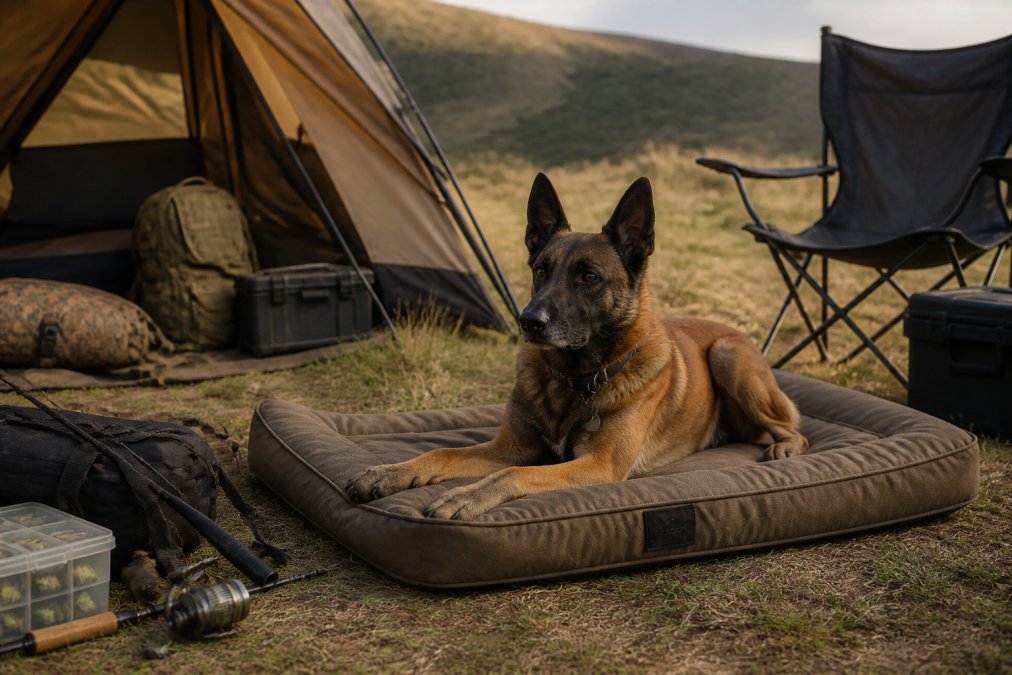
Orthopedic support matters more in the field than at home. Your dog isn't sleeping on a climate-controlled floor but on cold ground, packed earth, or rocky terrain where pressure points concentrate force into joints and spine. High-density foam redistributes that load, reducing strain on hips, elbows, and shoulders, exactly where older and working dogs feel it most.
The camping environment adds complexity. A bed at home stays dry and stable. In camp, moisture creeps up from below, temperature swings stress materials, and durability becomes non-negotiable. A bed that tears after two trips isn't orthopedic support, it's wasted money. That's why focus on materials and construction that survive field conditions: ripstop nylon, reinforced stitching, water-resistant fabrics, and foam that doesn't compress into uselessness after a season of use.
Waterproof Dog Beds for Camping: Essential Protection
Ground moisture is your orthopedic bed's silent killer. Morning dew, overnight condensation, and wet grass penetrate from below, soaking foam and destroying the structural integrity that makes the bed orthopedic. A waterproof dog bed for camping isn't optional, it's the difference between a bed that works all season and one that becomes a damp, compressed mat by mid-summer.
True waterproof protection requires a multi-layer approach. The bottom must be a moisture barrier, typically oxford cloth or ripstop nylon with a water-resistant coating, that blocks ground moisture completely. The cover should be machine-washable but also water-resistant on the exterior, shedding rain and morning moisture before it penetrates to the foam.
Look for covers with sealed seams or reinforced stitching along edges and corners, these are the weak points where water finds its way in. The Orthopedic Dog Bed Mat with removable cover uses anti-slip oxford cloth on the base with sealed construction, keeping ground moisture out while the washable cover handles camp spills and dirt.
Machine-washable covers matter in a camping context. You can't dry-clean a bed in the field. Dirt, mud, and accidents need to rinse out fast. A cover that goes through a regular wash cycle and dries quickly gets your dog back to a clean sleep surface without fussing.
Chew-Proof Dog Beds for Outdoors: Durability That Lasts
Some dogs test their beds. A working dog or anxious dog in camp might chew edges, dig at seams, or shred fabric. A chew-proof dog bed for outdoors needs materials that resist puncture and tearing.
Ripstop nylon is the standard here. Unlike soft polyester or cotton blends, ripstop is woven with reinforced fibers that stop tears from spreading. A small puncture doesn't unravel into a growing tear, the weave holds. Heavy-duty stitching compounds this effect. Beds with double-stitched seams and reinforced corner construction survive chew and claw pressure that would shred single-stitched alternatives.
High-density memory foam and closed-cell foam types are less appealing to chew on and hold up better to puncture than open-cell alternatives. The reality is simple: a bed designed for chew-resistance costs more upfront but saves money over time.
Portable Orthopedic Dog Beds: Weight and Packability
Portability determines whether a camping bed actually comes on trips. A 15-pound orthopedic bed sounds fine until you're hiking five miles with a full pack and your own fatigue.
Look at packed size first. The best portable orthopedic dog beds compress to roughly the size of a rolled sleeping bag or smaller. A bed that compresses to 12 by 8 inches fits in a pack side pocket. Weight matters proportionally to trip length. For car camping, an 8-10 pound bed is acceptable. For backpacking, anything over 5-6 pounds starts competing with other essentials.
Material choice affects both weight and packability. Ripstop nylon and oxford cloth are heavier than some alternatives, but they're durable. The goal is the lightest bed that still delivers on durability and waterproofing, not the absolute lightest option regardless of function.
| Feature | Impact on Portability | Consideration |
|---|---|---|
| Packed size | High | Under 12 x 8 inches fits in most packs |
| Weight | High | 5-6 lbs max for backpacking; 8-10 lbs acceptable for car camping |
| Foam thickness | Medium | Thinner = lighter, but reduces orthopedic support |
| Material | Medium | Ripstop/oxford heavier but more durable |
| Compression design | High | Roll-up or fold designs pack smaller than rigid structures |
Camping Gear for Dogs with Arthritis: Joint Support in the Field
Arthritis changes everything about how your dog experiences camp. A dog with joint pain needs strategic support that reduces pressure on affected joints and makes movement easier.
High-density memory foam is non-negotiable. Standard foam compresses unevenly, creating pressure points that aggravate arthritic joints. Memory foam conforms to your dog's body shape, distributing weight evenly across the surface. Elevation matters for arthritic dogs. A bed with raised edges or slight elevation helps older dogs get up and down without straining hips and knees.
Insulation from cold ground is critical for arthritic dogs. Cold stiffens joints and increases pain. Beds with insulating layers or those designed to sit slightly above ground keep your dog warmer, reducing morning stiffness. This is especially important in shoulder seasons when nights dip into the 40s or 50s.
Portability becomes secondary with an arthritic dog. You're not doing high-mileage backpacking. A heavier, more supportive bed is worth the trade-off because your dog's comfort and recovery matter more than shaving a few pounds.
Key Features and Materials: High-Density Foam, Anti-Slip Bases, and Ripstop Nylon
The materials you choose determine whether a bed actually delivers on durability and orthopedic support.
High-Density Foam and Pressure Point Relief
High-density foam is the foundation of orthopedic support. Density is measured in pounds per cubic foot; higher density means better support and longer lifespan. Standard foam might be 1.5-2 pounds per cubic foot. Orthopedic-grade foam runs 2.5-4 pounds per cubic foot or higher.
Standard foam compresses within weeks. High-density foam resists compression, maintaining its shape and support for months or years. Memory foam adds another layer of benefit by conforming to your dog's body, filling gaps and distributing pressure evenly. For dogs with arthritis or joint issues, memory foam makes a measurable difference in sleep quality and morning stiffness.
Water-Resistant Fabric and Machine-Washable Covers
Ripstop nylon and oxford cloth are the standards for outdoor gear because they're durable, water-resistant, and easy to clean. Ripstop has reinforced fibers woven throughout that stop tears from spreading. Oxford cloth is heavier and more rigid, resisting abrasion better than ripstop.
Water-resistant coatings on these fabrics shed surface moisture without making them fully waterproof. Combined with a fully waterproof base, this two-layer approach keeps moisture out while remaining breathable. Machine-washable covers are essential for field use. A cover you can throw in a wash cycle gets clean fast without spot-cleaning fussing.
Heavy-Duty Stitching and Tear-Resistant Construction
Stitching is where cheap beds fail. A bed with single-stitched seams and thin thread unravels under stress. Double-stitched seams with heavy thread hold up to chewing, abrasion, and repeated packing.
Pay special attention to corners and edges, which take the most abuse. Corners should be reinforced with multiple stitching passes or corner patches. Seams that run along the bottom and sides need heavier thread and more frequent stitching than seams on the top surface. Some beds use box-stitch patterns at stress points, multiple overlapping stitches that distribute load across more thread.
The foam should be glued to the cover, not sitting loose inside. A bed where foam can shift around will develop lumps and gaps that reduce support and create pressure points.
How to Choose the Right Size and Fit for Your Trail Dog
Size matters more than it seems. A bed that's too small forces your dog into a cramped position that defeats the orthopedic benefit. A bed that's too large becomes unwieldy to pack.
Measure your dog in a relaxed sleeping position. Have them lie on their side and measure from nose to tail tip, then across their widest point at the shoulders. Add 6-12 inches to each dimension to give them room to stretch without hanging off edges.
For most medium dogs (40-70 pounds), a bed around 36 by 24 inches works well. Large dogs (70-100 pounds) typically need 42 by 30 inches or larger. Small dogs under 30 pounds can use compact sizes around 30 by 18 inches.
Weight capacity matters. A bed rated for 100 pounds should handle a 90-pound dog comfortably. Look for beds rated 10-15 pounds above your dog's weight for a safety margin. Consider your dog's sleeping style. Curlers can get away with smaller beds; sprawlers need more room. Raised-edge beds work well for dogs that like to rest their head on a lip while sleeping. Open-platform beds suit dogs that prefer a flat surface.
Cleaning and Field Maintenance: Keeping Your Bed Trail-Ready
A bed that's easy to clean lasts longer and stays hygienic. Field conditions mean dirt, mud, and the occasional accident.
Spot-cleaning handles most field mess. A damp cloth and mild soap remove surface dirt and dried mud. Let mud dry first, dried mud brushes off easier than wet. Machine-washable covers are essential. Pull the cover off, throw it in a wash cycle with cold water and mild detergent, and hang it to dry. Most covers dry within 2-4 hours in sun and breeze.
For the foam itself, spot-cleaning is the only option. A damp cloth with mild soap handles surface stains. For odors, air drying in sun and breeze works; UV light kills odor-causing bacteria.
Prevent mold and mildew by drying the bed thoroughly after wet conditions. If your dog gets the bed soaked, pull the cover off and let everything air dry completely before packing. Store the bed dry and in a breathable bag when not in use. A mesh or cotton storage bag lets air circulate while protecting from dust.
Regular maintenance extends bed life dramatically. A bed that's cleaned after each trip and dried properly stays functional for years.
Choosing the right durable orthopedic dog bed for camping means balancing support, durability, portability, and your dog's specific needs. A bed that handles cold ground, resists moisture and chewing, and provides real orthopedic support transforms how your dog experiences camp. The Orthopedic Dog Bed Mat from Leash the Wilderness combines high-density foam, waterproof construction, and machine-washable covers, exactly what working dogs need in the field. Your dog's recovery and comfort on the trail depend on the gear you choose.
Frequently Asked Questions
What makes a dog bed orthopedic and durable for camping?
An orthopedic dog bed combines high-density foam for pressure point relief with a water-resistant, tear-resistant outer cover designed to withstand mud, moisture, and rough terrain. Durability comes from heavy-duty stitching, ripstop nylon fabric, anti-slip bases, and non-toxic materials that hold up to repeated packing, unpacking, and outdoor exposure. The best camping beds also feature machine-washable covers so you can clean them after muddy trips without damaging the foam core.
Are orthopedic dog beds worth it for camping trips?
Yes, especially if your dog is active or aging. Orthopedic support reduces joint strain on long hikes and sleeping on cold, hard ground. Dogs with arthritis or stiffness benefit most, but even young, healthy dogs recover faster and sleep deeper on quality foam. Since camping involves extended physical activity and non-ideal sleeping surfaces, the investment pays for itself in comfort and injury prevention over multiple trips.
How do I choose the right size orthopedic dog bed for camping?
Measure your dog from nose to tail while lying down, then add 4-6 inches for comfortable stretching. Width should allow your dog to curl up or sprawl. Most camping beds come in M, L, XL, and 2XL sizes. Consider your dog's sleeping style: dogs that curl need less length, while sprawlers need more. Portable beds should balance size with packability, so avoid oversizing unless your vehicle or pack space allows.
Can orthopedic dog beds be easily cleaned after camping?
Quality camping dog beds feature machine-washable, removable covers that can be cleaned separately from the foam core. Most covers handle cold or warm water wash cycles. The foam itself should be spot-cleaned with mild soap and water, then air-dried completely to prevent mold. Look for PFAS-free, hypoallergenic materials that dry quickly and resist odor, which matters when gear is stored between trips.
What portable orthopedic dog bed features matter most for backpacking?
Weight-to-durability ratio is critical. A bed weighing under 3 pounds but using cheap foam will fail fast. Look for roll-up or foldable designs that compress to pack-friendly dimensions without sacrificing orthopedic support. Anti-slip bases prevent sliding inside tents, and water-resistant fabric protects against ground moisture. Field-tested materials like ripstop nylon and high-density foam offer the best balance of protection, portability, and longevity for remote camping.
This article was written using GrandRanker