

Last Updated: October 29, 2026
Quick Summary
The best stream fishing sunglasses have polarized lenses, and the tint should match the light and bottom you fish most. Gray suits bright open water, while copper or amber helps in shade, overcast, and stained water. Polycarbonate lenses and a wraparound frame suit rough wading.
- Polarized lenses cut surface glare so you can see the bottom, rocks, and fish in moving water.
- Match lens tint to your usual light: gray for bright open water, copper or amber for shade and overcast.
- Polycarbonate lenses are lighter and more impact-resistant than glass, which suits wading and brush.
- Check the manufacturer's light-transmission figure for each lens, since it varies by model.
- Rinse lenses after silt or salt exposure and store them in a hard case to avoid scratches.
Table of Contents
- Why Polarized Lenses Matter More in a Stream Than on a Lake
- Choosing a Lens Color for Stream Conditions
- Glass vs Polycarbonate Lenses for Wading and Rough Use
- Fishing Sunglasses for Low Light, Shade and Overcast Days
- Why Wraparound Frames Help Stream Anglers
- Fit, Coverage and Care in the Field
- Choosing Your Pair Before the Next Trip
- Frequently Asked Questions
Why Polarized Lenses Matter More in a Stream Than on a Lake
Stream fishing sunglasses do more than look good. Polarized lenses in stream fishing sunglasses cut surface glare so you can see underneath (Examining polarizing and non-polarizing filters for road sports).
That matters more in a stream than a lake. A calm lake reflects a flat sheet of light.
Polarized lenses can also reduce glare-related fatigue over long days on the water. For how a fishing line holds up in harsh conditions, see how fishing line stands up to brutal conditions.
Not every pair of polarized sunglasses is the same, though. Lens color, material, and frame shape all change how well they work in a stream.
Choosing a Lens Color for Stream Conditions
Lens color is one of the bigger decisions you'll make. A stream differs from open water: shallow depths, visible bottom, dappled shade, and a surface whose color changes as the sun moves.
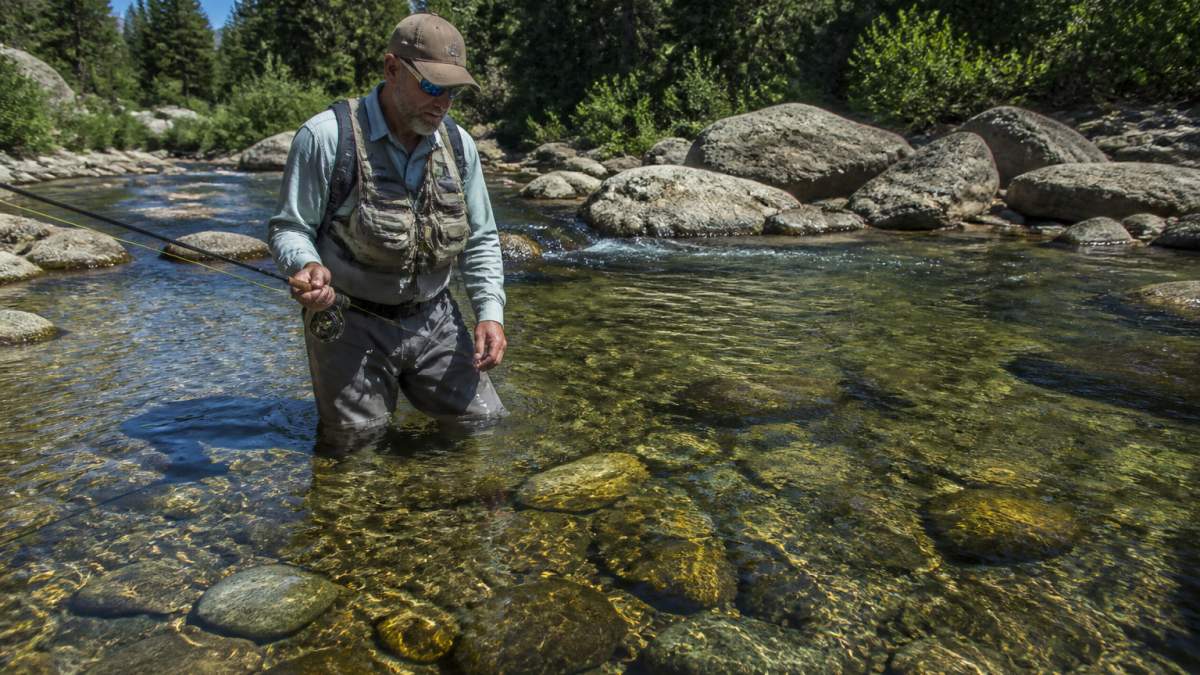
Start with the bottom. A limestone spring creek with a pale marl bed throws light straight back at you. A tannin-stained freestone stream absorbs light and hides fish in tea-colored water.
A practical decision guide
Use this as a starting point, then check the manufacturer's stated light-transmission figure for the exact lens you are buying, since transmission varies by model even within one brand.
| Stream condition | Bottom and light | Lens tint to try | Why |
|---|---|---|---|
| Clear spring creek, bright sun, open banks | Pale marl or gravel, full sun | Gray or smoke, darker transmission | Keeps colors neutral and cuts the hard glare off light bottoms without washing out the scene |
| Clear water, mixed sun and shade, tree cover | Gravel and rock, dappled light | Copper or brown | Adds contrast so you can separate a fish from a similar-toned bottom in and out of shadow |
| Stained or tannic water | Dark bottom, tea-colored water | Amber or copper | Warms the scene and pulls detail out of low-contrast water |
| Overcast, dawn, deep canopy | Low light, dark bottom | Light amber or yellow-based | Brightens the scene without the dim feel of a dark gray lens |
| Mixed freestone, changing light all day | Variable | Gray-green | A compromise tint that holds contrast in sun and still reads in shade |
What each tint actually does
- Gray and smoke keep colors close to natural. They are the safest first buy for bright, open water. On a pale-bottomed stream they cut glare well, but they do not add contrast, so a fish holding on a same-colored bottom can blend in.
- Copper and brown add warmth and contrast. This is the tint most stream anglers reach for in mixed light because it separates a dark fish from a lighter bottom and holds up in shade. It is a poor choice for very bright, open water where it can feel too warm.
- Amber and yellow-based tints brighten low light and sharpen detail in shade. They are the wrong tool at midday on open water, where they can wash out and reduce the contrast you need.
The two-pair rule
Most year-round stream anglers end up with two pairs: a darker gray or gray-green for bright open water and a copper or amber for shade, overcast, and stained water. If you buy one pair, pick the tint that matches the light you fish most, not the one that looks best in the store. Dark gray in a shaded brook leaves you squinting; light amber on an open midday flat feels washed out.
Numbers to check before you buy
Light-transmission figures tell you how much visible light reaches your eye. A lower number means a darker lens. Manufacturers publish these per lens. Don't assume a lens marketed as "low light" is lighter than another brand's all-around lens. Check the figure on the product page, and if it isn't listed, check with the manufacturer before you buy.
If you are building a stream kit and want budget tackle to go with your glasses, see the Fishing Tackle Under $25 collection.
Glass vs Polycarbonate Lenses for Wading and Rough Use
Lens material affects clarity, weight, and how well the lenses survive a rough day. Glass offers strong optical clarity and scratch resistance, but it's heavier and can shatter.
Here is how the two compare for stream use:
| Feature | Glass | Polycarbonate |
|---|---|---|
| Optical clarity | Excellent | Very good |
| Weight | Heavier | Lighter |
| Impact resistance | Lower | Higher |
| Scratch resistance | Higher | Lower, needs coating |
| Best for | Calm, controlled fishing | Wading, rough banks |
If you wade slick rock or push through brush, impact resistance matters.
Watch out: a lens with a scratch-resistant coating can still be damaged by grit and sand. Rinse the lenses after a day on gravel or sandy water.
Fishing Sunglasses for Low Light, Shade and Overcast Days
Shade is where stream fishing gets hard. A run under a hemlock canopy at 7 a.m. is darker than open water 20 feet away, and a dark gray lens that worked on the flat turns that run into a black slot. You're not cutting glare in shade. You're pulling detail out of a low-contrast scene without losing the polarization that lets you see through the surface.
Why low light is a different problem
Polarization still matters in shade. A shaded run still reflects sky and canopy, and that reflection still hides the bottom. What changes is how much light reaches your eye. Too dark a lens forces your pupil open and costs you contrast; too light a lens loses the glare-cutting benefit. The goal is the lightest tint that still kills surface glare.
Tints that work in shade and overcast
- Light amber and yellow-based tints brighten the scene and sharpen detail in flat light. They are the standard pick for dawn, dusk, and heavy overcast. They are a poor choice for bright open water, where they wash out.
- Copper is the better all-around shade tint if your day moves between canopy and open water. It adds contrast without the strong warm cast of amber.
- Rose and light gray-green can help in mixed shade, but they are niche. Do not buy them as your only low-light lens.
A common pattern among stream anglers is a copper lens as the primary shade tint and a light amber as a backup for true low light.
Transmission: the number that matters
Light-transmission figures are the only reliable way to compare low-light lenses across brands. A higher percentage means more light reaches your eye. Manufacturers publish these per lens, and they vary by model even within one product line.
Do not trust the word "low light" on a label. A lens marketed that way can still be darker than another brand's all-around lens. The figure is the tiebreaker.
Shade, canopy, and moving water
Canopy shade isn't uniform. A run shaded on one bank and sunlit on the other shows a bright seam and a dark seam at once.
Moving water adds a second problem: the surface is broken, so glare comes from many angles. A wraparound frame matters more in shade than in sun, because side glare off a bright patch next to a shaded run is exactly what hides the seam you're trying to read.
When low-light lenses are the wrong buy
If you fish mostly open water at midday, a low-light lens will feel washed out and you will lose the glare cutting you bought polarization for. If you fish one pair all day, a gray-green or copper compromise tint will serve you better than a dedicated low-light lens. Buy the low-light pair as a second lens, not your only one.
If you keep a second lens in your pack for shaded runs, a small Tackle Storage pouch keeps it from getting scratched by hooks and split shot.
Why Wraparound Frames Help Stream Anglers
Wraparound frames block light from reaching your eyes at the sides, which cuts glare coming off the water at an angle.
Coverage matters more than style here. A frame that sits well away from the face leaves gaps where light and debris can get in.
Wraparound frames can feel warm on hot days and may fog if they do not vent well.
Fit, Coverage and Care in the Field
Sunglasses only help if they stay on your face and stay clean.
- Check that the frame sits flat against the nose and does not slide when you tilt your head.
- Use each manufacturer's size chart and fit guidance, since frame dimensions vary between brands.
- Try the glasses on with a hat or cap, if you wear one, to make sure they still fit.
Field care is simple but often skipped. If you also carry braided line in the field, see how to maintain braided fishing line between trips.
Never rely on sunglasses as protection against eye injury from a hook or line.
Many anglers who fish with a tackle backpack keep sunglasses in a separate pocket so hooks and lures don't crush or scratch them.
Choosing Your Pair Before the Next Trip
Start with your most common conditions. To compare reels and combos that hold up, see spinning vs baitcasting reels and rod and reel combos.
If you are still building your setup, pair your sunglasses with the right tackle and storage. The Fishing Tackle Under $25 collection covers budget-friendly basics, and the Complete Fishing Kits collection gives you a starting point for a full setup. For storage, the Tackle Storage collection has options for keeping gear organized.
Best for: anglers who fish streams regularly in bright or mixed light and want reliable eye protection.
Skip if: you rarely fish moving water, or only fish deep shade where a dark lens won't help.
For current prices and availability, check the product pages directly. Shipping takes 10 to 20 business days, so plan ahead for your next trip.
Frequently Asked Questions
Are polarized sunglasses good for stream fishing?
Yes, for most stream work. Polarized lenses filter the horizontal glare that bounces off moving and still water, which lets you see past the surface to rocks, submerged logs and fish holding in current breaks. They do not make a fish appear where none is, and they will not show detail in very deep or heavily stained water. Check that the lens is actually polarized, since many budget frames only carry a tint, and pick a color that matches the light you fish in most often.
What lens color is best for stream fishing?
There is no single best color. Amber and copper tones add contrast and brighten shade, which helps on overcast days and in tree-covered runs. Gray and gray-green lenses reduce brightness without shifting colors, which suits open water in strong sun. Many anglers carry two pairs: a darker lens for bright conditions and a lighter one for shade or low light.
Are glass or polycarbonate lenses better for fishing?
Glass offers better optical clarity and scratch resistance, but it is heavier and breaks more easily on a fall onto rock. Polycarbonate is lighter, impact resistant and more practical when you are wading or scrambling over stream banks. For most stream anglers, polycarbonate is the safer everyday choice. Look for lenses that carry a UV-protection rating and read each maker's specifications before buying.
How should fishing sunglasses fit?
They should sit close to the face without pinching, and the lenses should cover your eyes from above and the sides. Follow the manufacturer's size chart and fit instructions, since frame dimensions vary between brands. A strap or retainer helps keep them on when you cast, bend or wade, and check that the nose pads and temples hold the frame steady during movement.
