

Table of Contents
- Why Braided Fishing Line Needs Regular Maintenance
- Signs of Worn Braided Fishing Line You Can't Ignore
- Step-by-Step: Cleaning Braided Line After Saltwater Fishing
- How Often to Change Braided Fishing Line
- Braided Line Maintenance Tips for Year-Round Use
- Proper Storage Techniques for Long-Term Line Integrity
- Trimming, Respooling, and When to Replace Braided Line Sections
- Conclusion
Last Updated: August 28, 2026
Why Braided Fishing Line Needs Regular Maintenance
Braided fishing line won't snap under pressure like monofilament, and it cuts through water with zero stretch, exactly why serious anglers choose it for saltwater, heavy cover, and deep-water work. But that same synthetic weave that makes it tough also makes it vulnerable to accumulation. Salt buildup, UV degradation, micro-fractures from friction against guides, and line twist compound over time. A line that felt perfect in May can be unreliable by August if you're not paying attention.
At Leash the Wilderness, we outfit serious hunters, anglers, and their trail dogs with rugged, field-tested gear. A well-maintained braided line will outperform a fresh spool of neglected line every single time. The maintenance routine is straightforward, takes minimal time, and extends your line's life by months.

Signs of Worn Braided Fishing Line You Can't Ignore
Braided line fails quietly. Unlike monofilament, which shows obvious stretch and weakness, braided line can look acceptable while losing tensile strength.

Visual indicators of damage
Fraying at the weave is the clearest sign. Run your thumb and finger along the line; if the individual strands feel rough or separated instead of smooth and locked together, the synthetic weave is breaking down. This happens from UV exposure, salt crystallization, and repetitive flexing through rod guides.
Nicks and abrasions appear as thin spots where the line diameter visibly narrows. These aren't cosmetic, a nick removes the line's outer protection layer and creates a stress concentration point. Check the first 20 yards from your rod tip most carefully.
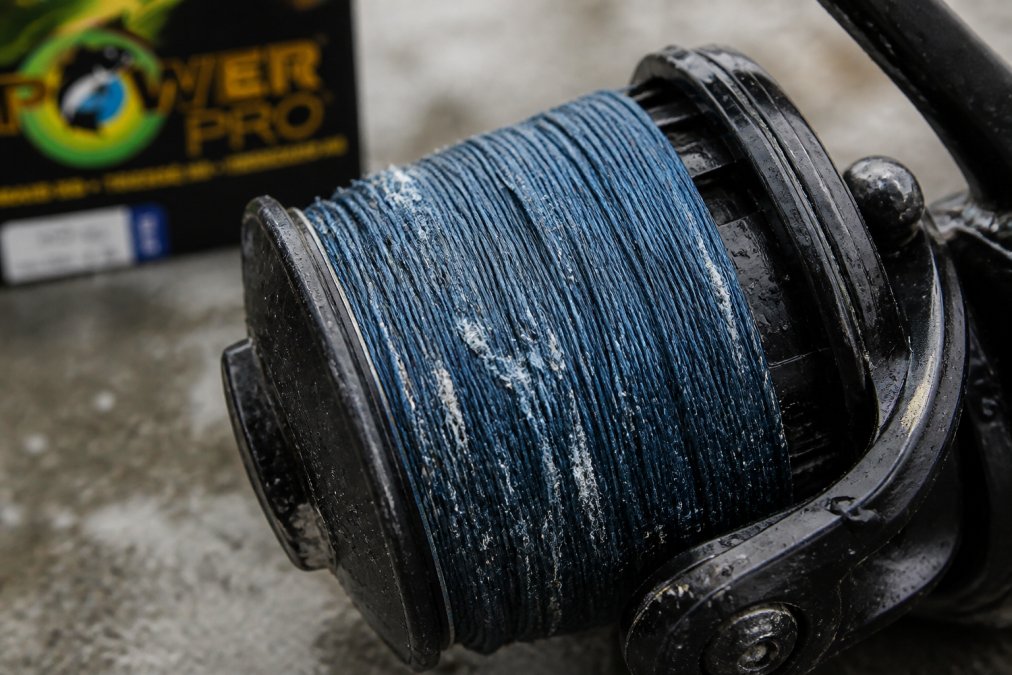
Discoloration signals salt crystallization embedded in the weave. Fresh braided line has consistent color throughout. White, gray, or chalky patches indicate salt that absorbs water and accelerates degradation. Freshwater rinse removes it, but if discoloration has set in deep, structural damage may already be done.
Performance red flags
The line feels stiff or sticky instead of smooth when you run it through your fingers. This indicates salt buildup or UV-damaged synthetic fibers. Stiff line doesn't cast as far and creates more friction through guides.
Backlashes happen more frequently even though your casting technique hasn't changed. Worn braided line has a rough surface that catches on itself during the cast, causing the reel to overrun.
Knot strength drops noticeably. If your knots suddenly fail at lower tension, the line itself is weaker. Test this by tying an improved clinch knot on fresh line and on your current line. If the worn line breaks at 70% of the fresh line's strength, it's time to respooled or trim the damaged section.
Step-by-Step: Cleaning Braided Line After Saltwater Fishing
Salt crystals lodge between synthetic fibers, trap moisture, and accelerate UV degradation. The cleaning routine takes 10 minutes and extends line life significantly.
Immediate post-fishing rinse
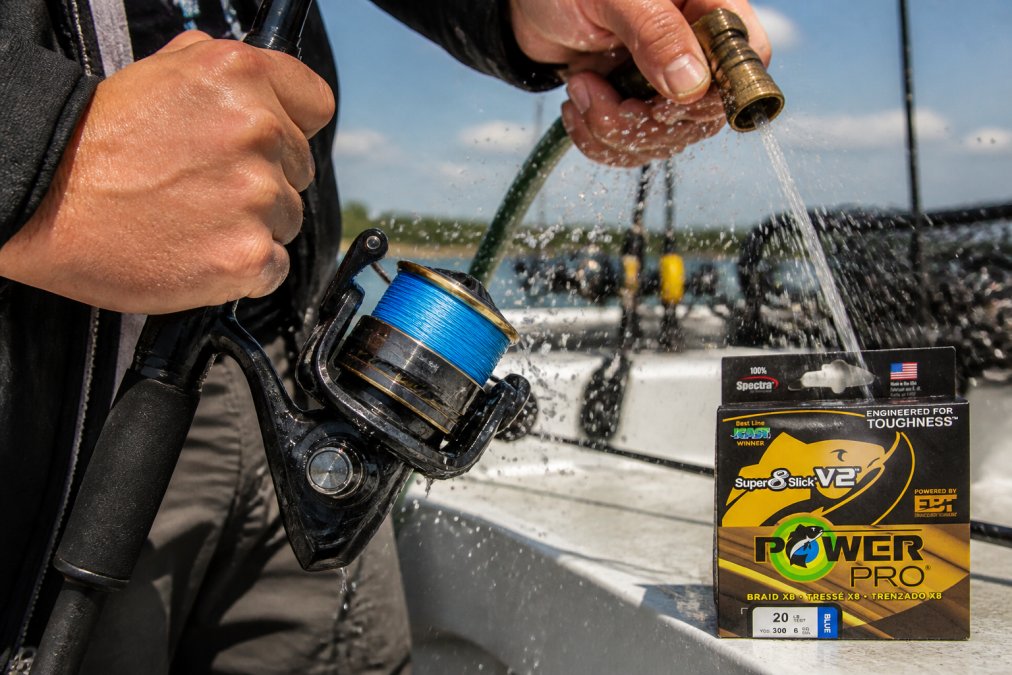
Before you leave the water, rinse the reel and line with fresh water from a spray bottle or hose. Salt starts crystallizing as soon as it dries. Run fresh water along the entire length of the line on the reel, paying special attention to the first 30 yards where salt concentration is highest.
Deep cleaning with fresh water
At home, fill a bucket with fresh water and submerge the entire reel for 15 minutes. This allows water to penetrate the braided weave and dissolve salt crystals. Don't use hot water; temperature extremes can affect the synthetic fibers.
After soaking, gently work the line with your fingers while underwater to help dislodge salt. Drain and refill with fresh water. Soak again for 10 minutes. Clear water means the salt is gone.
Drying and conditioning
Air dry the reel completely in a cool, dry location away from direct sunlight. Drying takes 4-6 hours depending on humidity. Once dry, you can apply a light line conditioner if desired. Apply sparingly, too much makes the line slippery and harder to grip.
How Often to Change Braided Fishing Line
The timeline depends on how hard you fish and what environment you're in.
Saltwater vs. freshwater replacement schedules
Saltwater fishing accelerates line degradation significantly. Salt crystallization, UV exposure, and constant moisture create a harsher environment. Most anglers fishing saltwater should plan to replace or respooled braided line every 12-18 months with regular use (2-3 trips per week) (peer-reviewed research).
Freshwater fishing is gentler on line. Lakes and rivers don't have salt buildup, and you're often fishing in shade or overcast conditions. Freshwater anglers can typically extend braided line life to 18-24 months with the same frequency of use.
Heavy-use vs. casual angler timelines
If you fish 4+ days per week, especially in saltwater, plan on replacing braided line every 9-12 months. Casual anglers who fish once or twice monthly can stretch line life to 24-30 months, assuming freshwater conditions and proper storage.
The practical approach: inspect your line every season. If you see significant fraying, discoloration, or abrasion, replace it. Don't follow a calendar, follow what the line actually looks like.
Braided Line Maintenance Tips for Year-Round Use
UV protection and storage
Sunlight breaks down the molecular bonds in polyethylene fibers, causing brittleness and loss of tensile strength (peer-reviewed research). Store reels in a dark, cool place, a tackle box with a lid, closet shelf, or storage cabinet. Avoid windowsills and truck beds.
Temperature stability matters. Extreme heat softens synthetic fibers and accelerates UV degradation. Extreme cold makes the line brittle. A room temperature between 60-75°F is ideal (peer-reviewed research).
Humidity control prevents corrosion and slows salt recrystallization. A dry storage environment is better than a damp one. If your storage area is humid, add silica gel packets to your tackle box.
Preventing backlashes and tangles
A worn or frayed braided line has a rough surface that catches on itself more easily. Prevention starts with line condition, keep the weave smooth and intact.
Don't overload the spool. Braided line should fill the spool to about 1/8 inch from the rim. Line twist develops when you retrieve faster than the reel rotates. If you notice the line twisting, slow your retrieve or use a swivel.
Managing salt buildup and corrosion
After every saltwater trip, rinse the entire reel with fresh water, not just the line. Pay special attention to the bail, handle, and spool. Salt crystallizes in these moving parts and causes the reel to bind.
Once per month during saltwater season, apply a light reel oil to the handle and bail pivot points. This creates a barrier against salt and keeps the reel smooth. Use reel oil specifically, not general-purpose lubricants.
Proper Storage Techniques for Long-Term Line Integrity
How you store your reel between trips directly affects how long your braided line lasts.
Temperature and humidity control
Braided line degrades faster in unstable environments. A reel stored in an air-conditioned room stays in better condition than one left in a garage where temperature swings 40 degrees between day and night. The synthetic fibers expand and contract, creating micro-fractures that weaken the weave.
Humidity above 70% accelerates corrosion and salt recrystallization. If you live in a humid climate, store reels in a dehumidified space or use silica gel packets inside your tackle box.
Spool capacity and respooling best practices
Fill the spool so the line comes to within 1/8 inch of the rim. This is the manufacturer's recommended level for most spinning reels.
When respooling, use monofilament backing on the spool first. Braided line doesn't grip the bare spool well and can slip under load. A 20-30 yard layer of monofilament backing provides the grip you need. Tie the monofilament to the spool using an arbor knot, then tie the braided line to the monofilament using a uni knot.
To minimize twist, have someone hold the supplier's spool so it rotates freely as you wind. The line should peel off smoothly without resistance.
Trimming, Respooling, and When to Replace Braided Line Sections
You don't always need to replace the entire spool. Sometimes trimming a damaged section and respooling is the smarter choice.
Identifying and removing damaged sections
The first 20-30 yards of braided line take the most abuse. Inspect this section carefully every month. If you find significant fraying, nicks, or discoloration concentrated in the first 20 yards, trim that section off. Cut the damaged section cleanly with scissors or a sharp knife.
If the damage is scattered throughout the entire spool, replacement is more practical than trimming. Multiple short sections create too many knots, and each knot is a potential failure point.
Respooling without introducing line twist
After trimming, maintain consistent tension as you wind. If the line on the spool is under tension and the line coming off is loose, twist develops. Have a helper hold the remaining line spool so it rotates freely. Wind slowly and steadily.
After respooling, let the reel sit for a few hours before fishing. The line will relax and any residual twist will work itself out. When respooling, tie the remaining braided line to the monofilament backing using an improved clinch knot or uni knot. Test the knot by pulling hard, it should hold without slipping.
Maintaining braided fishing line is the difference between gear that lasts and gear that fails when you need it most. The routine is simple: rinse after saltwater trips, inspect regularly, store in a cool dark place, and respooled or trim when damage appears. These steps take minimal time but extend your line's life by months and keep your reel reliable in the field.
At Leash the Wilderness, we stock everything you need to maintain and upgrade your fishing setup, including our LTW Grab & Go Spin Kit for quick trips and our Catfish Angler Starter Kit for serious anglers. But even premium gear needs maintenance. The equipment you own will perform as well as you maintain it. Start with your line, and everything else follows.
Frequently Asked Questions
Q: How often should you replace braided fishing line?
A: Saltwater anglers should replace braided line every 1-2 seasons or after 100+ hours of use, depending on conditions and visible wear. Freshwater anglers can extend this to 2-3 seasons if the line shows no signs of abrasion, nicks, or micro-fractures. Heavy-use guides and tournament anglers may replace line 2-3 times per season. Inspect your line regularly for fraying and loss of tensile strength, if you notice these signs, replace it sooner rather than risking a lost fish or broken leader.
Q: Should you soak braided fishing line in water?
A: No, soaking braided line for extended periods is not recommended. Braided line is made from synthetic fibers (PE Spectra) that absorb water and can weaken over time if kept saturated. Instead, rinse your line with fresh water immediately after saltwater fishing, then dry it thoroughly by spooling it slowly onto a clean reel or line holder. A quick rinse followed by air drying is far more effective than soaking and prevents water absorption that could compromise line integrity.
Q: What is the best way to clean salt and grit from braided line?
A: Rinse your braided line with fresh water within 30 minutes of leaving saltwater. Use a hose or faucet with moderate pressure, do not use high pressure, which can force salt deeper into the weave. Spool the line slowly while rinsing to ensure water reaches the entire weave. For stubborn salt buildup, soak the reel (not the line alone) in a bucket of fresh water for 15-20 minutes, then rinse again. Dry the line completely by spooling it onto a clean reel and storing it in a dry, cool location away from direct sunlight.
Q: Can you use line conditioners on braided fishing line?
A: Yes, but use conditioners designed specifically for braided line and PE Spectra fibers. Avoid generic fishing line conditioners or silicone-based products, which can clog the weave and reduce sensitivity. Braided-specific conditioners help reduce friction, improve casting distance, and protect against UV degradation. Apply conditioner sparingly after cleaning and drying, and always follow the product instructions. Test any new conditioner on a short section of line before treating your entire spool.
This article was written using GrandRanker