

Table of Contents
- Why Durable Braided Line Outperforms in Heavy Cover
- Understanding Line Diameter and Pound Test for Heavy Cover
- Four-Strand vs. Eight-Strand Braid: Construction Matters
- How to Prevent Braid Fraying and Extend Line Life
- Best Fishing Rod and Reel Combos for Braided Line
- Top Braided Lines That Handle Vegetation and Structure
- Conclusion
Last Updated: August 19, 2026
Why Durable Braided Line Outperforms in Heavy Cover
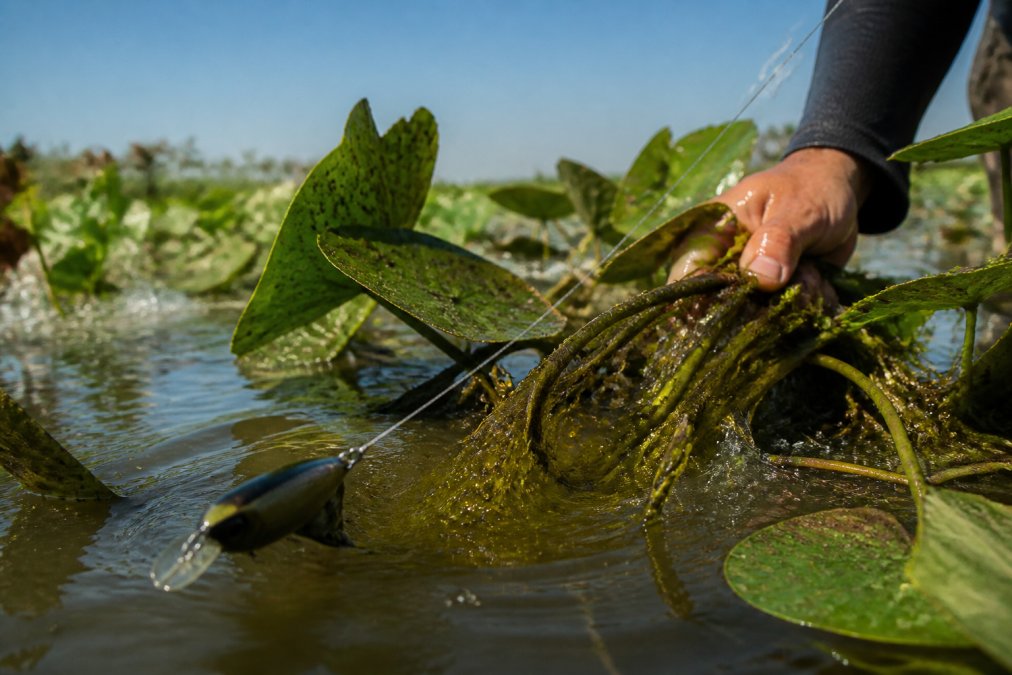
Durable braided line cuts through vegetation where monofilament and fluorocarbon fail. The zero-stretch characteristic means your hook sets instantly with no delay. When you're fishing dense lily pads, submerged timber, or matted hyacinth, that sensitivity difference is the difference between landing a bass and watching it disappear.
Braided line's thin diameter relative to its pound test gives you two advantages: it slices through vegetation without snagging, and it maintains abrasion resistance even after repeated contact with sharp branches and rocks. Monofilament stretches under load, dampening your hook set in heavy cover. Braid doesn't stretch, tension transfers directly from rod to hook.
The fiber density of modern braided lines also means less line on your spool for the same pound test, so you can upsize your test rating without sacrificing casting distance. This matters when you're winching a 5-pound bass out of submerged structure where one break-off costs you the fish and your confidence.
At Leash the Wilderness, we've tested braided lines in real-world heavy cover conditions. The lines that survive repeated vegetation contact, maintain knot integrity under shock load, and resist color fading in stained water are the ones worth your money. That's why we stock options like Power Pro SSV2 and YGKX X16, both engineered specifically for the abuse heavy cover fishing demands.

Understanding Line Diameter and Pound Test for Heavy Cover
The relationship between diameter and pound test determines whether your line cuts or snags. A thinner line with the same pound test cuts vegetation faster. A thicker line has more surface area to absorb abrasion but is more likely to catch on branches.
How Pound Test Affects Hook Penetration and Sensitivity
Pound test is the breaking strength at the line's weakest point, usually the knot. For heavy cover, you need enough pound test to winch a bass free without breaking, but not so much that you sacrifice sensitivity. Most anglers fishing heavy cover use 20-80 pound test depending on structure density and target species size.
Higher pound test reduces sensitivity because thicker fibers require more load to bend and transmit information back to your rod. A 50-pound braid feels more responsive than 80-pound braid on the same rod. However, 50-pound may not be enough to extract a large bass from thick vegetation without risk of breakage.
Match pound test to your specific structure: dense vegetation with heavy timber requires 65-80 pound test; lighter cover with scattered structure works fine at 40-50 pound test. Hook penetration improves with lighter line because the rod can load faster, but only if your drag is set correctly and your knots are solid.
Diameter Trade-offs: Casting Distance vs. Cutting Power
Line diameter is measured in thousandths of an inch. A 0.012-inch diameter 50-pound braid casts farther than a 0.018-inch diameter 50-pound braid, but the thicker line cuts vegetation more aggressively. For heavy cover, prioritize cutting power over casting distance since you're usually fishing within 40-60 feet of the boat anyway.
Thicker diameter lines also resist fraying better when they contact sharp vegetation edges repeatedly. The cross-section of the braid matters too, four-strand braids have a rounder profile than eight-strand braids, affecting how they interact with vegetation. A rounder profile slips through vegetation more easily; an angular profile cuts more aggressively but can catch on rough surfaces.
Four-Strand vs. Eight-Strand Braid: Construction Matters
Four-strand braids are constructed from four fibers woven together in a simple pattern. They're stiffer, more visible in the water, and have a rounder profile that slides through vegetation efficiently. Eight-strand braids use eight fibers in a tighter weave, resulting in a smoother, more flexible line with a slightly angular cross-section.
For heavy cover fishing, eight-strand construction generally performs better because the tighter weave provides superior abrasion resistance. When your line contacts sharp vegetation edges repeatedly, the additional fiber density protects against nicks and cuts that lead to fraying. Eight-strand's tighter weave also means your knots are less likely to slip under shock load.
How to Prevent Braid Fraying and Extend Line Life
Braid frays when individual fibers separate due to abrasion, knot stress, or contact with sharp objects. Once fraying starts, it accelerates as separated fibers catch on vegetation and pull more fibers loose. Preventing fraying is the single best way to extend your line's lifespan.
Knot Failure Analysis in Heavy Cover
Knot failure is the primary cause of premature line replacement in heavy cover. When you set the hook hard on a bass buried in vegetation, the shock load concentrates at the knot. If your knot isn't tied correctly or if the braid is damaged near the knot, failure happens instantly.
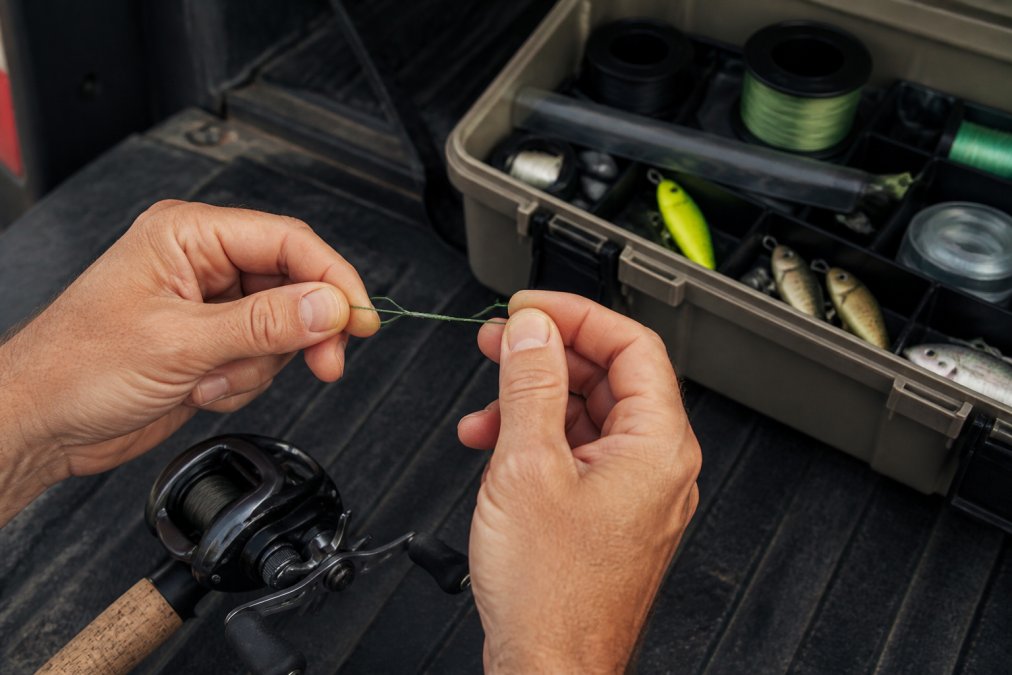
Use a Palomar knot or Uni knot for mainline-to-lure connections, both maintain 85-90% of the line's breaking strength when tied correctly. For mainline-to-leader connections, use a Double Uni knot or Surgeon's knot. The critical step is moistening the knot with water or saliva before tightening; dry knots create friction that weakens the fibers.
Inspect your knots regularly, especially after a hard set or after fighting a large fish. If the knot looks frayed or damaged, cut it off and retie. A few feet of lost line is better than a break-off mid-fight.
Maintenance Practices That Preserve Tensile Strength
Tensile strength is the maximum load your line can handle before breaking. Braided line loses tensile strength over time due to UV exposure, repeated bending, and contact with abrasive surfaces. You can slow this degradation through proper maintenance.
After each fishing trip, rinse your entire spool with fresh water to remove salt, algae, and debris. Store your spools in a cool, dark place away from direct sunlight, UV rays break down the polymer coating on braided line, causing color fading and brittleness. Spool tension matters too: tight enough that the line doesn't slip on the spool, loose enough that you're not crushing the fibers.
Replace your line every 1-2 seasons of heavy use, or immediately if you notice significant color fading, fraying, or reduced sensitivity.
Best Fishing Rod and Reel Combos for Braided Line
Braided line demands specific rod and reel characteristics to perform optimally. Your equipment must be designed to handle zero-stretch line without damaging the rod or sacrificing sensitivity.
Baitcasting Reels vs. Spinning Reels for Zero-Stretch Sensitivity
Baitcasting reels are the superior choice for heavy cover fishing with braided line. The direct spool design means zero stretch translates directly into immediate hook set feedback. When your line is in contact with structure, you feel every bump and snag through the rod handle.
Spinning reels introduce lag because the bail must flip and the line must travel up the rod before tension fully loads the rod. That fraction-of-a-second delay reduces hook penetration in heavy cover. For precision work in dense vegetation, baitcasting is the better option.
The reel's drag system matters more with braid than with other line types. Braid's zero-stretch characteristic means any drag slippage is immediately noticeable. Your drag should be smooth and progressive, not sticky or erratic. High-quality reels with precision drag systems perform better with braid.
Line Capacity and Drag Settings for Winching
Line capacity determines how long you can fight a fish before running out of line. For heavy cover fishing, a reel that holds 200 yards of 50-pound braid is adequate for most freshwater applications.
Drag settings are critical with braided line because braid doesn't compress like monofilament. When you set the drag, you're setting a hard threshold, the line either holds or it breaks. Most anglers fishing heavy cover set their drag at 20-25% of the line's breaking strength, providing enough resistance to set the hook hard without exceeding the line's limits.
Test your drag before fishing by tying the line to a fixed object and slowly increasing drag pressure until the line breaks. Note the drag setting at break point, then back off to 20-25% of that threshold.
Top Braided Lines That Handle Vegetation and Structure
The best braided lines for heavy cover share common characteristics: superior abrasion resistance, tight fiber density, and coating technology that resists color fading and fraying.
Power Pro SSV2 Braided Fishing Line delivers zero-stretch sensitivity and exceptional cutting power through vegetation. The SSV2 construction uses a proprietary coating that reduces friction against structure while maintaining durability. The line's thin diameter relative to pound test means maximum cutting efficiency without sacrificing strength.
YGKX X16 Braided PE Fishing Line represents Japanese engineering focused on smoothness and knot integrity. The 16-strand construction creates a tighter weave than standard eight-strand braids, resulting in superior abrasion resistance. This line is particularly effective where your mainline contacts rough structure repeatedly.

| Braided Line Option | Construction | Best For | Key Strength |
|---|---|---|---|
| Power Pro SSV2 | Proprietary coating | Vegetation cutting and sensitivity | Zero-stretch hook sets |
| YGKX X16 | 16-strand Japanese | Abrasion resistance | Knot integrity under shock |
Both options maintain tensile strength through repeated casting and structure contact better than generic braids. Match the pound test to your target structure: dense vegetation requires 50-80 pound test; lighter cover works fine at 30-50 pound test.
Conclusion
Durable braided line for heavy cover isn't a luxury, it's a necessity when you're fishing dense vegetation, submerged timber, or structure where traditional lines fail. The zero-stretch characteristic, superior abrasion resistance, and cutting power through vegetation make braid the only practical choice for serious anglers in heavy cover.
Selecting the right pound test, understanding diameter trade-offs, and maintaining your line properly extends performance and prevents frustrating break-offs. Pair your braided line with a quality baitcasting reel and a rod designed for braid, and you've got a system that handles whatever your fishing environment throws at it.
The braided lines available through Leash the Wilderness, including Power Pro SSV2 and YGKX X16, are field-tested in real heavy cover conditions. Both deliver the abrasion resistance, knot integrity, and cutting power you need when conditions turn brutal and the fish are buried in vegetation.
Frequently Asked Questions
What pound test braided line is best for heavy cover?
For heavy cover, 30-50 lb test is the sweet spot for bass and pike fishing. Higher pound test (65-80 lb) works for catfish and saltwater applications where abrasion resistance and shock resistance are critical. The right choice depends on your target species, water depth, and structure density. Heavier pound test reduces casting distance but increases hook penetration and winching power in dense vegetation.
Does braided line fray easily in rocks and timber?
Quality braided line resists fraying better than monofilament, but abrasion still occurs in sharp rocks and broken timber. Eight-strand constructions are more durable than four-strand because the tighter weave distributes friction across more fibers. Fraying accelerates when knots are weak or when you drag line across jagged surfaces repeatedly. Inspect your line after every heavy-cover session and retie weak knots immediately.
How does braid diameter affect performance in thick vegetation?
Thinner diameter braid cuts through vegetation more easily and casts farther, but sacrifices abrasion resistance. Thicker diameter provides better durability and visibility in stained water, but reduces castability and sensitivity. For vegetation cutting, aim for the smallest diameter that still delivers adequate pound test for your target species. Fiber density and coating technology also influence how cleanly braid cuts through slop.
How often should you replace braided line used in heavy cover?
Replace braided line every 2-4 months if you fish heavy cover weekly. Line memory, color fading, and microscopic abrasion accumulate faster in harsh conditions. Check for visible fraying, discoloration, and reduced knot integrity before each trip. Some anglers replace the top 50 yards quarterly rather than the entire spool, which saves cost while maintaining performance in the critical casting zone.
This article was written using GrandRanker