

Table of Contents
- Why Proper Maintenance of Fishing Gear Matters
- What You'll Need: Essential Fishing Gear Cleaning Kit
- Step 1: Freshwater Rinsing Techniques for Your Catch
- Step 2: Fishing Reel Maintenance and Lubrication
- Step 3: Preventing Rust on Fishing Tackle
- Step 4: Storing Fishing Gear for Off-Season and Long-Term Care
- Step 5: Inspecting Fishing Line and Advanced Maintenance
- Common Mistakes to Avoid When Maintaining Outdoor Fishing Gear
Maintain Outdoor Fishing Gear: Complete Care Guide
Last Updated: July 20, 2026
Fishing gear takes a beating. Salt spray corrodes metal, freshwater deposits mineral buildup on reels, and UV exposure degrades line and tackle. The difference between gear that lasts five years and gear that lasts fifteen comes down to maintenance. This guide explains how to maintain outdoor fishing gear using practical, field-tested techniques for saltwater flats and inland lakes alike.
Why Proper Maintenance of Fishing Gear Matters
Neglecting fishing equipment costs more than replacement. A reel that's never been cleaned will seize. A rod stored improperly develops micro-cracks in the guides. Line left in direct sunlight becomes brittle and fails when you need it most.
Regular maintenance extends gear life dramatically. A reel maintained every season outlasts an unmaintained reel by a factor of three or more. Clean reels cast smoother. Properly lubricated drag systems respond predictably. A simple routine, rinsing after each trip, checking for wear monthly, storing properly off-season, prevents 90% of failures before they start.
What You'll Need: Essential Fishing Gear Cleaning Kit
You don't need expensive specialized tools. A basic cleaning kit costs under fifty dollars and handles every maintenance task.
Freshwater source. A garden hose or bucket with spray bottle flushes salt and debris without high pressure that forces water into sealed spaces.
Mild soap and soft cloth. Dawn dish soap works perfectly. A microfiber cloth won't scratch guides or reel bodies.
Lubrication. Light machine oil works for most applications. Avoid heavy grease, which attracts dirt and slows moving parts.
Damp cloth. Use it to wipe down guides and reel seats before they dry, preventing water spots and mineral deposits.
Tackle organization supplies. Plastic tackle boxes with dividers, zip-lock bags, and labels prevent tangling and rust.
For waders and fabric gear. Mild detergent, a soft brush, and a clothesline for drying. Avoid fabric softener, which breaks down neoprene and wader seals.
| Item | Purpose | Frequency |
|---|---|---|
| Freshwater rinse | Remove salt and debris | After every outing |
| Mild soap + microfiber cloth | Clean guides and reel body | Weekly or as needed |
| Light machine oil | Lubricate moving parts | Monthly or seasonally |
| Damp cloth | Prevent water spots | After rinsing |
| Tackle box dividers | Organize and prevent corrosion | Ongoing |
Step 1: Freshwater Rinsing Techniques for Your Catch
Rinsing is the foundation of all fishing gear maintenance. Remove salt, debris, and organic material before they dry and harden on your equipment. The best time to rinse is immediately after you get off the water.
Rinsing Fishing Rods and Rod Guides
Hold the rod at a slight angle so water runs off rather than pooling in the guides. Use gentle water pressure, a garden hose on low flow or a spray bottle works best. Work from the reel seat toward the rod tip, paying special attention to the guides where salt accumulates. After rinsing, stand the rod upright or lay it horizontally on a clean surface to dry. Wipe the guides with a dry cloth to prevent water spots.
Cleaning Fishing Reels After Each Outing
The reel is where most damage happens. A reel rinsed immediately after every saltwater trip will last indefinitely.
Remove the reel from the rod if possible to access the reel seat and bottom where water pools. Rinse the reel body with gentle freshwater, letting water run over the spool, handle, and drag knob. Open the bail and spray inside the spool area where line sits and salt crystals accumulate. Rotate the spool slowly by hand while rinsing to flush debris from bearing races.
After rinsing, wipe down the exterior with a damp cloth, then use a dry cloth to remove excess water. Leave the reel sitting upright so any remaining water drains out. If you fish saltwater regularly, rinse your reel after every trip without exception.
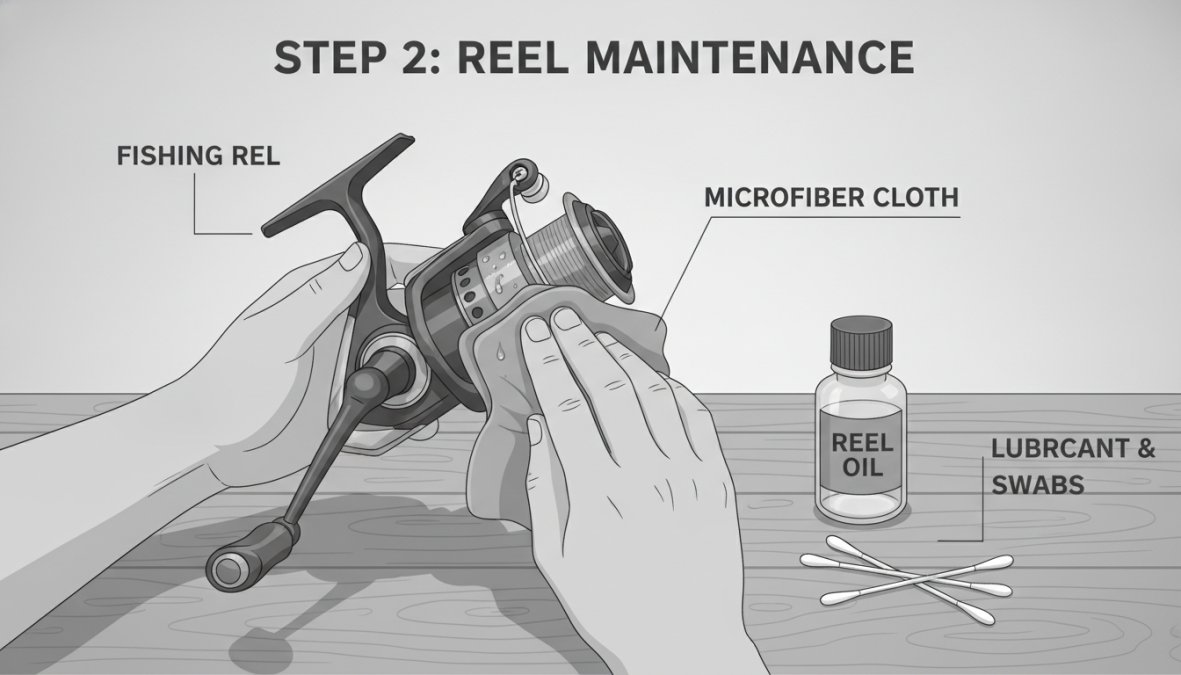
Step 2: Fishing Reel Maintenance and Lubrication
Rinsing keeps salt out. Lubrication keeps everything moving smoothly. You need both.
Inspecting the Drag System and Bearings
Before you lubricate, inspect what you're working with. Tighten the drag knob fully, the spool should not turn. Back off slowly until the spool turns with slight resistance. If the drag is jerky, uneven, or unresponsive, the drag washers might be worn or contaminated with salt.
Check the handle by rotating it slowly. It should turn smoothly without grinding or catching. Inspect the spool for white or green deposits (salt corrosion) or orange rust spots. Light surface corrosion can be cleaned and prevented with lubrication. Deep pitting means the spool might be compromised.
Applying the Right Lubrication
Less is more with reel lubrication. A common mistake is over-oiling, which attracts dirt and slows the reel. Light machine oil goes on the handle shaft, the drag knob threads, and the bail pivot point. A single small drop on each is enough. Rotate the handle a few times to work the oil in and wipe away excess.
For the spool shaft, apply a tiny drop of oil where the spool meets the reel body. Never oil the line guides or spool interior, these areas should stay clean and dry. Lubricate your reel every month during fishing season, or every three months if you fish less frequently.
Step 3: Preventing Rust on Fishing Tackle
Hooks, lures, and soft plastics corrode or degrade if stored improperly. Salt residue hardens on metal. UV exposure breaks down plastic. Moisture causes rust.
Removing Salt Residue from Saltwater Fishing
After a saltwater outing, rinse your tackle box and all loose tackle with freshwater using a spray bottle or bucket. For hooks and small metal lures, a quick freshwater rinse in a bucket works well. Swish them around, let the water drain, and dry them on a clean cloth. Soft plastic lures need a gentler approach, rinse them with freshwater and dry them immediately.
After rinsing, dry everything thoroughly. Lay tackle out on a clean cloth and let it air dry completely before returning it to the tackle box. If you notice white crusty deposits (salt corrosion), soak them in freshwater for 15-20 minutes, scrub gently with an old toothbrush, and dry immediately.
Drying and Protecting Hooks, Lures, and Soft Plastics
For hooks and small metal lures, store them in a dry compartment of your tackle box. If your box has a moisture problem, add a desiccant packet and replace it monthly.
For soft plastics, use individual zip-lock bags to keep them separated and protected from UV light. Store the bags in a dark compartment. Soft plastics exposed to direct sunlight degrade within weeks. In a dark bag, they last for years.
For larger lures and plugs, wrap them individually in cloth or store them in a dedicated lure box. Never store wet tackle, moisture causes rust and mold. If storing gear for the off-season, add extra desiccant packets to your tackle box and keep it in a cool, dry place away from direct sunlight.
Step 4: Storing Fishing Gear for Off-Season and Long-Term Care
Off-season storage determines whether your gear comes back next spring ready to fish or damaged and corroded.
Organizing Your Tackle Box and Tackle Organization
Sort your tackle by type: hooks in one compartment, soft plastics in another, metal lures in a third. Use dividers and label everything. Remove any tackle you haven't used in a year. For hooks, store them point-down in cork or foam. For soft plastics, keep them in labeled zip-lock bags, away from direct sunlight and heat. For metal lures, wipe each one with a slightly oily cloth before storing to prevent surface rust.
Winterization and Small-Space Storage Solutions
Before storing your reel for the season, perform a complete maintenance cycle: rinse thoroughly, dry completely, and apply a light coat of oil to all moving parts. For rods, store them horizontally on a rack or in a rod holder. Never store them vertically, as the weight of the reel stresses the reel seat. Loosen the drag knob completely before storing to relieve pressure on the drag washers.
For waders, clean them thoroughly, dry them completely, and store them flat or hung on a wide hanger. Never fold them tightly, as creases can crack the material. Store them in a cool, dry place away from direct sunlight.
Step 5: Inspecting Fishing Line and Advanced Maintenance
Fishing line is your only connection to the fish. A weak or damaged line costs you fish. Regular inspection catches problems before they become failures.
Testing Line Integrity and Spool Condition
Inspect your line monthly during fishing season. Look for discoloration, which indicates UV damage or age. Check for fraying or fuzzing, which means the line is breaking down. Feel the line between your fingers, it should be smooth and uniform. Rough spots or brittleness mean it's time to replace that spool.
Test the line's strength by pulling hard. Fresh line stretches slightly. Old or damaged line breaks with little resistance. Replace your line every season or every 100 hours of fishing, whichever comes first.
Maintenance for High-End Electronics and Eco-Friendly Cleaning
Never submerge electronic devices in water. A quick rinse with freshwater is fine for water-resistant devices, but don't soak them or use high-pressure water. After rinsing, dry electronics immediately with a soft cloth. Check battery compartments regularly, corroded batteries leak and damage electronics. Replace batteries annually.
For eco-friendly cleaning, skip harsh chemicals. Mild soap and water work for 99% of maintenance tasks. Diluted vinegar removes mineral deposits from freshwater fishing. Avoid bleach, acetone, or harsh solvents, which damage plastic and rubber components.
Common Mistakes to Avoid When Maintaining Outdoor Fishing Gear
Storing gear while wet. This is the number-one cause of corrosion and mold. Always dry gear completely before storing.
Using freshwater on saltwater gear without rinsing the reel. The reel is where salt does the most damage.
Over-oiling the reel. Excess oil attracts dirt, slows down the reel, and can make the drag unreliable.
Storing soft plastics in direct sunlight. UV light degrades plastic within weeks.
Leaving line on the spool for months without rotating it. Line that sits in the same position develops weak spots.
Storing the reel with the drag tightened. This compresses the drag washers permanently. Always loosen the drag before storing.
Troubleshooting Common Mechanical Failures
Reel handle is hard to turn. Salt or debris is stuck in the bearing. Rinse the reel thoroughly with freshwater, rotate the handle slowly while rinsing, and dry completely. If it still sticks, the bearing might be damaged and needs professional service.
Drag is jerky or uneven. Rinse the reel and apply a tiny drop of oil to the drag knob threads. If the problem persists, the drag washers need replacement.
Line is fraying or fuzzy. The line is degraded and needs replacement.
Guides are cracked or chipped. A cracked guide will fray your line and needs professional replacement.
Rod is bent or has a permanent curve. Store the rod horizontally for a few weeks to see if it straightens. A permanent curve means professional repair or replacement is needed.
Reel spool is stuck and won't rotate. Soak the reel in freshwater for 30 minutes, then try gently rotating the spool by hand. If it still won't move, professional service is needed.
Bail won't open or close smoothly. Debris or corrosion in the bail pivot. Rinse the area thoroughly, dry completely, and apply a tiny drop of oil to the pivot point.
Maintaining outdoor fishing gear doesn't require special knowledge or expensive tools. A simple routine, rinsing after saltwater trips, checking for wear monthly, and storing properly, prevents 90% of failures. The gear you buy today will still be fishing with you in a decade if you treat it right. Start with a basic maintenance kit, follow the steps in this guide, and your gear will reward you with years of reliable performance.
Frequently Asked Questions
How often should you clean your fishing gear to prevent corrosion?
Rinse your fishing rod, reel, and tackle with freshwater immediately after each outing, especially after saltwater fishing. For deeper maintenance of the fishing reel, clean and lubricate every 3-4 outings or monthly during heavy use. Off-season gear should be inspected and cleaned before storage to prevent rust and mold. Regular maintenance extends gear longevity significantly.
What's the best way to clean a fishing reel without damaging internal bearings?
Use a damp microfiber cloth with mild soap and lukewarm water to wipe the exterior. For the drag system and spool, apply a small amount of reel-specific lubricant rather than general-purpose oils. Avoid submerging the reel or using high-pressure water. Never use WD-40 on bearings, it attracts dirt. If mechanical failures occur, consult the manufacturer's guide before attempting internal disassembly.
How do you remove salt residue from fishing tackle after saltwater use?
Rinse all tackle, hooks, lures, and soft plastics thoroughly with freshwater immediately after fishing. For stubborn salt deposits, soak items in fresh water for 15-20 minutes, then gently scrub with a soft brush. Dry completely with a microfiber cloth to prevent rust. Store in a cool, dry location away from humidity. This prevents corrosion and maintains the integrity of your gear over time.
What supplies do you need for a basic fishing gear cleaning kit?
Essential items include: freshwater source, microfiber cloths, mild soap, soft-bristled brush, reel-specific lubricant, and damp cloth for wiping. For saltwater fishing, add a small soak container. Optional eco-friendly alternatives include vinegar solutions for light cleaning. Store these supplies in a compact tackle box or small container. Having a dedicated fishing gear cleaning kit ensures you're prepared after every outing.
This article was written using GrandRanker