

Table of Contents
- What Makes Essential Gear Different for Remote Overlanding
- Off-Grid Power Solutions for Overlanding
- Remote Camping Kitchen Essentials
- Overlanding Recovery Gear List
- Best Practices for Off-Road Navigation
- Water, First Aid, and Emergency Preparedness
- Vehicle Payload and Weight Distribution for Remote Travel
- Post-Trip Maintenance and Gear Inspection
Last Updated: August 16, 2026
What Makes Essential Gear Different for Remote Overlanding
Remote overlanding demands gear that works when you're hours from the nearest road and days from civilization. The difference between standard camping equipment and essential gear for remote overlanding trips isn't just durability, it's redundancy, self-sufficiency, and the ability to solve problems alone.
When you're overlanding in truly remote areas, your vehicle becomes your lifeline. A broken tent can mean sleeping in your truck. A failed water filter can lead to dehydration. A dead battery can trap you miles from help. This is why serious overlanders don't just pack lighter versions of car-camping gear, they build systems designed to work independently, fail gracefully, and keep you moving when things go wrong.
The gear you choose should reflect three core principles: First, every critical system needs a backup. Second, weight distribution matters because vehicle payload limits are real constraints. Third, post-trip inspection separates overlanders who last from those who burn out or break down.
At Leash the Wilderness, we've worked with overlanders who've learned these lessons the hard way. The gear we recommend isn't the lightest or the cheapest, it's what actually works when conditions turn brutal and you're far from help.
Off-Grid Power Solutions for Overlanding
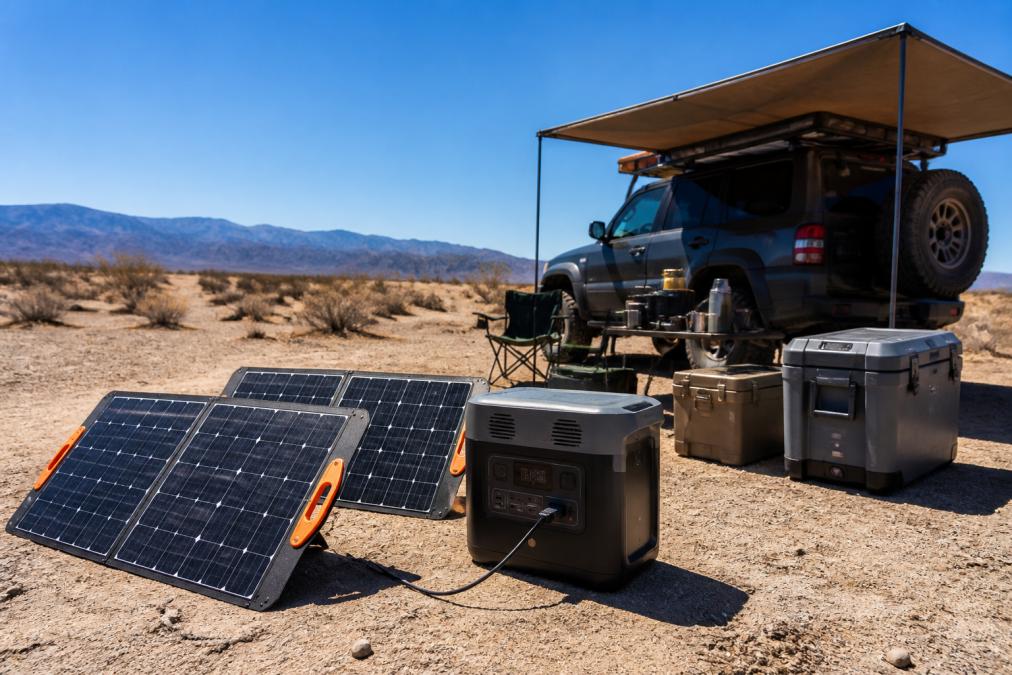
Remote overlanding without reliable power is like sailing without a compass. Your vehicle alternator charges while driving, but once parked, you need independent power to run lights, charge devices, refrigerate food, and operate critical equipment like satellite messengers.
Off-grid power solutions for overlanding fall into two categories: stored energy and generation. A portable power station stores energy from your vehicle's alternator or solar panels. Solar panels generate power during daylight. The best overlanders use both, creating a system that works in any weather condition.

A compact portable power station like the GaiaRay Portable Power Station 300W delivers 256Wh of LiFePO4 capacity, enough to run LED lights, charge phones and tablets, and power small devices for several days without recharging. For longer expeditions or larger power needs, the SOLARPLAY Q2501 Portable Power Station offers 2160Wh capacity, supporting refrigeration, power tools, and extended camp operations.

Dual battery systems in your vehicle provide the foundation. A secondary lithium battery charges while driving and powers camp loads separately from your starter battery. This prevents dead batteries that strand you. Many overlanders add a 100-200W solar panel array to recharge during camp days, creating a self-sustaining power loop.
The psychological benefit matters too. When your power system works reliably, you stop worrying about dead batteries and focus on the expedition itself.
Remote Camping Kitchen Essentials
Eating well on remote overlanding trips isn't a luxury, it's fuel for the mental and physical endurance required. A remote camping kitchen needs to function without running water, electricity, or resupply for weeks.
The Widesea Camping Cookware Set delivers complete outdoor cooking capability with a portable burner, cookware, utensils, and storage in one package. This all-in-one approach eliminates the decision fatigue of assembling a kitchen piecemeal and ensures nothing gets forgotten.
Essential remote camping kitchen components include:
- Fuel and burner system: Liquid fuel (white gas) or cartridge-based systems. Liquid fuel works in cold weather and remote areas where cartridges aren't available. Bring more fuel than you think you'll need, cooking for a week uses more than most people estimate.
- Cookware: Non-stick aluminum or stainless steel pots and pans rated for camp use. Lightweight matters when every pound counts against your vehicle payload limit.
- Water heating: A kettle or pot for boiling water for coffee, tea, and rehydrating meals. Hot drinks matter psychologically on cold mornings.
- Food storage: Bear-proof containers or bear bags if wildlife is present. Coolers with ice or ice packs for perishables. Dry storage for grains, pasta, and canned goods.
- Cleaning: Biodegradable soap, scrubbing pad, and a system for disposing of wastewater away from water sources.
Remote trips require meal planning that accounts for shelf stability. Fresh produce lasts days. Dried foods, canned goods, and freeze-dried meals last weeks. Many overlanders prep meals at home, vacuum-seal them, and freeze them before departure, they thaw during travel and stay fresh for several days.
Overlanding Recovery Gear List
Recovery gear keeps you moving when you get stuck. Mud, sand, rocks, and steep terrain will trap your vehicle eventually. Recovery gear lets you extract yourself without waiting for external rescue.
Essential overlanding recovery gear includes:
- Traction boards: Lightweight, portable devices placed under wheels to provide grip in sand, mud, or snow. Two sets (four boards) handle most single-vehicle extractions.
- Winch: A 8,000-12,000 lb winch mounted to your vehicle's front bumper provides mechanical pulling power. Paired with recovery straps, a winch extracts you from deep mud or steep terrain. Winches require proper electrical wiring and a secondary battery to operate reliably.
- Recovery straps: Heavy-duty nylon straps rated for your vehicle's weight, used to connect your winch to anchor points. Never use regular rope, recovery straps are engineered for the shock loads involved.
- Shackles: Heavy-duty steel shackles connect straps to anchor points. Carry redundancy, two shackles minimum.
- Air compressor: A portable air compressor lets you deflate tires for better traction in sand or mud, then reinflate when you're free. Tire pressure monitoring becomes critical when you're adjusting pressure multiple times per trip.
- Tire repair kit: Puncture repair plugs, patches, and a portable tire plug gun handle most punctures. Carry spares, remote areas mean no tire shops.
- Jack and jack points: A high-lift jack with proper base plates lets you raise your vehicle for tire changes or rock extraction. Know your vehicle's rated jack points before you need them.
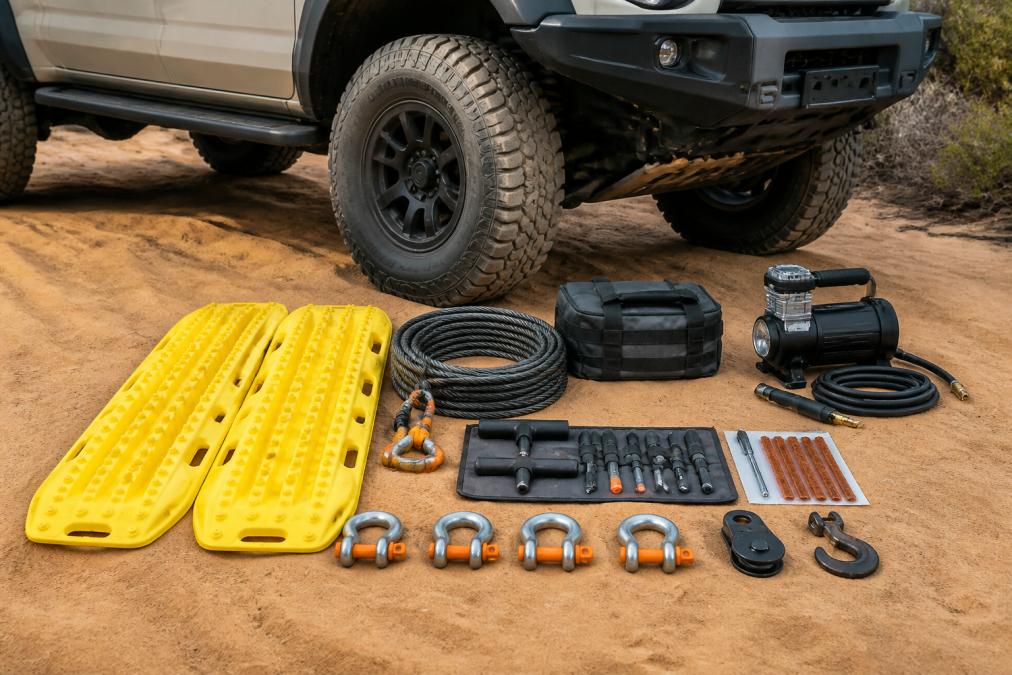
Recovery gear adds weight and cost, but it's the difference between a stuck day and a stuck trip. Most overlanders who carry recovery gear use it eventually.
Best Practices for Off-Road Navigation
Navigation in remote areas requires redundancy because electronics fail. A GPS unit dies. Satellite messengers lose signal. Paper maps don't need batteries.
Best practices for off-road navigation combine multiple systems:
- Primary navigation: A dedicated GPS unit or a smartphone app with offline maps downloaded. Modern GPS is accurate and reliable, but don't rely on it exclusively.
- Secondary navigation: Paper topographic maps and a compass. Learn to use them before you need them. Many overlanders never practice map navigation until they're lost, too late. Spend an afternoon with your maps and compass before departure.
- Satellite communication: A satellite messenger lets you send messages and SOS signals from areas with no cell coverage. This is your emergency lifeline in truly remote terrain.
- Route planning: Download detailed maps, mark waypoints, and share your route with someone outside the trip. If you don't check in, they know where to start looking.
- Terrain awareness: Understand the terrain you're entering. Steep canyon systems, river crossings, and technical rock sections require different navigation approaches than open desert.
Navigation redundancy isn't paranoia, it's acknowledging that single points of failure in remote areas have serious consequences. A dead GPS in the suburbs is an inconvenience. A dead GPS 80 miles from the nearest road is a problem.
Water, First Aid, and Emergency Preparedness
Water is survival. A person can last weeks without food but only days without water. Remote overlanding requires carrying water, filtering water, and having emergency protocols.
Water systems for remote overlanding include:
- Water storage: Jerry cans or collapsible water containers holding 5-10 gallons minimum. Calculate consumption as 1 gallon per person per day for drinking and cooking. Remote areas often lack water sources, carry more than you estimate you'll need.
- Water filtration: A portable water filter (gravity-fed or pump-based) lets you use found water sources. Filters remove bacteria and protozoa but not all viruses. Boiling water provides additional safety.
- Emergency water: Purification tablets or boiling capacity as backup if filters fail.
First aid in remote areas requires more comprehensive supplies than day-trip kits. You can't call an ambulance. Minor injuries become serious without proper care. A comprehensive first aid kit includes wound care, pain management, infection prevention, and evacuation supplies.
Emergency preparedness means knowing your vehicle's limitations. What's your GVWR (gross vehicle weight rating)? How much payload capacity do you actually have after fuel, water, and gear? Weight distribution affects handling and off-road performance. An overloaded vehicle handles poorly and breaks components faster.
Vehicle Payload and Weight Distribution for Remote Travel
Your vehicle has a maximum weight it can safely carry. This isn't a suggestion, it's an engineering limit. Exceeding GVWR (gross vehicle weight rating) changes how your vehicle handles, stresses components, and affects safety.
Payload capacity = GVWR minus curb weight (vehicle weight empty). A truck rated at 6,000 lbs GVWR with 4,500 lbs curb weight has 1,500 lbs payload capacity. Add a 500 lb roof rack, 800 lbs of gear, and 300 lbs of water, and you're over capacity.
Weight distribution matters as much as total weight. Heavy gear mounted high (roof racks, roof tents) raises your center of gravity and affects handling. Heavy gear mounted low (under-vehicle storage, battery boxes) improves stability. Distribute weight toward the vehicle's center, not all in the rear, for balanced handling.
Many overlanders discover payload limits the hard way: tires wear prematurely, suspension components break, and fuel economy plummets. Lighter gear choices and better organization prevent these problems.
Post-Trip Maintenance and Gear Inspection
Remote overlanding stresses your vehicle and gear. Post-trip maintenance separates overlanders who sustain the lifestyle from those who burn out equipment and move on.
Post-trip inspection checklist:
- Vehicle undercarriage: Inspect for damage, bent components, and fluid leaks. Remote terrain damages things you don't see until you look.
- Suspension and steering: Check for play, bent parts, and worn bushings.
- Tires: Inspect sidewalls for damage, check tread depth, and look for puncture repairs that might fail next trip.
- Fluids: Check and top off engine oil, coolant, brake fluid, and differential fluid. Remote driving generates heat and stress.
- Electrical system: Test battery voltage, inspect wiring for damage, and verify dual battery system performance.
- Gear inspection: Check water filters for clogs, inspect recovery gear for damage, test power stations and solar panels, and verify first aid supplies are complete.
Sustainable overlanding means maintaining your vehicle and gear between trips. This prevents failures during future expeditions and extends equipment life significantly.
Remote overlanding demands preparation that separates casual campers from serious expedition travelers. The essential gear for remote overlanding trips, power systems, recovery equipment, navigation tools, and water filtration, creates the self-sufficiency required when civilization is hours away. At Leash the Wilderness, we stock field-tested kits like the Camp Cookware & Burner and portable power solutions designed for exactly this purpose. Start with a clear understanding of your vehicle's payload limits, build redundancy into critical systems, and commit to post-trip maintenance. The gear you choose today determines whether your next remote expedition succeeds or becomes a story about what went wrong.
Frequently Asked Questions
What are the most important items for essential gear on a remote overlanding trip?
Start with power (portable power station), water filtration, first aid kit, recovery gear (traction boards and winch), navigation tools (GPS and paper maps), tire repair kit, and camp kitchen essentials. Your specific needs depend on trip length and vehicle type, but these categories cover survival, self-rescue, and basic comfort. Redundancy matters—carry backup navigation and communication devices since you won't have cell service.
How much power capacity do you need for remote camping and off-grid overlanding?
A 256Wh portable power station handles phones, lights, and small devices for 2-3 days. For longer trips or larger groups, 2160Wh capacity supports refrigeration, laptops, and vehicle accessories. Calculate your daily draw: a laptop uses 50Wh, a fridge 200Wh daily. Add 30% buffer for weather and inefficiency. Solar panels extend capacity indefinitely if you have sun exposure during your trip.
What's the difference between casual weekend gear and serious remote overlanding equipment?
Remote overlanding gear prioritizes redundancy, durability, and self-sufficiency. Weekend gear often assumes you're within reach of help; remote gear assumes you're not. You need satellite messengers instead of cell phones, dual battery systems instead of single batteries, water filtration instead of bottled water, and recovery equipment instead of roadside assistance. Field-tested gear survives actual abuse, not just marketing claims.
How do you organize and store gear efficiently in a vehicle for long remote trips?
Use the rule: frequent-access items in easy reach (first aid, navigation), power systems secured but accessible, recovery gear mounted externally or in dedicated compartments, and food/water distributed to avoid exceeding vehicle payload limits. Check your vehicle's GVWR—Gross Vehicle Weight Rating—to ensure you don't overload. Organize by function: power station, kitchen, recovery, navigation, medical. This prevents scrambling when you need something fast.
What emergency communication gear should you carry for truly remote areas?
A satellite messenger device is non-negotiable for off-grid overlanding where cell coverage doesn't exist. It sends texts and SOS signals via satellite. Pair it with a paper map, compass, and offline GPS unit. Some overlanders also carry a personal locator beacon (PLB) for life-threatening emergencies. These tools ensure help can find you even if your vehicle fails—something a phone cannot do in remote areas.
How do you prevent gear failure on long remote trips?
Test everything before departure—power stations, water filters, camp stoves, tire repair kits, and navigation tools. Carry duplicates of critical items: two water filters, two navigation systems, extra batteries, and backup first aid supplies. Inspect gear after each trip to catch wear before the next expedition. Field-tested gear from reputable makers reduces failure risk, but inspection and redundancy are what save trips when something breaks miles from help.
This article was written using GrandRanker