

Table of Contents
- What Makes Fishing Tackle Durable for Rugged Environments
-
Top Durable Fishing Tackle Options for Heavy-Duty Use
- 1. OKUMA AC Series Spinning Reel: Metal Body Built for Saltwater and Freshwater
- 2. Power Pro SSV2 Braided Fishing Line: Zero-Stretch Sensitivity for Big Fish
- 3. Catfishing Circle Hooks: Self-Setting Design for Reliable Hookups
- 4. Steel Wire Leaders: Bite-Proof Protection for Toothy Species
- 5. Heavy-Duty Sinker Kits: Reliable Weight for Current and Bottom Fishing
- Saltwater Fishing Gear Maintenance for Extended Lifespan
- How to Pack Fishing Gear for Backpacking in Rugged Terrain
- Durability Comparison Table: What to Look For
- Field Repair and Emergency Maintenance in Remote Locations
- Common Mistakes That Shorten Tackle Lifespan
- Conclusion
Last Updated: August 14, 2026
Get the lures without the markup. Browse Tackle Under $25 — crankbaits, spoons, jigs, soft plastics and terminal tackle, most shipping free with no minimum order.
What Makes Fishing Tackle Durable for Rugged Environments
When you're miles from the truck on a remote river or saltwater flat, your gear performs or fails. Durable fishing tackle comes down to three core factors: material selection, tensile strength, and environmental resistance. A metal-body spinning reel handles saltwater intrusion where plastic bodies crack. Braided line with zero stretch delivers sensitivity and strength without the wear-and-tear that monofilament suffers in current. Circle hooks self-set under load, reducing gut hooks and wasted time on the bank.

At Leash the Wilderness, we hand-pick tackle because it survives real conditions. Every reel, line, and terminal tackle item we carry has proven itself in rock, mud, salt, and weather.
Material Construction and Corrosion Resistance
Metal bodies outperform plastic in saltwater and freshwater alike. A CNC-machined metal spool delivers smooth line output without twist, while reinforced rocker arms handle big fish pressure without flex. Stainless steel construction is the standard for components exposed to saltwater. Steel wire leaders resist bite-offs from pike and muskie.
Braided fishing line eliminates the stretch that monofilament suffers, meaning less line degradation over time. Zero-stretch sensitivity lets you feel every snag and bite, critical when fishing heavy cover or current. Braided line resists abrasion better than monofilament when dragged across rocks or structure.
Tensile Strength and Impact Resistance
A 12kg drag system on a spinning reel gives you 26.4 pounds of drag pressure, enough to turn a big fish's head without snapping the line. Impact resistance matters when gear hits rocks during transport. Heavy-duty sinker kits made from lead or tungsten withstand repeated casting without deforming. A 40L waterproof tackle backpack with 600D Oxford cloth construction absorbs impact and resists punctures.
The real test is field performance: a reel that survives a drop on concrete and still cranks smooth is worth the investment.
Top Durable Fishing Tackle Options for Heavy-Duty Use
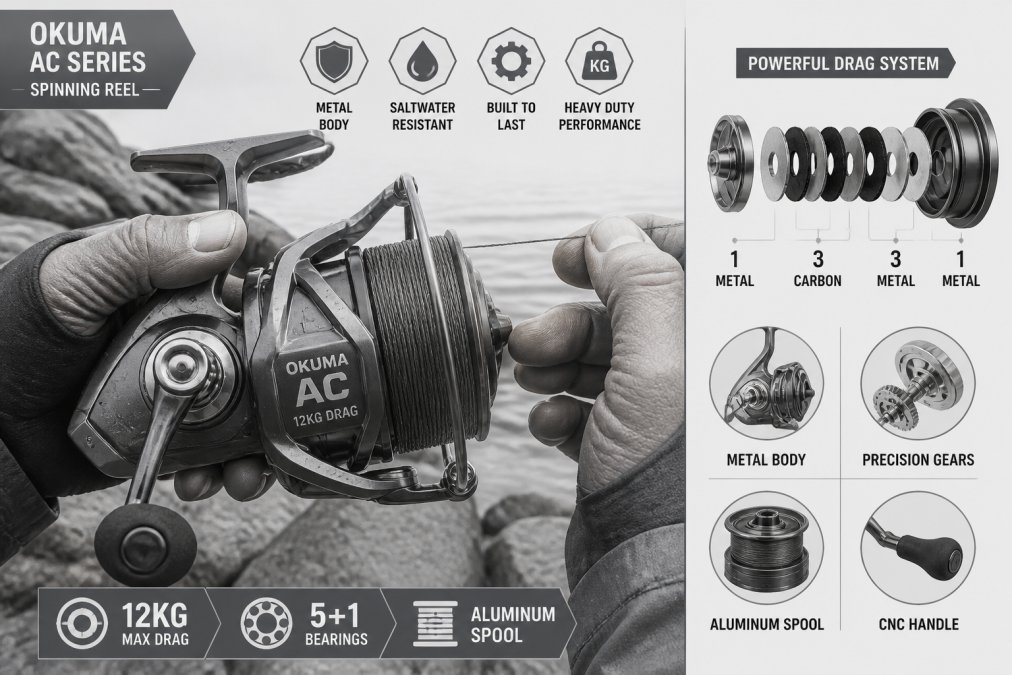
1. OKUMA AC Series Spinning Reel: Metal Body Built for Saltwater and Freshwater
The OKUMA AC Series is built for anglers who demand reliability where plastic reels fail. The metal body resists corrosion, the CNC-machined spool delivers smooth line output, and the 12kg drag system provides stopping power for bass, pike, catfish, and inshore saltwater species. A 5.2:1 gear ratio gives solid cranking power with fast retrieve. Available in six sizes from 2000 to 7000, you can match the reel to your rod and target species.
Purchase the OKUMA AC Series Spinning Reel here.
2. Power Pro SSV2 Braided Fishing Line: Zero-Stretch Sensitivity for Big Fish
Power Pro SSV2 delivers zero-stretch sensitivity and strength to stop a big fish cold. The USA PE Spectra braid has an ultra-thin diameter relative to its strength, 80-pound test feels like 30-pound monofilament. Three hundred yards gives you enough line for deep water and long casts. Braided line resists abrasion better than monofilament when dragged across rocks, which is why catfish and saltwater anglers prefer it.
Purchase Power Pro SSV2 Braided Fishing Line here.

3. Catfishing Circle Hooks: Self-Setting Design for Reliable Hookups
Circle hooks rotate and set themselves in the corner of a fish's mouth automatically. This self-setting design means fewer gut hooks, more landed fish, and less time re-rigging on the bank. The octopus-style design works in saltwater and freshwater with cut bait, live bait, and stink bait rigs. Sizes 1/0 through 14/0 cover everything from channel cats to flatheads.
Purchase Catfishing Circle Hooks here.
4. Steel Wire Leaders: Bite-Proof Protection for Toothy Species
Steel wire leaders resist the sharp teeth of pike, muskie, and barracuda that cut through monofilament on the first bite. The steel wire construction with integrated swivels prevents twist and bite-offs.
Purchase Anti-Bite Steel Fishing Line Leaders here.
5. Heavy-Duty Sinker Kits: Reliable Weight for Current and Bottom Fishing
Pyramid sinkers anchor in current and soft bottoms where round sinkers roll and drag. A 4-pack of pyramid sinkers covers 1oz through 4oz. Bullet sinkers cut through current cleanly, keeping your bait in the strike zone longer. A 30-piece kit with five sizes from 1/2oz to 3oz gives you flexibility to adjust weight without changing your entire rig.
Purchase the 30-Piece Fishing Sinker Kit here or the Pyramid Fishing Sinker Weights 4-Pack here.
Saltwater Fishing Gear Maintenance for Extended Lifespan
Saltwater intrusion is the primary threat to gear longevity. Salt crystals corrode metal, degrade line, and accelerate wear on moving parts. The difference between a reel that lasts five years and one that lasts fifteen is maintenance discipline.
Rinsing and Drying After Saltwater Use
Rinse your entire reel with fresh water immediately after use. Flush water through the drag system, rocker arm, and bail. Dry the reel thoroughly with a soft cloth, paying special attention to the spool and where it meets the body. Rod guides need the same attention, salt accumulates inside guides and on guide feet.
Reel Drag System Care
The drag system is the most critical moving part on a reel. Saltwater and sand infiltrate the drag washers, causing the drag to stick or slip unpredictably. Inspect your drag regularly by setting it to moderate tension and slowly turning the handle. If the drag is sticky, remove the spool and inspect the drag washers for salt crystals or sand. Store your reel with the drag backed off slightly.
Rod Guide and Line Inspection
Rod guides accumulate salt, sand, and line debris. Inspect guides regularly for cracks or pitting. Clean guides with a soft brush and fresh water. Inspect your line regularly for fraying, discoloration, or stiffness. Saltwater degrades monofilament faster than fresh water, so expect to replace line more frequently if you fish salt.
How to Pack Fishing Gear for Backpacking in Rugged Terrain
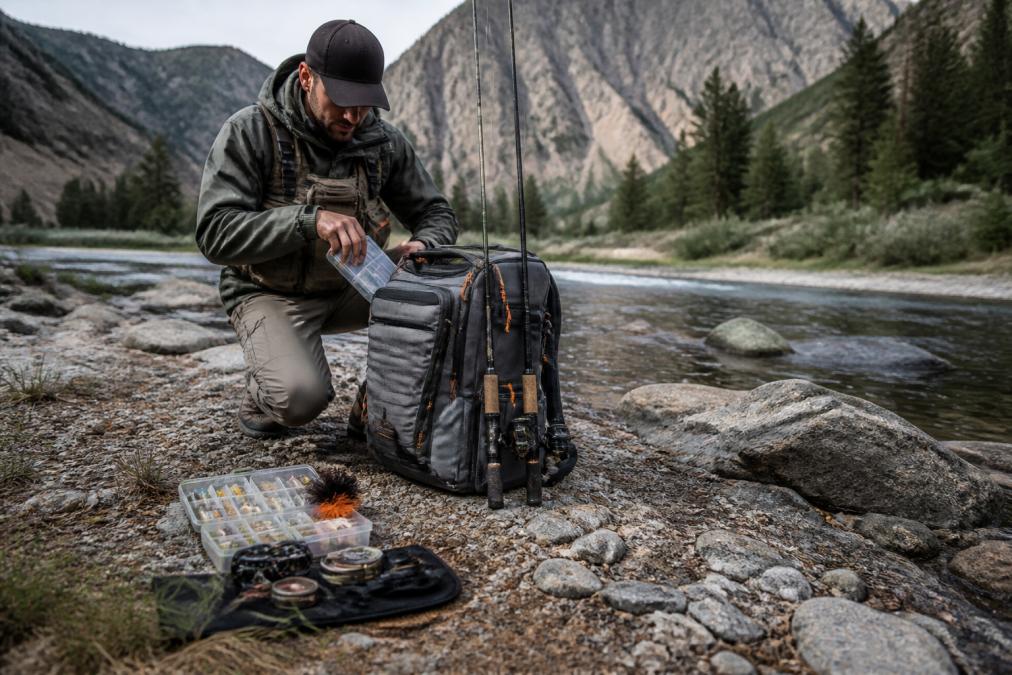
Transport is where most anglers lose gear. A rod snapped during packing, a reel damaged by impact, tackle boxes crushed under other gear, these are preventable losses if you pack strategically.
Choosing the Right Tackle Storage Solution
A 40L waterproof tackle backpack is the foundation of a mobile fishing setup. The backpack should have integrated rod holders so your hands stay free during the hike. Four tackle boxes included in the backpack keep your hooks, sinkers, and terminal tackle organized and protected. The 600D Oxford cloth construction absorbs impact and resists punctures.

Protecting Rods During Transport
Rod tubes or rod sleeves protect your rod during transport. A simple PVC tube with foam padding costs less than replacing a snapped rod blank. Alternatively, use a dedicated rod holder that integrates into your backpack. Never pack your rod horizontally at the bottom of your backpack with other gear on top.
Waterproof Organization for All-Weather Conditions
Waterproof tackle boxes keep your terminal tackle dry even if your backpack gets submerged. A 3600 tackle box holds hundreds of hooks, sinkers, and small lures without taking up much space. Organize your tackle by type: hooks in one box, sinkers in another, lures in a third. The rain cover on your backpack is critical for backcountry trips where weather changes fast.
Durability Comparison Table: What to Look For
| Component | Material | Corrosion Resistance | Best Use | Durability Trade-Off |
|---|---|---|---|---|
| Spinning Reel | Metal body, CNC spool | High in freshwater, moderate in saltwater | Freshwater and light saltwater | Requires rinsing after saltwater use |
| Braided Line | PE Spectra braid | Excellent; resists UV and abrasion | Heavy cover, current, saltwater | More visible to fish in clear water |
| Circle Hooks | High-carbon steel | Good; bend rather than break | All species, all baits | Less effective on short strikes |
| Steel Wire Leaders | Stainless steel | Excellent; resists bite-offs | Toothy species (pike, muskie) | Stiff; less natural presentation |
| Pyramid Sinkers | Lead or tungsten | Good; won't deform | Current and soft bottoms | Check local lead regulations |
| Rod Holders | Stainless steel | Excellent; rust-proof | Bank and boat fishing | Ground spike requires firm soil |
Field Repair and Emergency Maintenance in Remote Locations
When you're hours from the truck, field repairs keep you fishing. A broken rod guide, frayed line, or stuck drag can end your session if you don't know how to fix it on the bank.
Quick Fixes for Broken Rod Guides
A broken guide will fray your line and eventually snap it. If you break a guide in the field, you can wrap the line around the rod blank and bypass the broken guide temporarily. A better solution is to carry a spare guide and some epoxy. Remove the broken guide, clean the rod blank, apply epoxy, and slide the new guide into place.
Line Replacement on the Bank
If your line frays or breaks, you can re-spool in the field if you carry extra line. Most anglers keep a small spool of braided line in their tackle backpack. Tie the new line to the old line with an arbor knot, then crank the new line onto the reel. This takes ten minutes and gets you back on the water.
Reel Maintenance in the Field
If your drag becomes sticky or inconsistent, remove the spool and inspect the drag washers for sand or salt. Wipe them clean with a soft cloth and fresh water. If the drag remains problematic, loosen the drag tension slightly. A reel that won't crank usually means sand or salt is jamming the gears. Spray fresh water into the reel and work the handle gently.
Common Mistakes That Shorten Tackle Lifespan
Storing reels with the drag fully tightened. A fully tightened drag puts constant pressure on the washers, accelerating wear. Store your reel with the drag backed off slightly.
Leaving salt-soaked gear unwashed overnight. Salt crystallizes as water evaporates, making corrosion worse. Rinse your reel and rod immediately after saltwater use.
Packing rods horizontally with weight on top. A bent rod is a weak rod. Pack rods vertically or in a dedicated rod tube.
Using monofilament leaders on toothy fish. One bite and your lure is gone. Steel wire leaders are the only sensible choice for pike, muskie, and barracuda.
Overpacking your tackle backpack. An overloaded backpack shifts your center of gravity and increases fall risk. Pack only what you'll use in a day.
Ignoring a sticky drag. A sticky drag will eventually fail completely. Clean and inspect your drag regularly, especially after saltwater use.
Storing line in direct sunlight. UV exposure degrades monofilament and braided line. Store your tackle backpack in a cool, dark place when not fishing.
Durable fishing tackle for rugged environments isn't about buying the most expensive gear. It's about understanding what makes gear last: metal construction over plastic, braided line over monofilament, stainless steel hardware, and maintenance discipline. The tackle we recommend at Leash the Wilderness has proven itself in real conditions. Start with the OKUMA AC Series Spinning Reel and Power Pro SSV2 Braided Line, add circle hooks and steel wire leaders for your target species, and invest in a 40L waterproof tackle backpack. These choices give you a foundation that lasts years of hard use in rugged environments.
Ready to outfit your next backcountry or saltwater trip with gear that won't quit? Leash the Wilderness carries field-tested tackle engineered for real conditions. The OKUMA AC Series, Power Pro braided line, and our selection of durable rod holders and tackle storage solutions are built to survive the abuse that separates casual anglers from serious adventurers. Explore our complete fishing tackle collection and build your own kit with LTW bundles. Shop all bundles and get wilderness-ready equipment that performs when the road ends.
Frequently Asked Questions
What features make fishing gear durable for saltwater use?
Saltwater durability depends on corrosion-resistant materials like stainless steel, zinc alloy, and anodized aluminum that resist saltwater intrusion. Look for marine-grade coatings, sealed reel drag systems, and braided lines with UV-stable construction. Metal bodies and CNC-machined spools resist wear and tear better than plastic components. The OKUMA AC Series Spinning Reel uses a reinforced metal body specifically designed for saltwater environments, making it a solid choice for inshore fishing where corrosion resistance matters most.
How often should you replace fishing line used in rocky areas?
Inspect your line after every outing in rocky terrain. Replace it immediately if you notice fraying, discoloration, or reduced tensile strength. In heavy-use conditions with frequent abrasion, change line every 5-10 outings or monthly during peak season. Braided lines like Power Pro SSV2 resist abrasion better than monofilament and last longer in rocky environments. Store line away from direct sunlight (UV-stable lines fade slower), and rinse after saltwater use to prevent degradation from salt crystals.
What is the most durable fishing line for heavy-duty saltwater and freshwater use?
Braided fishing lines offer superior durability because they have higher tensile strength and zero-stretch sensitivity compared to monofilament. Power Pro SSV2 Braided Fishing Line delivers zero-stretch performance and handles heavy freshwater and saltwater applications. The 300-yard spool in 10-80lb test options provides strength-to-weight ratio advantages, meaning thinner diameter for the same pound rating. This reduces visibility while increasing abrasion resistance. Braided lines maintain integrity longer in rocky areas and resist saltwater intrusion better than single-strand alternatives.
How do you maintain fishing tackle in harsh environments?
After every saltwater outing, rinse your reel, rod guides, and line with fresh water to remove salt crystals that cause corrosion. Dry thoroughly before storage. Inspect the reel drag system monthly and apply light reel oil if needed. Check rod guides for cracks or corrosion, and replace damaged guides immediately to prevent line wear. Store gear in a cool, dry location away from direct sunlight. Use a waterproof tackle backpack with weather-resistant features to protect terminal tackle during transport. Regular maintenance protocols extend gear longevity significantly and prevent saltwater intrusion into sealed components.
Is durable fishing gear overkill for casual weekend anglers?
Not necessarily. Durable gear performs better and lasts longer, which saves money over time even for occasional anglers. A corrosion-resistant reel and braided line handle unexpected weather, rocky terrain, and heavy fish better than budget alternatives. You'll spend less on replacements and repairs. Heavy-duty tackle also builds confidence in remote locations where failure isn't an option. The Catfish Angler Starter Kit combines a durable reel, braided line, and organized tackle storage, designed for serious use but reliable enough for any angler who wants gear that won't fail mid-trip.
This article was written using GrandRanker