

Table of Contents
- Why Waterproof Gear Matters for Multi-Day Hunts
- Best Budget Rain Gear for Hunting: Waders and Boots
- How to Layer for Backcountry Hunting Success
- Essential Gear for Multi-Day Hunting Trips
- Waterproof Hunting Clothing Maintenance for Extended Trips
- Key Durability Features: Denier, Seams, and DWR Coatings
- Quiet Waterproof Fabrics for Stalking
- Field-Tested Gear That Won't Fail You
Last Updated: August 17, 2026
Multi-day hunting trips demand gear that doesn't fail when conditions turn wet. Rain, morning fog, river crossings, and sweat accumulation all conspire to soak you through if your waterproof gear isn't built for the punishment. This guide covers affordable waterproof gear for multi-day hunting trips, the base layers, shells, waders, and field maintenance practices that keep you functional when the forecast turns grim.
Why Waterproof Gear Matters for Multi-Day Hunts
Staying dry isn't luxury, it's survival. Hypothermia kills faster than hunger, and wet gear accelerates heat loss dramatically. On a three-day hunt, you'll encounter multiple moisture sources: morning dew soaking your legs, rain showers lasting hours, and sweat pooling inside your jacket as you climb elevation. Standard cotton absorbs water and holds it against your skin. Waterproof membranes and DWR coatings shed water before it penetrates, while breathability prevents the suffocating sweat buildup that turns your gear into a sauna.
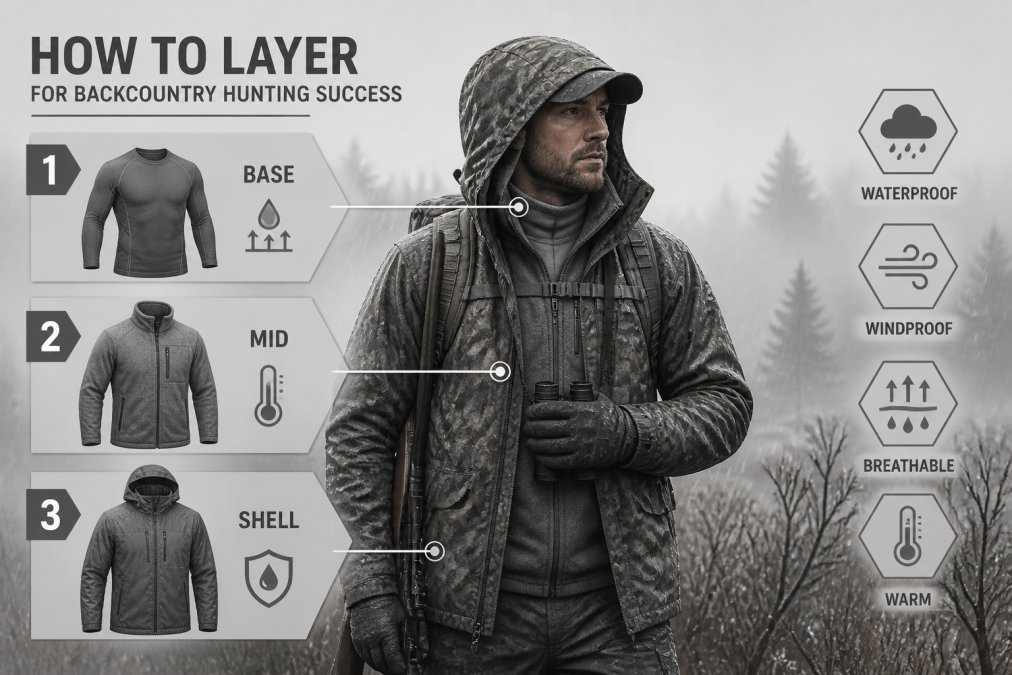
A hydrostatic head rating of 10,000mm or higher means your jacket sheds hard rain without leaking at stress points like seams and zipper runs. Taped seams eliminate the pinhole leaks that single-layer construction allows. Weight matters on multi-day trips, ultralight waterproof fabrics keep your pack under control while delivering the same protection as heavier alternatives.
Best Budget Rain Gear for Hunting: Waders and Boots
Waterproof Chest Waders with Integrated Boots
Waders are non-negotiable for hunting in water or extreme wet conditions. Waders with integrated boots eliminate stitched seams where water sneaks in. Two-ply nylon with PVC coating creates a fully waterproof barrier, and the integrated boot design means no leak points at the foot-to-wader junction. Anti-slip PVC outsoles grip slippery riverbeds and uneven terrain, critical when navigating rocky creek beds in low light.

Adjustable H-back suspenders and waist belts accommodate different body shapes, with front pockets for licenses and essentials. These waders excel on multi-day trips where you're crossing water multiple times daily. Durability means they'll outlast cheaper alternatives, and vinyl patch kits address small punctures without requiring replacement.
Tactical Waterproof Hiking Boots
Waterproof leather boots rated for outdoor work deliver protection for dry-land hunts where you're navigating brush, rock, and uneven terrain. Military-grade construction means reinforced toe and sole protection against impacts and punctures. Leather breathes better than synthetics, reducing heat buildup during active hunting.

For all-season tactical hunting, all-season tactical hiking boots with waterproof construction and breathable mesh lining bridge summer and winter use. Scratch-resistant Oxford cloth uppers withstand brush and rock, while the rubber and EVA sole delivers durability and all-day comfort. Above-ankle coverage provides support on uneven terrain. Available in khaki, black, and army green.

How to Layer for Backcountry Hunting Success
Layering is the foundation of staying dry on multi-day hunts. Each layer serves a specific function: the base layer wicks moisture away from your skin, the mid-layer traps warmth, and the outer shell protects against wind and rain.
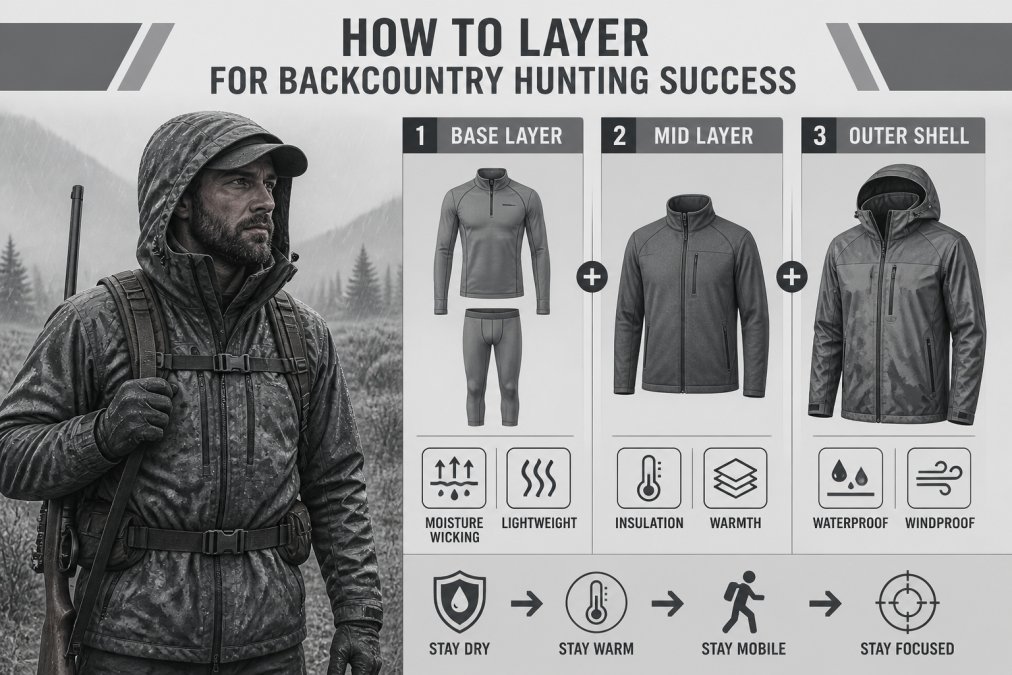
Start with a moisture-wicking base layer made from synthetic materials or merino wool. Avoid cotton, it absorbs sweat and stays wet. On cold mornings, add a fleece or wool mid-layer for insulation. The outer shell is your storm protection. A waterproof jacket with taped seams and a hydrostatic head rating above 10,000mm sheds rain without leaking at stress points. Pit zips allow temperature regulation without removing the jacket. Quiet fabric technology is critical for stalking: noisy synthetic shells crackle with every movement, alerting game. Look for shells with soft, quiet outer materials.
Ventilation prevents condensation buildup inside your shell. A jacket with pit zips and breathable membrane technology balances waterproofing with vapor transmission.
Essential Gear for Multi-Day Hunting Trips
Shelter and Sleep System
A four-season waterproof tent is essential for multi-day hunts. The Naturehike Dune 7.6 camping tent handles 2-4 people and withstands rain and snow. Reinforced poles, ripstop fabric, and a strong rainfly shed precipitation without leaking. Ventilation pockets prevent condensation buildup, and a vestibule area protects muddy boots and equipment.
Sleep comfort directly impacts hunt performance. A down sleeping bag rated for cold temperatures keeps you warm even when nighttime temperatures drop well below freezing. The mummy-style design minimizes heat loss, and the draft collar seals warmth around your head and shoulders.
Get off the ground with an ultralight inflatable camping mattress that inflates in 30 seconds. The 40D nylon with TPU backing resists water and punctures, packing to just 26x10x10cm. A full-length sleeping surface (190x60cm) supports comfortable rest without adding bulk. Vinyl patch kits handle small tears.
Cooking and Power
Cook complete meals in the backcountry with a nesting camping cookware set that includes pots, pans, utensils, and a portable burner. The stackable design packs small, and lightweight construction keeps your pack manageable.
Power your devices with a portable power station delivering 300W or 500W output from a LiFePO4 battery. Multiple charging methods, solar, AC, and car outlet, keep your power station topped up between camps. Multiple output ports charge phones, headlamps, and other essentials. The built-in LED lighting serves as an emergency backup.
Waterproof Hunting Clothing Maintenance for Extended Trips
Waterproof gear degrades if you don't maintain it. DWR coatings wear away with use and washing. On multi-day trips, extend DWR performance by avoiding unnecessary contact with vegetation and keeping your jacket clean. Dirt and oils break down the coating faster than water alone.
When you return from a hunt, hang your gear to air dry rather than stuffing it in a closet. Moisture trapped in fabric promotes mold and mildew growth. Wash waterproof gear in cold water using a gentle detergent designed for technical fabrics. Avoid fabric softeners and bleach, they damage the waterproof membrane. After washing, tumble dry on low heat to reactivate the DWR coating.
Inspect taped seams for peeling or separation. If seams are separating, a seam sealer kit restores the waterproof seal, extending your jacket's life by years.
Key Durability Features: Denier, Seams, and DWR Coatings
Understanding fabric construction helps you identify gear that survives multi-day hunts. Denier measures fabric weight; higher denier means thicker, more durable material. For hunting, 600-800 denier offers a balance between durability and weight.
Taped seams are non-negotiable for waterproof gear. Single-stitched seams leak because water follows the thread line through fabric. Taped seams, where a waterproof tape covers the stitched line, eliminate this leak path. Every stress point (armholes, collar, zipper runs) should be taped.
DWR coatings create the initial water-repellent layer. When DWR is working, water beads and rolls off fabric rather than soaking in. Over time, DWR wears away through friction and UV exposure. Refreshing the DWR extends your gear's effective life.
Hydrostatic head rating measures water pressure resistance. A 10,000mm rating means the fabric withstands 10,000mm of water column pressure before leaking. For hunting, 10,000mm is the practical minimum. Ratings above 20,000mm handle torrential rain and sustained immersion.
Quiet Waterproof Fabrics for Stalking
Noise discipline separates successful hunts from blown opportunities. Standard synthetic shells crackle and crinkle with every movement, broadcasting your presence to game. Quiet fabric technology, soft outer materials that move silently through brush, is essential for stalking hunts.
Soft-shell jackets use flexible fabrics that bend without noise, unlike rigid shells that rustle loudly. The tradeoff is reduced waterproofing; soft shells handle light rain well but fail in downpours. For stalking hunts where you're moving constantly, soft shells often outperform hard shells because silence matters more than absolute waterproofing.
Hard shells with quiet outer materials (like brushed polyester or microfiber) dampen noise while maintaining waterproofing. Articulated knees and elbows on pants and jackets reduce noise by allowing natural movement without fabric bunching or rustling. Test gear by moving through brush before purchase.
Field-Tested Gear That Won't Fail You
Real-world testing separates reliable gear from marketing hype. Gear that survives multi-day hunts in harsh conditions proves its durability through performance, not promises.
Look for gear with repairability in mind. Waders with integrated boots can be patched in the field using vinyl repair kits. Sleeping bags with quality zippers can be mended with duct tape if necessary. Shells with pit zips allow emergency ventilation if the main fabric fails. Warranty coverage indicates manufacturer confidence; many outdoor brands offer multi-year warranties on stitching and seams.
Customer reviews from hunters (not casual users) reveal real-world performance. Look for feedback from people who've used gear on extended trips in difficult conditions.
Affordable waterproof gear for multi-day hunting trips doesn't require premium pricing, it requires smart selection and maintenance. Start with a quality waterproof shell and taped-seam waders, layer with breathable mid-layers, and maintain your gear to extend its life. At Leash the Wilderness, we stock tested gear built for real abuse. Shop our selection of waterproof hunting apparel, waders, and sleep systems to get field-ready for your next hunt.
| Gear Category | Key Feature | Best For | Field Repairability |
|---|---|---|---|
| Chest Waders | Integrated boots, no stitched seams | Water crossings, marshland hunting | High, vinyl patch kits work in field |
| Tactical Boots | Waterproof leather, scratch-resistant uppers | Dry-land hunts, brush terrain | Medium, sole replacement requires shop |
| Rain Shell | Taped seams, hydrostatic head 10,000mm+ | Storm protection, stalking | Medium, seam sealing kits restore function |
| Sleep System | Down insulation, mummy-style design | Cold-weather camps | Medium, patch kits handle small tears |
| Cooking Gear | Nesting design, lightweight materials | Multi-day meals, pack weight control | High, simple design survives field abuse |
Frequently Asked Questions
What features should I look for in affordable waterproof hunting gear?
Prioritize taped seams, hydrostatic head rating (at least 5,000mm for rain protection), and DWR (durable water repellent) coatings. Check denier ratings, higher denier fabrics resist abrasion better on rough terrain. For waders and boots, look for integrated construction with no stitching, which eliminates leak points. Breathability matters on multi-day trips; moisture vapor transmission rate prevents condensation buildup inside your gear. Quiet fabrics for stalking and articulated knees for movement are bonuses at any price point.
How do I maintain waterproof hunting clothing for multi-day trips?
After each day, hang gear to air dry in ventilated spaces, never sealed bags that trap moisture. Wipe seams and zippers with a soft cloth to remove dirt and salt deposits. Once home, hand wash in cool water with mild detergent, then air dry completely before storage. Reapply DWR coating annually or when water stops beading on fabric. Store in a cool, dry place away from direct sunlight. For field repairs on multi-day hunts, pack waterproof tape and seam sealer to patch small tears or seam failures before they spread.
Is it possible to find quiet, waterproof hunting gear on a budget?
Yes. Quiet fabrics like brushed nylon and soft-shell materials are available at budget-friendly price points. The key is avoiding crinkly plastic-lined rain gear, which produces noise during stalking. Look for nylon with PVC or TPU backing rather than plastic film. Many affordable options sacrifice premium features like pit zips or advanced moisture management, but they still deliver waterproofing and quiet movement. Prioritize jacket and pant noise over bells and whistles, that's where it matters most for hunting success.
What is the best budget rain gear for hunting?
Waterproof chest waders with integrated boots deliver the best value for water-heavy hunts, they protect your entire lower body and eliminate seam leak points. For dry-land hunting, a waterproof nylon jacket with taped seams and a DWR coating works well. Pair either with waterproof tactical boots featuring breathable mesh lining to manage condensation on long days. Avoid ultra-cheap plastic ponchos; they tear easily and don't breathe. Mid-range gear from trusted outdoor retailers balances affordability, durability, and performance for multi-day trips.
What are the essential waterproof items for a backcountry hunting trip?
Pack a waterproof jacket and pants with taped seams and DWR coating, waterproof boots or waders, a waterproof sleeping bag, and a 4-season tent with high hydrostatic head rating. Include a waterproof pack cover or dry bags for gear. Bring waterproof gloves for wet conditions and a camo cap to shed rain. A repair kit with waterproof tape and seam sealer prevents gear failure in the field. Don't forget a waterproof headlamp and fire-starting kit in dry containers. Each item should withstand repeated exposure to rain, snow, and mud over multiple days.