

Table of Contents
- Can You Actually Use Wood Stoves in Tents?
- Hot Tent Camping Safety: Essential Precautions
- Carbon Monoxide Safety in Tents: Ventilation and Monitoring
- Understanding Stove Jacks and Canvas Tent Compatibility
- Types of Tent Stoves: Titanium vs. Steel
- Managing Condensation and Moisture Control
- Maintenance, Creosote Buildup, and Legal Considerations
- Conclusion
Last Updated: August 26, 2026
Can You Actually Use Wood Stoves in Tents?
Yes, you can use wood stoves in tents, but only with proper safety measures. Wood stoves in tents are viable for cold-weather camping and overlanding, yet they demand respect for fire hazards, carbon monoxide risks, and tent compatibility. A canvas wall tent with a stove jack and proper ventilation becomes a genuinely warm winter shelter. A synthetic tent without a jack becomes a fire hazard. Condensation management, stove placement clearance, and carbon monoxide monitoring separate safe hot-tent camping from dangerous improvisation.

Below, we'll walk through the safety-first essentials, the specific gear you need, and the common mistakes that turn a wood stove from an asset into a liability.
Hot Tent Camping Safety: Essential Precautions
Wood stoves in tents demand obsessive attention to fire safety and ventilation. The primary risks are uncontrolled heat transfer to tent fabric, carbon monoxide accumulation, and inadequate clearance between the stove and flammable materials. Each is preventable with proper setup and discipline.
Stove Clearance and Placement
Place your wood stove a minimum of 3 feet away from all tent walls, fabric, and gear. Position the stove on a fireproof mat or platform, a steel sheet or ceramic tile base isolates the stove from the tent floor and prevents direct heat transfer and ember escape. The mat should extend at least 2 feet in all directions from the stove base.
Never place the stove near the tent entrance. You need an unobstructed path to exit quickly if something goes wrong. Position it toward the rear of the tent, leaving the front clear for emergency egress.
The stove jack, the opening through which your chimney passes, should be positioned high on the tent wall, near the peak. Hot smoke and gases rise naturally, and a high placement maximizes draft while minimizing back-draft or smoke pooling near ground level where you sleep.
Fire-Retardant Tent Requirements
Not all tents can safely accommodate wood stoves. Synthetic fabrics like polyester and nylon have low melting points around 250-300°F and will shrink, melt, or ignite well before that temperature is reached by radiant heat from an active stove (peer-reviewed research).
Canvas tents, particularly heavy-duty polycotton blends and pure cotton canvas, are fire-resistant by nature. Canvas doesn't melt; it chars only at sustained high temperatures above 600°F (peer-reviewed research). This fundamental difference makes canvas the only practical choice for hot-tent camping with wood stoves.
Look for tents explicitly rated as fire-retardant. Many canvas tent manufacturers treat their fabric with flame-retardant coatings that further reduce ignition risk. The tent must also have a stove jack: a reinforced opening designed specifically for chimney passage with a metal ring and often a spark arrestor to prevent embers from exiting the chimney. Never cut your own hole in a tent for a stove pipe.
Carbon Monoxide Safety in Tents: Ventilation and Monitoring
Carbon monoxide is the silent killer in enclosed tent spaces with wood stoves. Unlike smoke, which you can see and smell, CO is colorless and odorless. Improper ventilation allows CO to accumulate to lethal levels while you sleep.
Ventilation requires both intake and exhaust. The stove consumes oxygen from the tent air as it burns, and that oxygen must be replaced. A stove jack handles exhaust; fresh air intake is equally important. Many experienced overlanders crack a window or door slightly, or install additional ventilation openings opposite the stove jack, to ensure fresh air circulates continuously.
A high-quality CO monitor is non-negotiable. Portable carbon monoxide detectors designed for camping are inexpensive and can alert you to dangerous accumulation before symptoms develop. Place the monitor at breathing height when you're lying down. According to OSHA guidelines on carbon monoxide exposure, even brief exposure to CO levels above 1,200 parts per million can cause dizziness and headache within minutes.
If your CO monitor alarms, immediately open all tent openings and ventilation. Step outside for fresh air. Check that your chimney isn't blocked by snow, ice, or creosote buildup. Blockages are a common cause of CO backup into the tent.
Understanding Stove Jacks and Canvas Tent Compatibility
A stove jack is a reinforced opening in the tent fabric designed to safely pass a chimney or flue pipe through the tent wall. It typically includes a metal ring sewn into the tent fabric to prevent tearing and heat damage around the opening. Many designs incorporate a spark arrestor, a metal mesh screen that catches embers before they exit the chimney.
Installation of the stove jack is a manufacturing detail, not a field modification. Purchase a tent with a factory-installed stove jack. Field-installed jacks compromise fabric integrity and create unpredictable fire hazards.
Canvas vs. Synthetic Tent Compatibility
Canvas is the only practical fabric for hot-tent camping with wood stoves.
Canvas (cotton, polycotton blends): Fire-resistant by material property. Doesn't melt. Chars only at extreme sustained temperatures. Breathable, which helps manage condensation. Works reliably with wood stoves when properly ventilated.
Synthetic fabrics (polyester, nylon, polyethylene): Low melting points (250-300°F). Shrink and melt from radiant heat. Don't breathe well, trapping condensation. Ignite easily if exposed to direct flame or sustained high temperature. Unsuitable for wood stove use.
Some manufacturers offer polycotton blends that combine canvas durability with lighter weight. These blends retain the fire-resistant properties of canvas and work well for stove use. Check the fiber composition: if the tent is 50% cotton or higher, it's generally safe.
Installing Your Stove Jack Properly
If your tent arrives with a stove jack already installed, verify its condition. Check that the metal ring is secure, the fabric around it isn't torn or frayed, and any spark arrestor is intact and unobstructed.
For field installation, follow these steps:
-
Mark the location. The jack should be high on the tent wall, near the peak, positioned where your chimney will naturally align with the stove below.
-
Cut the opening carefully. Use a sharp utility knife to cut a clean hole slightly smaller than the metal ring.
-
Install the metal ring. Slide the ring through the opening and secure it with the provided fasteners. The ring should sit flush against the fabric with no gaps.
-
Seal any gaps. Use high-temperature silicone sealant or fire-retardant tape around the ring to close small gaps between the ring and fabric.
-
Test the fit. Insert your stove pipe and verify it passes through smoothly without binding or creating gaps.
A properly installed stove jack should be airtight around the pipe, preventing smoke or CO from leaking into the tent around the opening.
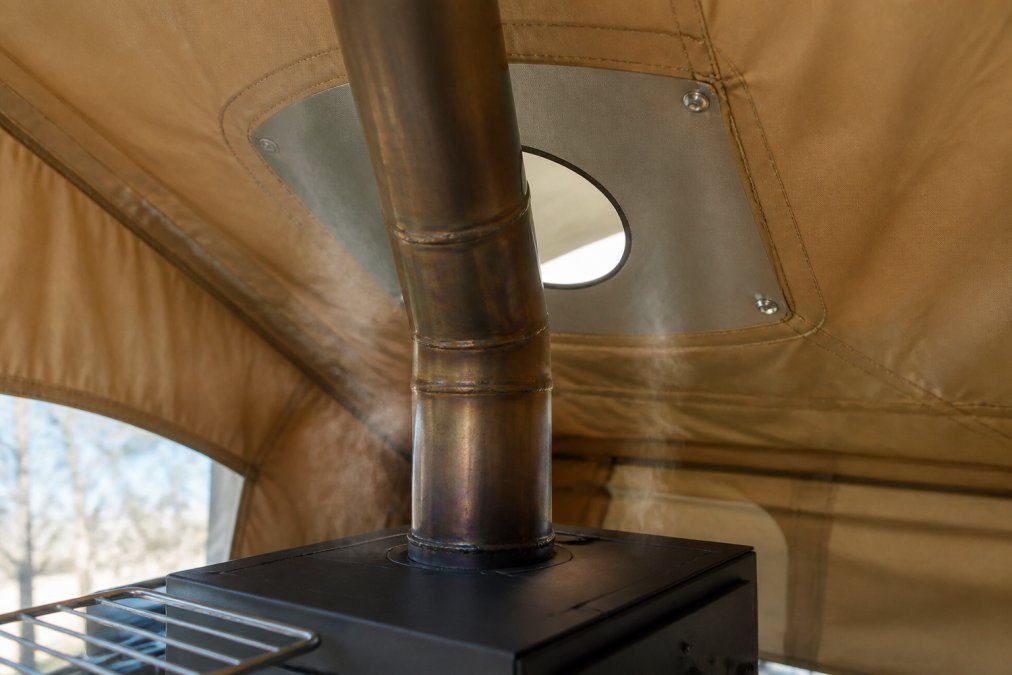
Types of Tent Stoves: Titanium vs. Steel
Two material choices dominate the tent stove market: titanium and steel.
Steel stoves are heavier but more common and generally less expensive. Steel conducts and radiates heat efficiently, providing rapid warmth to the tent. Steel is also more forgiving in field conditions and harder to damage accidentally. The trade-off is weight, a steel wood stove suitable for tent camping typically weighs 15-25 pounds. Steel stoves require regular maintenance to prevent rust and creosote buildup.
Titanium stoves are significantly lighter, often 40-50% lighter than comparable steel models, making them attractive for overlanders and backpackers who carry their stove between camps. Titanium is also more corrosion-resistant than steel, reducing maintenance demands. The drawback is cost. Titanium stoves are substantially more expensive than steel equivalents, and titanium conducts heat more slowly than steel, meaning it takes longer to warm the tent.
For stationary camps where weight is less critical, steel offers better value and faster heat output. For mobile overlanding where you're moving camp frequently, titanium's weight savings and durability justify the higher cost.
Managing Condensation and Moisture Control
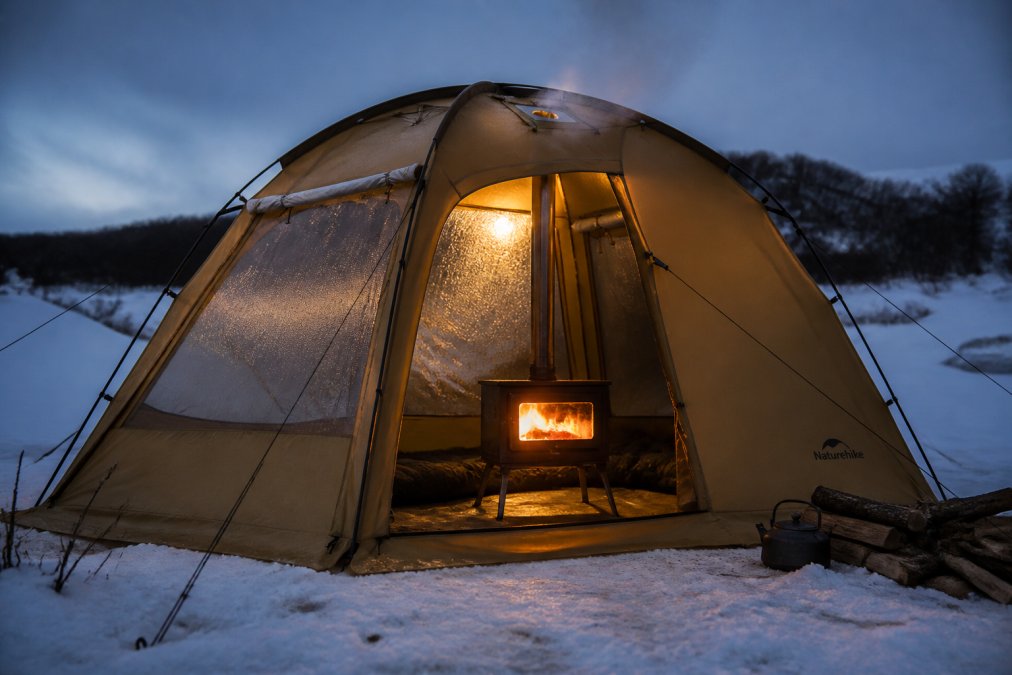
Wood stoves create a paradox: they warm the tent interior, but they also generate moisture. Combustion of wood releases water vapor, and the temperature difference between the warm tent interior and cold exterior air causes condensation to form on tent walls and gear.
Persistent moisture promotes mold growth on canvas and damages gear stored inside the tent. The solution is active moisture management. Maintain some airflow through the tent even with the stove running. Crack a window or door slightly, or install additional ventilation openings. Canvas breathes naturally, which helps reduce condensation buildup on interior surfaces.
Inside the tent, hang moisture-absorbing materials or use silica gel packs near sleeping areas. Avoid placing wet gear directly inside the tent. Dry firewood, wet clothing, and damp boots outside or in a separate vestibule. In extremely cold conditions, some condensation is unavoidable. Wipe down interior walls periodically and ensure adequate ventilation to prevent moisture from accumulating.
Maintenance, Creosote Buildup, and Legal Considerations
Regular maintenance keeps your stove safe and functional. Creosote, a flammable byproduct of incomplete wood combustion, accumulates inside the chimney and flue pipe. If not removed, creosote buildup can ignite inside the chimney, creating a dangerous chimney fire.
Inspect the chimney and stove after every 5-10 fires. Look inside the flue pipe for dark, tar-like deposits. If creosote is visible, disassemble the chimney sections and scrape the interior with a stiff brush or specialized chimney brush. Burn dry, seasoned wood to minimize creosote formation. Green or wet wood burns incompletely, producing excess creosote.
Check the stove body for cracks or rust. Small cracks can be sealed with high-temperature sealant, but large cracks mean the stove is no longer safe. Keep the ash pan clean. Excessive ash buildup restricts airflow and reduces heating efficiency.
Legal and campground considerations: Many public campgrounds and private lands restrict or prohibit wood fires, including tent stoves. Before planning a hot-tent camp, verify local regulations. National Forests, BLM lands, and state parks have varying rules. Some require permits for wood stoves; others ban them entirely during fire season. Respect these regulations, they exist because uncontrolled fires in enclosed tents have caused injuries and deaths.
Wood stoves in tents transform cold-weather camping from miserable to genuinely comfortable. But comfort comes only with discipline and proper setup. Canvas tents with factory-installed stove jacks, proper ventilation, carbon monoxide monitoring, and regular maintenance make wood stove camping safe and reliable.
If you're outfitting for remote camping or overlanding in harsh conditions, Leash the Wilderness carries field-tested gear built for exactly these situations. Our Camp Cookware & Burner is designed for serious outdoorsmen who demand reliability when conditions turn brutal. Shop our complete camping collection and get equipped for the conditions where the road ends and the real adventure starts.
Frequently Asked Questions
Are wood stoves in tents safe?
Wood stoves in tents are safe when you follow strict safety protocols: install a proper stove jack with adequate clearance (typically 12-24 inches from fabric), use fire-retardant canvas, monitor carbon monoxide levels, and ensure continuous ventilation. The biggest risks, fire and CO poisoning, are completely preventable with correct setup and maintenance. Thousands of winter campers and overlanders rely on hot tents safely every year.
What is a stove jack and why do I need one?
A stove jack is a reinforced opening in your tent fabric designed to safely pass a flue pipe through. It prevents direct contact between the hot metal pipe and canvas, which would ignite the fabric. The jack includes a metal collar and heat shield that maintain safe clearance distances. Without one, you risk tent fires regardless of how careful you are with the stove itself.
What are the risks of carbon monoxide in hot tents?
Carbon monoxide (CO) is an odorless, colorless gas produced when wood burns incompletely. In an enclosed tent, CO can accumulate to dangerous levels and cause headaches, dizziness, or death. Prevent this by: maintaining proper ventilation (never seal your tent completely), ensuring your flue pipe extends above the tent roof, keeping air intake dampers open, and using a battery-powered CO detector. Check your detector regularly, it's your backup safety system.
Can you use a wood stove in any tent?
No. Your tent must be canvas or polycotton (fire-retardant blends) with enough space to accommodate a stove jack and maintain safe clearance distances. Synthetic fabrics like nylon or polyester melt at low temperatures and are unsafe. Most 4-season winter tents designed for stoves use canvas or fire-treated fabric. The Naturehike Dune 7.6 is built for all-season use, though you'd need to verify stove compatibility with the manufacturer before installing.
How do I maintain a tent stove and prevent creosote buildup?
Creosote (a flammable tar-like residue) builds up inside flue pipes when wood burns inefficiently. Prevent excessive buildup by: burning dry, seasoned wood only, maintaining proper draft through your damper, and inspecting your pipe monthly during the season. Clean the pipe annually or after heavy use. If you notice thick, shiny black deposits, you need cleaning before the next camping trip. Poor maintenance increases fire risk significantly.
This article was written using GrandRanker