

Table of Contents
- The Real Cost of Cheap Gear: When Budget Fails in the Field
- Cost-Per-Use: The Only Math That Matters for Expensive Hunting Gear
- Best Hunting Gear for Beginners: Where to Spend and Where to Save
- Durability and Repairability: The Hidden Value in Expensive Hunting Gear
- Hunting Gear Maintenance Tips That Extend the Life of Any Investment
- The Diminishing Returns Threshold: When Spending More Stops Paying Off
- Resale Value and Warranty Coverage: What Your Gear Is Worth After the Season
- Conclusion: A Framework for Your Next Purchase
- Frequently Asked Questions
Last Updated: September 15, 2026
The Real Cost of Cheap Gear: When Budget Fails in the Field
A cheap zipper that fails at 4 a.m. in 20-degree weather costs you the hunt, not just the jacket (rei.com). That is the honest starting point for whether expensive hunting gear is worth it. Buy cheap where cheap works, and spend real money only where failure ends your day.
Three questions decide it: How often will you use it? What happens when it fails? Can it be repaired?
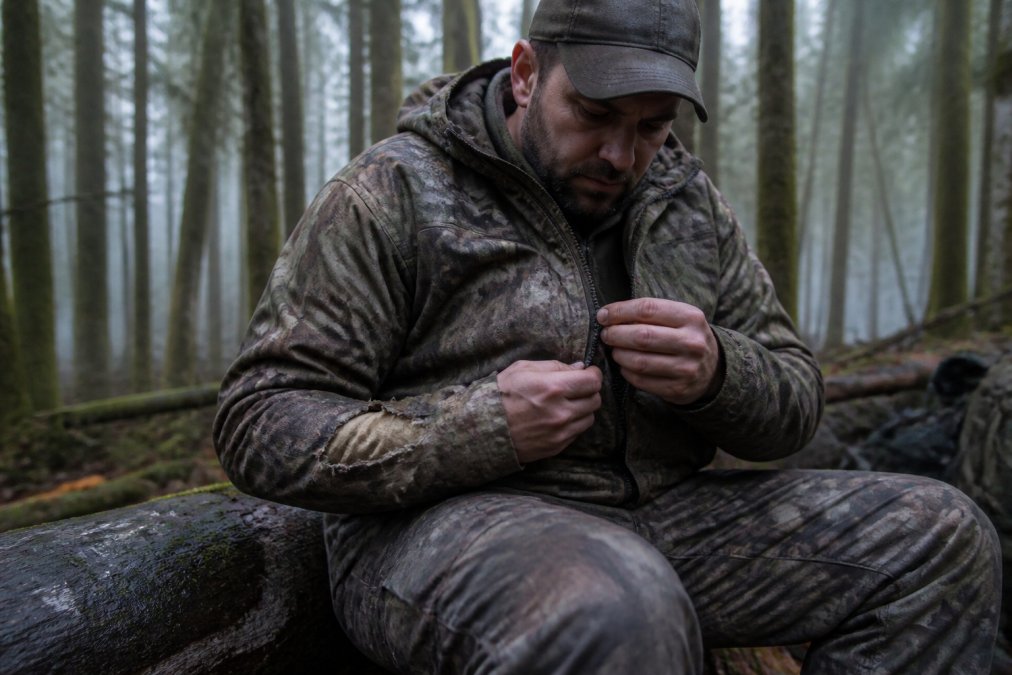
Most budget gear fails at the seams, zippers, and waterproof membrane, the three places cheap construction shows up first and the three you cannot fix in the field (rei.com).
Cost-Per-Use: The Only Math That Matters for Expensive Hunting Gear
Cost-per-use is purchase price divided by days used. A $300 jacket worn 60 days a season for three seasons costs $1.67 per day. A $90 jacket that fails after 20 days costs $4.50 per day.
That math argues for expensive hunting gear and against it. Hunt four days a year and the cheap jacket wins on cost-per-use, however well the expensive one is built.
How to Calculate Your Break-Even Point
Use this formula before any purchase over $100:
Break-even = (Price of expensive option - Price of cheap option) ÷ (Cost per day of cheap replacement × Days per season)
Run it with your real numbers. If the expensive option does not break even inside three seasons, buy cheap and put the difference into tags and fuel.
| Gear Category | Typical Days Used Per Year | Failure Cost | Spend or Save |
|---|---|---|---|
| Boots | 20-60 | High (blisters, ankle injury) | Spend |
| Base layers | 20-60 | Medium (wet, cold) | Spend |
| Outer shell | 10-30 | High (hunt over) | Spend |
| Rifle scope | 5-20 | Critical (missed shot) | Spend |
| Gloves | 20-40 | Low (uncomfortable) | Save |
| Scent control spray | 10-30 | Low (resupply cheap) | Save |
| Field knife | 5-15 | Medium | Either |
Best Hunting Gear for Beginners: Where to Spend and Where to Save
Beginners should spend on boots, optics, and an outer shell. Save on gloves, scent products, and anything replaceable at a gas station.
That order is not arbitrary. Boots and optics are where cheap costs you animals: bad boots stop the hike, bad glass can't identify game in low light (What Makes Great Low-Light Performance).
The Three Items Worth Buying Once
- Boots. Fit and waterproofing matter more than brand. Break them in before opening day.
- Rifle scope. A scope that loses zero after recoil or a bump is worse than no scope. Look for a glass-etched reticle and a waterproof rating.
- Outer shell. Windproof and waterproof, with taped seams. This is the layer between you and a ruined sit.
Everything else can start cheap. A $33.99 front and rear shooting rest sandbag does more for your accuracy than a $200 scope upgrade you have not learned yet.

🛒 Shop the Tactical Shooting Rest Sandbag →
Durability and Repairability: The Hidden Value in Expensive Hunting Gear
Repairability separates expensive hunting gear from gear that is merely priced high. A $90 rifle case with replaceable zipper pulls and thick padding can outlast a $200 sealed, unserviceable case.
Check three things before you pay more for anything:
- Seam construction. Double-stitched or bar-tacked at stress points. Single stitching on a load-bearing seam is a countdown timer.
- Replaceable parts. Zipper pulls, buckles, straps, and laces. If a part fails and cannot be swapped, the whole item is scrap.
- Warranty coverage. A one-year warranty on a scope tells you what the maker thinks of it. Longer coverage on optics and boots is worth real money.
Hunting Gear Maintenance Tips That Extend the Life of Any Investment
Hunting gear maintenance tips matter more than the price tag. Most gear does not wear out from use. It wears out from storage.
- Dry everything before it goes in the closet. Damp storage grows mildew in fabric and corrosion in metal. A wet rifle case will rust a barrel.
- Re-waterproof shells once a season. Dirt and body oils clog the membrane. A wash and a spray-on treatment restores beading.
- Store boots with cedar or newspaper, not in a hot garage. Heat breaks down adhesives and foam midsoles faster than miles do.
- Wipe metal with a lightly oiled cloth after every wet day. Salt and sweat are the two fastest paths to pitting on a scope tube.
- Check torque on scope rings and mounts each season. Loose mounts are the most common cause of a rifle that "suddenly" shoots off.
Do these five things and a mid-priced item outlasts a neglected expensive one.
The Diminishing Returns Threshold: When Spending More Stops Paying Off
Diminishing returns hit when the next dollar buys refinement instead of reliability. Refinement is lighter weight, smoother adjustment, better coatings. Reliability is a lower chance of failure. Once you can tell them apart, you stop overpaying.
Every category has a performance floor, the build quality below which the item fails in normal use. Money to reach that floor buys reliability. Money above it buys comfort, weight savings, and status. The floor sits at a different height in every category and moves with how hard you use the gear.
Where the Floor Sits by Category
- Boots. The floor is a full-grain leather or bonded synthetic upper, a waterproof membrane, and a resoleable sole. Above that you pay for lighter weight and faster break-in. A 3-pound boot and a 2-pound boot both keep your feet dry. The lighter one costs more and tires you less, a real benefit, but not a reliability one.
- Rifle scopes. The floor is a one-piece tube, a glass-etched reticle, waterproof and fogproof sealing, and turrets that return to zero. Above that you pay for edge-to-edge clarity, higher magnification, and illuminated reticles. If you shoot inside 300 yards in legal light, the extra glass does not change your hit rate.
- Outer shells. The floor is a waterproof membrane, taped seams, and an adjustable hood. Above that you pay for breathability and packability. A shell that keeps rain out but traps sweat is a comfort problem, not a failure problem.
- Optics (binoculars). The floor is fully multi-coated lenses and a waterproof housing. Above that you pay for low-light performance. If you glass at first and last light, when animals move, that upgrade is reliability, not refinement.
The Two-Question Test
🛒 Shop the Hunter's Optics Kit →

Resale Value and Warranty Coverage: What Your Gear Is Worth After the Season
How Depreciation Actually Runs
What kills resale value:
Warranty as a Hidden Cost-Saver
Repairability vs. Replaceability
| Factor | Budget Gear | Gear at or Above the Floor |
|---|---|---|
| Resale after 2 seasons | Minimal | Often 40-70% of retail |
| Warranty term | 1 year or none | Multi-year on optics and boots |
| Repairable parts | Rarely | Common |
| Environmental rating | Vague or absent | Published (IPX7, temp range) |
| Service address | Often overseas | Often domestic |
🛒 Shop the Deer Scouting Kit →
Conclusion: A Framework for Your Next Purchase
Frequently Asked Questions
Is expensive hunting gear actually more durable in the field?
It often is, but not always. The difference comes down to construction details: seam tape, abrasion-resistant fabrics, and reinforced stress points. A $300 jacket with taped seams will outlast a $100 jacket with stitched seams in wet brush. But past a certain price, you're paying for marginal weight savings or brand name, not durability. Look for specific features like waterproof membranes and articulated fit, not just the price tag.
What specific features justify a higher price tag in hunting gear?
Focus on features that solve real problems: a waterproof membrane with a hydrostatic head rating above 10,000mm, merino wool or synthetic fabrics that manage moisture, and seam construction that's taped rather than just stitched. For optics, fully multi-coated lenses and a solid warranty matter more than magnification. If a price jump doesn't come with one of these concrete upgrades, you're likely paying for marketing.
When is it better to buy budget-friendly hunting equipment?
Buy budget for gear that doesn't face extreme conditions or heavy use. A $34 shooting rest sandbag works as well as a $100 one for zeroing at the range. Entry-level fishing tackle under $25 catches fish. If you hunt a few weekends a year in mild weather, a basic rifle case and a mid-range scope will serve you fine. Save the big spending for items you use every trip in harsh conditions.
Does expensive gear improve hunting success rates?
Not directly. Success comes from scouting, shot placement, and time in the field. Expensive gear improves comfort and reliability, which keeps you out longer and reduces gear failure at bad moments. A thermal scope helps you see game you'd otherwise miss, but it won't make you a better shot. The real gain is fewer ruined hunts, not more tags filled.