

Table of Contents
- What BFS Fishing Actually Costs a Beginner
- BFS Reel vs Spinning Reel: The Real Trade-Offs
- Why the Light Power Lure Rod Matters More Than the Reel
- Where BFS Fishing Shines: Trout, Panfish, and Small Bass
- The Learning Curve Failure Rate Nobody Talks About
- Budget BFS Setup: Where to Save and Where to Spend
- The Verdict: Should You Start BFS Fishing?
- Frequently Asked Questions
Last Updated: September 7, 2026
Bait Finesse System (BFS) fishing is casting ultra-light lures, typically 1/16 to 3/16 ounces, with a specialized baitcasting reel with a shallow, lightweight spool. Whether BFS fishing is worth it depends on your tolerance for a steep learning curve and your willingness to spend on specialized tackle.
The real question is whether the frustration of learning it outweighs the payoff. BFS fishing offers unmatched precision for finicky trout, panfish, and small bass in clear, pressured water, but that precision costs dollars and practice time.
What BFS Fishing Actually Costs a Beginner
A complete BFS setup costs more than most beginners expect. You cannot pick up a standard baitcasting reel and expect it to throw a 1/16-ounce lure. The reel needs a light spool, often under 6 grams, and precise magnetic or centrifugal brakes. Entry-level BFS reels start around $80 to $120, rods with light power run another $60 to $100, and you need light line, typically 4 to 8 pound braid with a fluorocarbon leader.
Total entry cost lands between $150 and $250 for a functional setup, versus $60 to $100 for a quality ultralight spinning combo.
BFS Reel vs Spinning Reel: The Real Trade-Offs
The core difference between a BFS reel vs spinning reel comes down to casting control and lure presentation. Spinning gear is easier to learn, handles light line with fewer tangles, and costs less. BFS gear offers superior casting accuracy and better feel for light bites through braided line.
For most beginners, spinning gear is the more practical choice. BFS shines when you need to drop a micro-jig into a dinner-plate-sized pocket between overhanging branches, or when you work a tiny crankbait slowly along a deep bank where a spinning reel's line twist becomes a problem.
| Feature | BFS Baitcasting Reel | Ultralight Spinning Reel |
|---|---|---|
| Learning curve | Steep | Gentle |
| Casting accuracy | High | Moderate |
| Lure weight range | 1/16 - 3/16 oz | 1/32 - 1/4 oz |
| Backlash risk | High | None |
| Line twist | Low | Higher |
| Entry cost | $80 - $120 | $30 - $60 |
Casting Accuracy and Backlash Risk
Backlash is the single biggest reason beginners quit BFS fishing. When a spool spins faster than the line leaves it, the line piles up into a bird's nest. With light lures, the spool has less weight to control, so it overruns easily.
The fix is reel technology plus thumb control. Magnetic and centrifugal brakes slow the spool at the start of the cast, and a spool tension knob adds friction. But real control comes from your thumb, which must feather the spool as the lure decelerates.
Why the Light Power Lure Rod Matters More Than the Reel
A light power lure rod is the foundation of BFS, not an accessory. The rod must be soft enough to load during the cast, launching a light lure with the rod's flex rather than arm strength.
Action matters as much as power. A fast action rod bends mostly in the tip, giving quick hooksets and precise lure control. A moderate action bends deeper, casting light lures farther but slowing your hookset. For BFS, a fast action light power rod is standard.
At Leash the Wilderness, we carry a 70.86" Light Power Lure Rod with a fast action and sensitive tip, built for this work. At $20.99, it lets you test the technique without committing to a high-end rod.
🛒 Shop the 70.86" Light Power Lure Rod
Where BFS Fishing Shines: Trout, Panfish, and Small Bass
BFS fishing earns its keep in specific water conditions. Clear, slow-moving streams with spooky trout are the classic scenario. A 1/16-ounce jig or small spinner lands softly, and the fluorocarbon leader is nearly invisible.
Panfish in pressured ponds respond the same way. Bluegill and crappie that have seen every spinner will still hit a tiny jig worked slowly past their face. Small bass in heavily fished urban lakes become wary of larger lures.
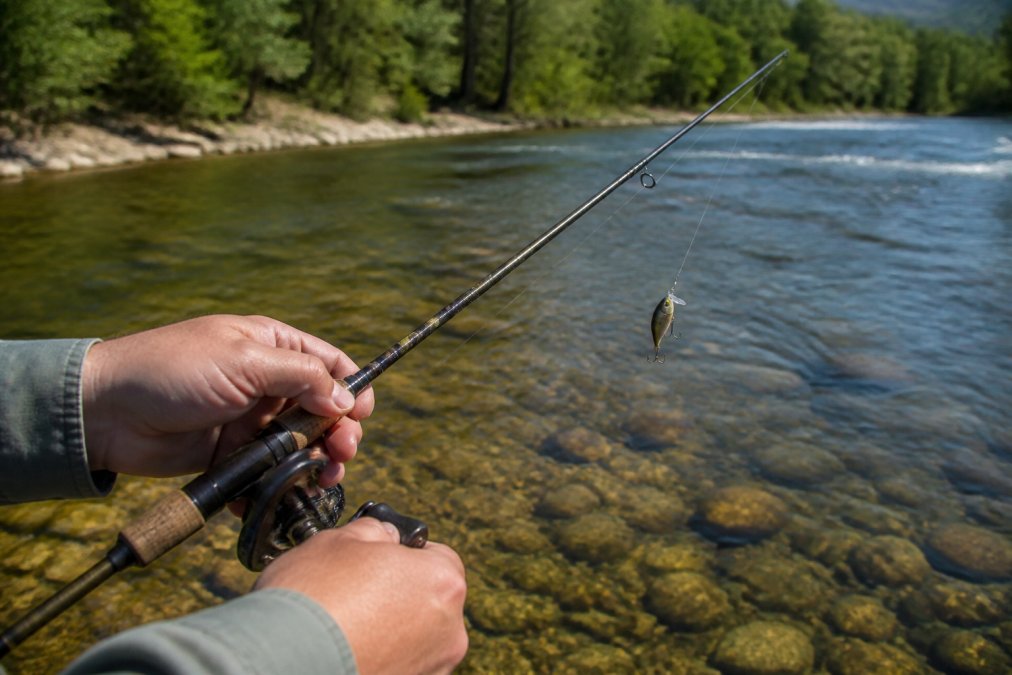
The common thread is finesse. If you fish pressured water with light line and small lures, BFS gives you an edge. If you fish open water for aggressive bass or catfish, it offers little advantage.
The Learning Curve Failure Rate Nobody Talks About
Most guides mention BFS has a learning curve, but rarely say how steep. Expect 5 to 10 hours on the water before you can cast without frequent backlashes (fisheries.org).
The failure rate among beginners is high, not because the technique is impossible, but because it requires patience many casual anglers lack. If you fish a few times a month and want to relax, the frustration will likely outweigh the benefits.
A common mistake is starting with the lightest lures. Begin around 3/16 ounce, which casts more predictably. As your thumb control improves, work down to lighter lures. This progression cuts learning time significantly.
Budget BFS Setup: Where to Save and Where to Spend
A functional BFS setup costs between $150 and $250. You can spend less, but you'll fight the gear. You can spend more, but you won't catch more fish until your thumb catches up.
The Reel: This Is Non-Negotiable
The spool is the engine of BFS. A standard baitcasting spool weighs 15 to 20 grams (peer-reviewed research). A BFS spool weighs under 7 grams, often closer to 5. That difference is why a BFS reel can launch a 1/16-ounce lure and a standard reel can't.
When you're looking at entry-level reels, check two things:
- Spool weight. Look for a reel that advertises a spool weight under 7 grams. If the manufacturer doesn't list it, move on.
- Braking system. You want both magnetic brakes and a spool tension knob. Magnetic brakes handle the initial spool speed at the start of the cast. The tension knob controls the overall spool freedom. You need both to dial in light lures.
A budget BFS reel in the $80 to $120 range will have a decent spool and functional brakes. It won't have the smooth bearings of a $300 reel, but you won't notice while learning. Buy the cheapest reel with a sub-7-gram spool and reliable braking.
The Rod: This Is Where You Save
A light power rod is essential, but you don't need a premium blank to learn. The rod needs to load during the cast, bending under the lure's weight and releasing that energy to launch it.
A budget rod in the $60 to $100 range will have a fiberglass composite blank. It will be heavier and less sensitive than carbon fiber, but it will cast adequately.
At Leash the Wilderness, we carry a 70.86" Light Power Lure Rod for $20.99. It's a fast action rod with a sensitive tip. It's not a high-end blank, and we won't pretend it is. But it's a functional tool to learn the cast without a big investment.
🛒 Shop the 70.86" Light Power Lure Rod
Line and Knots: The Part Everyone Gets Wrong
Line choice is where beginners sabotage themselves. You need braided mainline, not monofilament. Braid has zero stretch, so you feel the bite instantly and set the hook with a quick wrist snap.
For BFS, use 10 to 15 pound braid. Diameter is what matters. Ten-pound braid is roughly the same diameter as 2-pound mono. It casts well and holds a lot of line on a small spool. Don't go lighter than 10 pound braid.
Tie a fluorocarbon leader of 4 to 6 pound test. Fluorocarbon is nearly invisible and sinks, helping get your lure down.
Use a double-uni knot to connect braid to leader (aafp.org). For the lure, use a Palomar knot. It retains nearly 100% of breaking strength and is easy to tie with thin line. Avoid clinch knots with braid.
Lures: Start With a Kit, Not a Collection
You don't need 50 different lures. You need a handful that cover the basics:
- 1/8 to 3/16 ounce jigs for casting practice and general fishing
- A couple of small crankbaits in natural shad or crawfish patterns
- A few soft plastic paddletails on light jig heads
A kit gets you there without buying individually. The Pro Fishing Lure Kit at $11.99 includes crankbaits, spoons, jigs, and soft plastics that cover the BFS range. The 187pc Ultimate Fishing Kit at $19.99 adds hooks, swivels, and sinkers for building your own rigs.


🛒 Shop the Pro Fishing Lure Kit
Maintenance: The Step Beginners Skip
BFS reels are more delicate than standard baitcasters. The spool bearings are smaller and spin faster. After every few trips, wipe down the outside. Once a month, open the side plate, remove the spool, and put a single drop of light reel oil on each bearing. Don't use grease on spool bearings.
If you fish in dirty water or rain, clean the reel more often. A gritty bearing kills casting distance and causes backlashes.
The Bottom Line on Budget
| Component | What to Spend | Why |
|---|---|---|
| Reel | $80 - $120 | Sub-7g spool and reliable brakes are non-negotiable |
| Rod | $20 - $60 | Budget blanks cast fine while you learn |
| Line | $10 - $15 | 10-15 lb braid + 4-6 lb fluorocarbon leader |
| Lures | $10 - $20 | A starter kit covers the basics |
Total: $120 to $215. That's the real cost of a functional BFS setup. If that number makes you hesitate, stick with spinning gear.
The Verdict: Should You Start BFS Fishing?
BFS fishing is worth it for beginners who fish clear, pressured water for trout, panfish, and small bass, and who enjoy mastering a technical skill. It is not worth it for casual anglers who want a simple, relaxing day.
Start with a budget setup, expect a frustrating first few sessions, and focus on the heavier end of the lure range while you learn. If you stick with it, you gain a casting accuracy spinning gear cannot match. If it's not for you, a light power rod and small collection of finesse lures still work fine with a spinning reel.
At Leash the Wilderness, we carry the gear you need to test BFS without overcommitting. Our Fishing Tackle Under $25 collection has budget rods, lures, and terminal tackle, and our Rods & Reels page covers the full range.
The decision to start BFS fishing comes down to your fishing style and patience for learning. For anglers targeting spooky fish in clear water, the precision is worth the effort. For everyone else, a quality spinning setup serves you better. If you want to test the technique on a budget, start with a light power rod and a small selection of finesse lures.
Frequently Asked Questions
What are BFS reels good for?
BFS reels are built to cast very light lures, typically 1/16 to 3/16 ounce, on baitcasting gear. That makes them effective for trout fishing, panfish like bluegill, and small bass in tight cover. The advantage is pinpoint casting accuracy with small baits, which spinning gear often struggles to deliver in wind or heavy vegetation. BFS shines when you need to drop a small lure into a pocket the size of a dinner plate without spooking the fish.
Is BFS good for trout and panfish?
Yes, BFS fishing is well suited for trout and panfish. These species often key in on small food sources, so presenting a 1/16-ounce jig or tiny spinner naturally gets more strikes. The light power lure rod paired with a BFS reel gives you the sensitivity to feel subtle bites and the casting accuracy to place lures under overhanging branches where trout hold. It is a specialized approach, but effective for these target species.
Is BFS worth the investment compared to ultralight spinning gear?
The honest answer depends on what you value. Ultralight spinning gear costs less and has a shorter learning curve. BFS offers better casting accuracy with light lures and the compact feel of baitcasting gear. If you already own baitcasting reels and want one setup that handles small lures, BFS is worth it. If you are starting from zero, buy a budget spinning combo first, then decide if BFS fishing fits how you fish.
What are the main drawbacks of a BFS setup?
The main drawbacks are cost and the learning curve. Quality BFS reels start around $100 and go much higher, and a matching light power lure rod adds more. Casting 1/16-ounce lures takes practice; expect backlash when you start, especially in wind. BFS setups also have less line capacity than standard baitcasters, so they are not ideal for big rivers or species that make long runs. Budget gear can frustrate you more than it helps.