

Table of Contents
- Start with Obedience Training Basics
- How to Introduce Dogs to Gunfire Safely
- Hunting Dog Conditioning Exercises for Endurance
- Hunting Dog Nutrition and Hydration Strategies
- Essential Gear for Hunting Dogs in the Field
- Field Safety and Hazard Awareness
- Pre-Season Health Checkups and Recovery Protocols
- Conclusion
Last Updated: August 5, 2026
Start with Obedience Training Basics
Obedience training is the foundation that separates a hunting dog from a liability in the field. Before conditioning, gunfire exposure, or specialized retrieval drills, your dog must respond reliably to basic commands in distracting environments. Most hunters skip this foundational work and wonder why their dog bolts at gunfire or ignores recall when prey is nearby.
The core commands are sit, stay, come, and heel. But there's a critical difference between a dog that knows these commands at home and one that executes them under field stress. A hunting dog must respond even when adrenaline is pumping, wind is shifting scent, and birds are flushing. That reliability takes months of consistent training.
Start with short, frequent sessions: 10 to 15 minutes daily is better than one long session per week. Use high-value rewards the dog genuinely loves, and rotate them to maintain motivation. Consistency matters more than intensity. Everyone in the household must use the same command words and enforce the same rules, or your dog will be confused in the field.
Once basic obedience is solid, move to hunting-specific commands. "Whoa" (stop immediately) and "Here" (come now) are non-negotiable for safe field work. Some hunters use an electronic training collar like the Track & Train Dog Collar with 3300ft remote range to reinforce commands at distance, especially for "whoa" in open terrain.

How to Introduce Dogs to Gunfire Safely
Gun shyness can ruin a hunting dog permanently. Once a dog associates gunfire with fear, that response is extremely difficult to reverse. The introduction must be gradual, positive, and paired with something the dog loves: food or play.

Start with recorded gunfire at very low volume played during meals or play sessions. Gradually increase volume over several sessions, always paired with positive experiences. Never force a dog to approach a gun or loud noise.
The next phase is live gunfire at a distance. Have someone fire a shotgun or rifle 100+ yards away while you're playing with your dog or feeding high-value treats. Over multiple sessions, gradually decrease the distance. This process can take 4 to 8 weeks depending on the dog's temperament.
Some dogs have a genetic predisposition to gun shyness. If your dog shows extreme fear after reasonable exposure, consult a professional trainer specializing in gun-shy dogs. Forcing a gun-shy dog into hunting situations creates trauma and wastes your season.
Hunting Dog Conditioning Exercises for Endurance
A hunting dog's cardiovascular fitness determines how far and how long it can work effectively. A poorly conditioned dog tires by mid-morning; a well-conditioned dog hunts all day while maintaining focus and obedience.
Running is the most practical conditioning tool. Begin with 2 to 3 miles per week at a moderate pace. Increase distance by 10 percent per week until you reach 8 to 12 miles per week, depending on breed and hunting style. Pointer and setter breeds need higher mileage than retrievers because they cover more ground.
Swimming is exceptional for building endurance while protecting joints. A dog swimming for 20 minutes gets cardiovascular benefits equivalent to 45 minutes of running, with less impact on joints. Incorporate swimming 2 to 3 times per week if you have access to water.
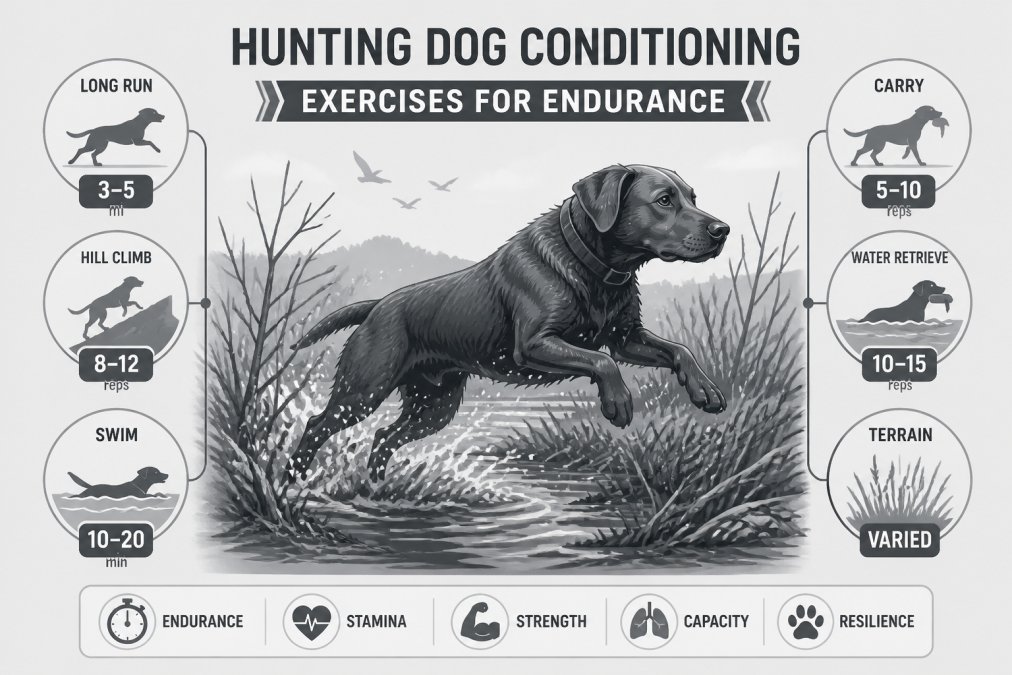
Interval training builds stamina faster than steady-state running. Have your dog run hard for 2 to 3 minutes, then walk or trot for 1 to 2 minutes, and repeat 4 to 6 times. This mimics actual field work patterns.
Avoid road running on pavement for extended distances. Trails, grass fields, and natural terrain protect joints and paws. Check your dog's paws regularly for cuts, cracked pads, or excessive wear.
Hunting Dog Nutrition and Hydration Strategies
A hunting dog's diet must support high energy expenditure and muscle recovery. A sedentary pet dog needs 500 to 800 calories per day. A hunting dog working hard in the field needs 1,500 to 2,500 calories per day, depending on size and activity level. Most commercial pet foods are formulated for inactive dogs and will leave your hunting dog underfed.
High-fat diets are essential for hunting dogs. Fat is the most efficient fuel source for endurance work. Look for dog foods with fat content above 20 percent, ideally 25 to 35 percent. Protein should be at least 25 percent to support muscle maintenance and recovery.
Feed your dog twice daily during the off-season and once daily during hunting season, about 4 to 6 hours before a hunt. A full stomach before intense exercise can cause bloating or gastric torsion. Some hunters feed a small meal the night before and nothing the morning of a hunt, then feed after the dog has rested.
Hydration is critically important. A dehydrated dog loses focus, tires faster, and risks heat exhaustion. Bring water and a collapsible bowl to every training session and hunt. Offer water every 30 to 45 minutes during activity.
Monitor your dog's weight and body condition throughout the season. A hunting dog should be lean and muscular. You should feel ribs easily but not see them prominently. If your dog is losing weight, increase calorie intake. If gaining weight, reduce portions.
Essential Gear for Hunting Dogs in the Field
The right gear keeps your dog safe, visible, and comfortable during long days in the field.
A hunting dog collar must be durable, secure, and visible. The Adjustable Reflective Dog Collar with soft foam padding provides comfort during long days while reflective stitching makes your dog visible at dawn and dusk. Avoid thin nylon collars that cut into the neck or cause chafing.
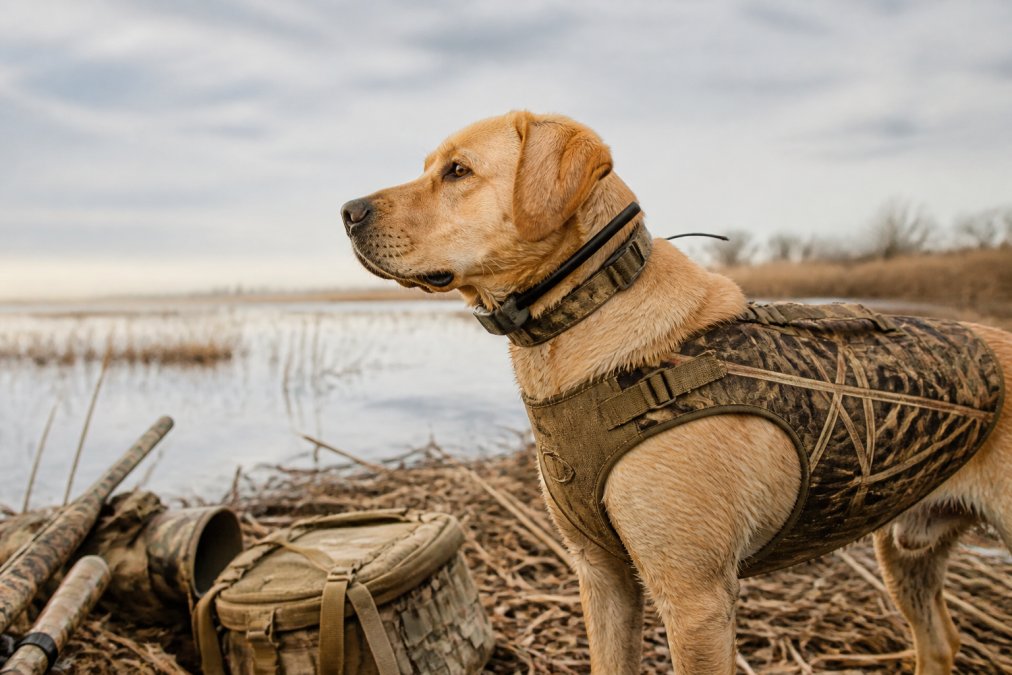
A GPS collar is invaluable for dogs that range far from you in open terrain. GPS trackers let you monitor your dog's location and retrieve a lost dog quickly. This is essential insurance for pointer breeds that naturally hunt 100+ yards away.
Protective booties protect paws from sharp stubble, rocks, and ice. A dog with cut or bruised pads will limp and refuse to work. Practice wearing booties during training so your dog is comfortable before hunting season.
A hunting vest or harness keeps your dog visible to other hunters and provides attachment points for gear. Blaze orange is required by law in many states. The vest should fit snugly without restricting movement.
A dog treat pouch like the magnetic closure training pouch keeps high-value rewards accessible during training and hunts. A pouch on your belt is faster than digging in a backpack.

The absorbent microfiber pet towels dry faster and are gentler on skin than cotton. A wet dog loses body heat quickly in cool weather, so drying immediately after water work prevents hypothermia.
A first aid kit is mandatory. Include bandages, antiseptic, pain relief medication, and tweezers for removing thorns or splinters. A dog with a minor injury that you can treat in the field can often continue working.
Field Safety and Hazard Awareness
Hunting involves real dangers for dogs: gunfire from other hunters, predators, toxic plants, contaminated water, and terrain hazards.
Gun safety is the primary concern. Wear blaze orange and train your dog to stay close during gun seasons. A dog ranging far from you is invisible to other hunters and at risk of being shot. Use a whistle or electronic collar to keep your dog within safe distance.
Prey drive can override safety instincts. A dog chasing a deer or elk can run into traffic, off a cliff, or into dangerous situations. Train a reliable recall command and practice it constantly. Some dogs require an electronic collar to enforce recall in high-drive situations.
Toxic plants and mushrooms are common in wild areas. Familiarize yourself with toxic plants in your hunting area and train your dog to avoid them. If your dog eats something unknown, contact a veterinarian immediately.
Water hazards include contaminated water, cold temperatures, and strong currents. Train your dog to exit water on command and never force a dog into dangerous water. Cold water causes hypothermia quickly; limit water exposure in winter and dry your dog immediately after.
Terrain hazards include sharp rocks, thorns, fallen trees, and holes. Inspect your dog for injuries after every hunt. Minor cuts and scrapes are normal, but puncture wounds, deep lacerations, or swelling require veterinary attention.
Pre-Season Health Checkups and Recovery Protocols
A veterinary checkup before hunting season is non-negotiable. Your veterinarian will evaluate your dog's overall health, check for joint issues or heart problems, and ensure vaccinations are current. Hunting dogs are exposed to wildlife and parasites, so preventive medication for ticks, fleas, and intestinal parasites is essential.
Ask your veterinarian about your dog's fitness level and any limitations. Some dogs have underlying joint problems or heart conditions that hunting season will aggravate. Knowing these issues beforehand lets you adjust your training appropriately.
Post-hunt recovery is as important as conditioning. After an intense day of hunting, your dog's muscles are fatigued and joints are stressed. Provide adequate rest, hydration, and nutrition. A dog that hunts hard on Saturday should have Sunday off or limited activity.
Muscle soreness is normal after hard work, but lameness, limping, or reluctance to move indicates injury. Rest the dog and consult a veterinarian if symptoms persist. Early intervention prevents minor injuries from becoming chronic problems.
Monitor your dog's condition throughout the season. A dog that's losing weight, becoming lethargic, or showing behavioral changes may be overworked or developing health issues. Listen to what your dog is telling you.
Preparing a dog for hunting is a months-long commitment that starts with obedience and builds through conditioning, nutrition, gear selection, and safety awareness. A well-prepared hunting dog is a reliable partner that performs when conditions get tough and comes home safe. Start your preparation now, focus on the fundamentals, and you'll have a dog that hunts effectively for years to come. Shop our Dog Care Kit and other field-tested gear built for dogs that work hard.
Frequently Asked Questions
What age should you start training a hunting dog?
Begin basic obedience and socialization at 8-12 weeks old. Introduce birds and scent work around 4-5 months. Formal field training typically starts at 6-12 months, depending on breed and individual development. Puppies need time to build confidence and prey drive before intensive work. Always consult your veterinarian to ensure your dog is physically ready for training demands.
How do I introduce my dog to gunfire safely?
Start with desensitization weeks before hunting season. Begin at distance (100+ yards) with low-caliber shots during positive experiences like feeding. Gradually reduce distance over weeks while maintaining positive associations. Use a training collar like the Track & Train Dog Collar to reinforce calm behavior. Never force exposure; let your dog acclimate naturally. Some dogs need 4-8 weeks of gradual introduction before field work.
How do I build my dog's stamina for long hunting days?
Condition your dog with graduated exercise over 6-8 weeks before season. Start with 20-30 minute runs on varied terrain, increasing to 60+ minutes by season start. Include swimming and hill work to build VO2 max and muscle endurance. Incorporate retrieval drills and marking exercises that mimic hunting demands. Rest days are critical; alternate hard work with light activity to prevent injury and allow muscle recovery.
What essential gear do hunting dogs need for field safety?
A waterproof remote training collar like the Track & Train Dog Collar helps maintain control in the field. Include an Adjustable Reflective Dog Collar for visibility during low-light conditions. Pack microfiber towels for drying and post-hunt care. A Dog Treat Pouch keeps rewards accessible during training sessions. GPS tracking collars, protective vests, and first aid supplies are also critical for remote hunting where your dog may range out of sight.
This article was written using GrandRanker