

Table of Contents
- Why Cleaning Hunting Optics Matters
- Tools and Materials You'll Need
- Step-by-Step: How to Clean Hunting Optics Safely
- Best Lens Cleaning Kit for Hunting Optics
- Cleaning Binoculars After Hunting in Rain
- How to Prevent Fogging on Hunting Optics
- What to Avoid When Cleaning Hunting Optics
- Maintenance Schedule and Storage Tips
Last Updated: August 8, 2026
Why Cleaning Hunting Optics Matters
Your hunting optics are only as good as the light they let through. Dust, fingerprints, and residue don't just cloud your view, they degrade the optical integrity of your lenses and can cost you a clean shot when it counts. Proper cleaning of hunting optics keeps your riflescope, binoculars, or rangefinder performing at peak clarity in the field.
The problem most hunters face is simple: they don't know the right way to clean hunting optics safely. Use the wrong solvent or technique, and you risk damaging the anti-reflective coating that makes modern optics work. That coating is what gives you that amber or green tint, it's engineered to reduce glare and boost light transmission. Scratch it or dissolve it, and you've just turned a precision instrument into a liability.
At Leash the Wilderness, we've equipped hunters with field-tested gear long enough to know that optics care separates the serious from the casual. The hunters who maintain their glass consistently see sharper images, better low-light performance, and gear that lasts decades instead of years. It's not complicated, but it does require the right tools and the discipline to use them correctly.
Tools and Materials You'll Need
Before you touch your optics, assemble the right cleaning kit. Using improvised tools or household cleaners is how damage happens.
Essential cleaning supplies:
- Lens pen, A retractable tool with a soft brush on one end and a microfiber tip on the other. The brush removes loose dust without touching the glass directly.
- Compressed air canister, Blows away debris safely without contact. Keep it upright and use short bursts to avoid liquid spray.
- Microfiber cloth, Lint-free, soft, and designed specifically for optics. Not the same as glasses-cleaning cloths, which can be too coarse.
- Isopropyl alcohol (reagent grade, 99%), The only solvent safe for optics. Never use rubbing alcohol or household cleaners. Reagent grade is pure enough that it evaporates cleanly without residue.
- Distilled water, Pairs with isopropyl alcohol for gentle cleaning. Tap water contains minerals that leave spots.
- Soft bristle brush, A small, soft-bristled brush (not nylon) for cleaning turrets and moving parts. Brass or natural bristles work best.
- Lens cap, Always use one when not in use. Prevention beats cleaning every time.
The Leash the Wilderness Hunters Optics Kit includes the core tools, lens pen, microfiber cloth, and protective storage, so you're ready to clean safely in the field or at home.
Step-by-Step: How to Clean Hunting Optics Safely
Cleaning hunting optics safely requires patience and a methodical approach. Rush the process, and you invite scratches or coating damage. Follow these steps exactly.
Step 1: Remove Loose Debris with Compressed Air
Start here every time. Loose dust and debris are the biggest threat because they can scratch when you wipe.
Hold your scope or binoculars steady and use short bursts of compressed air at a slight angle. Never shake the canister, that can spray liquid. Keep the nozzle 2-3 inches away from the lens to avoid direct pressure. Work from the center of the lens outward in a circular motion. If you see dust still sitting on the glass, repeat the process rather than moving to the next step.
For objective lenses (the front element), compressed air alone often solves the problem. For ocular lenses (where your eye sits), be gentler, these coatings are sometimes more delicate.
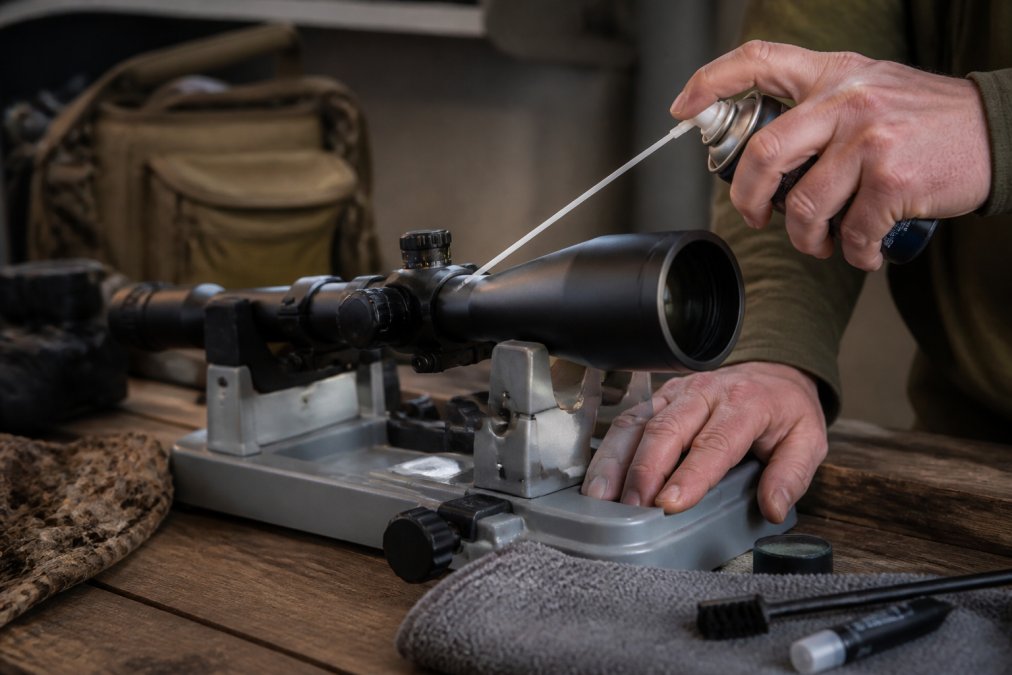
Step 2: Clean the Objective and Ocular Lenses
Once loose debris is gone, address smudges and fingerprints with a lens pen.
Use the soft brush end first. Gently sweep across the lens in one direction, don't scrub in circles. This removes any remaining dust particles that compressed air missed. Then flip to the microfiber tip and use gentle circular motions, starting from the center and moving outward. Light pressure is all you need. The microfiber does the work; your hand just guides it.
If smudges persist, dampen the microfiber cloth with a 50-50 mix of isopropyl alcohol and distilled water. Let the cloth absorb the solution, don't drip liquid onto the lens. Wipe gently in one direction, then use a dry section of the cloth to remove any remaining moisture. Never let liquid pool on the glass.
For stubborn residue, repeat the damp wipe but use pure isopropyl alcohol instead of the diluted mix. Reagent-grade isopropyl evaporates fast and leaves no spots. Household rubbing alcohol contains water and additives that leave streaks.
Step 3: Clean the Exterior Housing
The body of your scope or binoculars collects dirt, mud, and salt spray. This doesn't affect optics directly, but debris on the housing can work its way to moving parts.
Use a soft, slightly damp microfiber cloth to wipe down the exterior. For stubborn mud or salt residue, dampen the cloth a bit more and gently scrub. Avoid getting moisture into turrets or adjustment knobs. If water gets inside, it can cause fogging or internal corrosion.
Pay attention to crevices where the objective bell meets the tube. Dirt accumulates there. A soft brush can help loosen debris without forcing moisture into seams.
Step 4: Address Turrets, Parallax Adjustment, and Moving Parts
Turrets (elevation and windage adjustments) and the parallax adjustment ring collect dust and can become stiff if not maintained.
Use a soft bristle brush to gently clean around the turret edges and the parallax ring. Short, light strokes work best. Never force a stiff turret, that's a sign of internal debris or corrosion, and aggressive cleaning can make it worse.
For light lubrication, some hunters use a tiny amount of light machine oil on the turret threads, but this is optional and only necessary if adjustments feel gritty. Most modern hunting optics are sealed well enough that this isn't needed. If you do lubricate, use only a drop, excess oil attracts dust.
The magnification ring (on variable-power scopes) can be cleaned the same way as the turrets. Avoid excessive moisture here, as water inside the ring mechanism causes fogging.
Best Lens Cleaning Kit for Hunting Optics
When you need a complete, field-ready solution, a dedicated lens cleaning kit beats assembling parts separately. The best kits include a lens pen, microfiber cloths, compressed air, and storage in a compact case.
Look for kits that include reagent-grade isopropyl alcohol or clearly specify what solvents are safe. Some generic optics kits use standard rubbing alcohol, which will leave residue on your hunting optics. Verify the contents before buying.
The Leash the Wilderness Hunters Optics Kit is built for hunters who need reliability in the field. It includes the essentials, lens pen, microfiber cloth, and protective storage, without unnecessary bulk. Everything fits in a compact pouch that stows easily in a pack or truck.
When selecting a kit, prioritize:
- Lens pen with both brush and microfiber tip
- Multiple microfiber cloths (they get dirty and need rotation)
- Compressed air canister
- Clear labeling of alcohol type (reagent grade only)
- Compact, durable storage case
Cleaning Binoculars After Hunting in Rain
Rain and moisture are the biggest threats to binocular optics. Water can seep past seals, especially if your binoculars have taken hard use or are older.
Immediately after wet conditions, remove your binoculars from the case and let them air-dry at room temperature. Never use heat or direct sunlight, temperature changes can cause fogging inside the barrel.
Once dry, use compressed air to remove any water droplets from the objective and ocular lenses. If water has gotten inside the barrel and you see fogging, place the binoculars in a warm, dry room for 24-48 hours. Some internal fogging clears on its own as moisture evaporates.
For external cleaning after rain, use a damp microfiber cloth and gentle pressure. Salt spray from coastal hunting requires extra attention, salt residue is corrosive. Wipe down the entire exterior and pay special attention to metal parts. If you hunt near saltwater regularly, rinse your binoculars with distilled water after each trip, then dry thoroughly.
How to Prevent Fogging on Hunting Optics
Fogging happens when warm, moist air inside the barrel meets cold glass. Modern hunting optics are nitrogen-purged to prevent this, but the seals can fail if damaged.
Prevention strategies:
- Store in a dry location. Moisture-rich environments like trucks overnight or damp gear bags promote fogging. Keep optics in a climate-controlled space when not in use.
- Use lens caps. Caps prevent moisture from settling on cold glass when you transition from warm to cold environments.
- Allow acclimation time. When moving from a warm cabin to cold air, leave your scope cased for 10-15 minutes before opening. This slows temperature change and reduces condensation.
- Check seals annually. If your optics are several years old, have the seals inspected. A failing seal is the most common cause of internal fogging.
If fogging appears inside the barrel and doesn't clear after 24 hours of dry storage, the seal has likely failed. At that point, professional service is needed. Internal fogging means moisture is trapped, and cleaning from outside won't help.
What to Avoid When Cleaning Hunting Optics
Mistakes here cause permanent damage. Know what not to do.
Never use these solvents:
- Rubbing alcohol (contains water and additives)
- Acetone or paint thinner (dissolves coatings)
- Household glass cleaner (leaves residue and damages coatings)
- Vinegar or citrus-based cleaners (acidic, corrosive)
Never use these materials:
- Paper towels (abrasive, leaves lint)
- Tissues (too coarse, leaves residue)
- Shirt sleeves or cotton clothing (oils and lint damage coatings)
- Rough cloths or chamois (scratches optical glass)
Never do these actions:
- Don't scrub hard. Gentle pressure is all you need. Coatings are durable but not invincible.
- Don't use water alone. Pure water leaves mineral spots. Always pair it with isopropyl alcohol.
- Don't let liquid pool on the lens. Moisture can seep into seams and cause fogging.
- Don't force stuck turrets or adjustment rings. Forcing can break internal mechanisms.
- Don't store optics in direct sunlight. UV exposure degrades coatings over time.
- Don't use compressed air upside down. Holding the canister sideways or upside down can spray liquid propellant onto your optics.
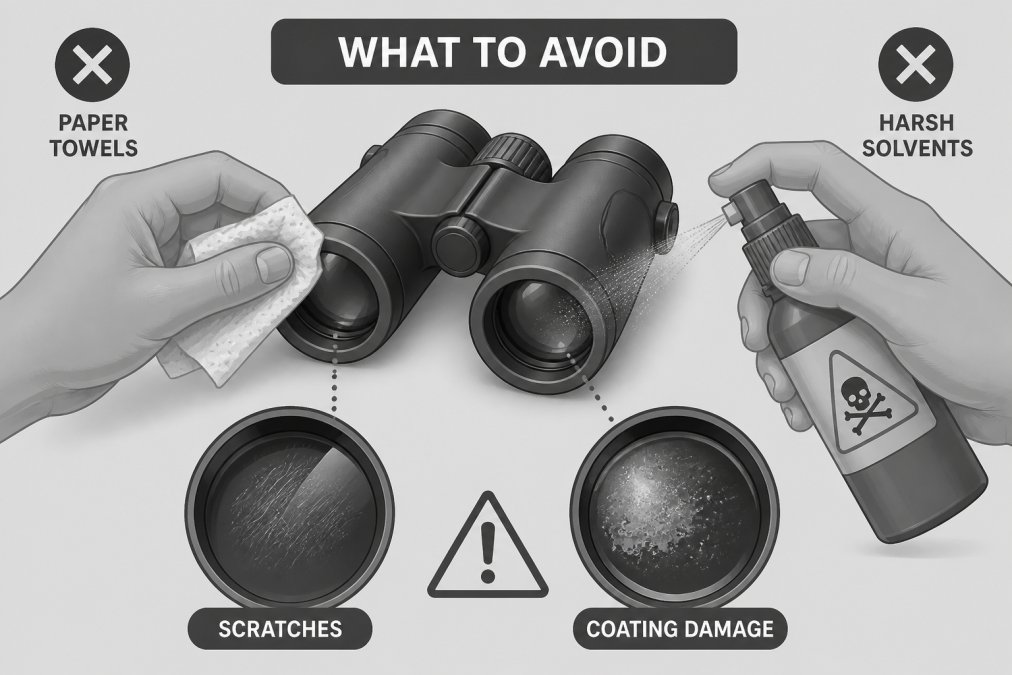
The anti-reflective coating on modern hunting optics is what makes them work. Damage that coating, and you've damaged the optics permanently. There's no repair, only replacement.
Maintenance Schedule and Storage Tips
Cleaning hunting optics regularly extends their life and keeps them performing. Build a maintenance routine based on how you use them.
Cleaning frequency:
- After every hunt: Quick pass with compressed air and lens pen. This takes two minutes and prevents dust buildup.
- Monthly (regular use): Full cleaning with microfiber cloth and isopropyl alcohol.
- After wet conditions: Clean and dry immediately, especially after rain or heavy fog.
- Seasonally (off-season): Deep clean and inspect seals before storage.
Storage best practices:
- Store in a cool, dry place. Avoid damp basements or hot attics.
- Keep lens caps on when not in use.
- Use a protective case or bag to prevent dust accumulation.
- Store with desiccant packets if you live in a humid climate. These absorb moisture and prevent fogging.
- Don't store in direct sunlight. UV exposure degrades coatings.
- Check optics monthly during off-season storage. A quick look for dust or moisture takes seconds.
For hunters who use optics year-round, a quick maintenance check every three months catches problems early. Look for dust on the lenses, check that turrets move smoothly, and verify that caps seal properly.
| Maintenance Task | Frequency | Time Required | What to Check |
|---|---|---|---|
| Compressed air cleaning | After every hunt | 2 minutes | Dust, debris on lenses |
| Full lens cleaning | Monthly (regular use) | 5-10 minutes | Smudges, fingerprints, residue |
| Turret and housing inspection | Every 3 months | 5 minutes | Stiffness, debris, corrosion |
| Deep clean and seal check | Seasonally | 15-20 minutes | Fogging, moisture, seal integrity |
| Storage environment review | Every 6 months | 2 minutes | Temperature, humidity, protection |
Hunting optics demand respect. They're precision instruments, and they perform best when maintained consistently. The time you invest in proper cleaning pays dividends in field performance and equipment longevity. Start with the basics, compressed air and a lens pen, and you'll handle 95% of maintenance needs. For deeper cleaning, stick to reagent-grade isopropyl alcohol and microfiber cloths, and you'll never damage a coating.
Leash the Wilderness builds gear for hunters who understand that reliability matters. That same discipline applies to optics care. Clean them right, store them right, and your hunting optics will deliver the clarity you need for decades of hard use.
Frequently Asked Questions
Can I use isopropyl alcohol to clean hunting optics?
Only reagent-grade isopropyl alcohol (99%+) is safe for hunting optics. Standard 70% rubbing alcohol contains water and other additives that can damage anti-reflective coatings and leave residue. If you use isopropyl alcohol, apply it to a microfiber cloth first, never directly on the lens. Always verify the alcohol is pure before applying it near optical glass or coatings.
What is the best lens cleaning kit for hunting optics?
A complete lens cleaning kit should include a lens blower, lens pen with soft bristle brush, microfiber cloths, and lint-free wipes. The Hunters Optics Kit from Leash the Wilderness provides essential tools for maintaining riflescopes, binoculars, and rangefinders in the field. Start with the blower to remove loose debris, then use the lens pen's brush side for smudges, and finish with a microfiber cloth dampened with distilled water if needed.
How often should I clean my hunting optics?
Clean your optics after every hunting trip, especially in rain, dust, or muddy conditions. Light cleaning with a lens blower and lens pen takes minutes and prevents debris from scratching scratch-resistant coatings. Deep cleaning with microfiber cloths and distilled water should happen monthly during active hunting season or whenever you notice fingerprints, smudges, or reduced clarity affecting your aim.
Is it safe to use paper towels on hunting optics?
No. Paper towels are too abrasive and will scratch optical glass and damage anti-reflective coatings. Always use lint-free microfiber cloths designed for optics. Even 'soft' paper products contain fibers that can leave scratches. Invest in quality microfiber cloths, they're reusable, inexpensive, and essential for protecting your investment in precision hunting optics.
This article was written using GrandRanker