

Table of Contents
- Why Saltwater Reels Fail: Corrosion is a Clock
- What You Need to Clean Fishing Reels
- Step-by-Step: How to Clean Fishing Reels After Saltwater
- Deep Cleaning Spinning Reels: The Full Disassembly
- Choosing the Best Reel Grease for Saltwater
- Common Mistakes That Ruin Reels
- Signs of Salt Damage and When to Service
- Long-Term Storage Preparation
- Frequently Asked Questions
Last Updated: September 9, 2026
Saltwater is the fastest way to kill a fishing reel. It is not the water itself that does the damage, but the salt it leaves behind. As that saltwater dries, it forms crystals that pull moisture from the air, seizing bearings, pitting gears, and freezing drag washers (the NIH). Learning how to clean fishing reels after saltwater use is the most important habit you can build as an inshore or surf angler.
A basic cleaning routine takes about ten minutes after every trip; a full disassembly takes an hour or two once or twice a season (noaa.gov). Most anglers skip the deep clean, and their reels pay for it with a grinding retrieve and a seized drag.
Why Saltwater Reels Fail: Corrosion is a Clock
Every dunk in the surf starts a countdown. Saltwater pushes brine into the gear housing, around the spool shaft, and behind the drag washers. The moment that water meets bare metal, oxidation begins, and it does not stop until the salt is removed or the metal is consumed.
Corrosion accelerates once it starts. A little surface rust on the bail arm today becomes a pitted wire tomorrow. Salt buildup inside the handle knob seizes the bearing. The drag system is especially vulnerable because the washers sit deep inside the reel where a rinse never reaches.
Most anglers do not notice the damage until it is done. The reel feels fine for a trip or two, then the anti-reverse slips or the spool wobbles. By the time you hear grinding, the internal components are already corroded past simple maintenance.
What You Need to Clean Fishing Reels
Cleaning a saltwater reel does not require a drawer full of specialty tools. You need a few basics most anglers already own, plus one or two items worth buying for this job.
- Freshwater source: A bucket of clean water or a low-pressure faucet. Never use a high-pressure spray, which forces water past the seals and into the bearings (the CDC).
- Microfiber cloths: For wiping down the exterior and drying components after cleaning.
- Soft brush: An old toothbrush works well for scrubbing salt buildup off the bail arm, spool, and reel body.
- Mild dish soap: For cutting grease and grime during the deep clean. Avoid harsh degreasers that can strip factory lubrication from sealed bearings.
- Reel lube and grease: A quality synthetic oil for bearings and a proper grease for gears and drag washers. The best reel grease for saltwater use is one designed to resist water displacement and protect against corrosion.
- Small parts tray: A magnetic tray or a clean towel to keep screws and washers organized during disassembly.
- Screwdrivers and wrenches: Sized to fit the screws on your specific reel. Most spinning reels need a small Phillips head and a flathead.
A common mistake is using WD-40 as a substitute for real reel maintenance. It displaces water in a pinch, but it is not a lubricant and will wash away the factory grease that protects your gears. Save it for an emergency field fix.
Step-by-Step: How to Clean Fishing Reels After Saltwater
Cleaning fishing reels after saltwater breaks down into two routines: a quick rinse after every trip and a full deep clean performed periodically. Both are necessary, and neither replaces the other.
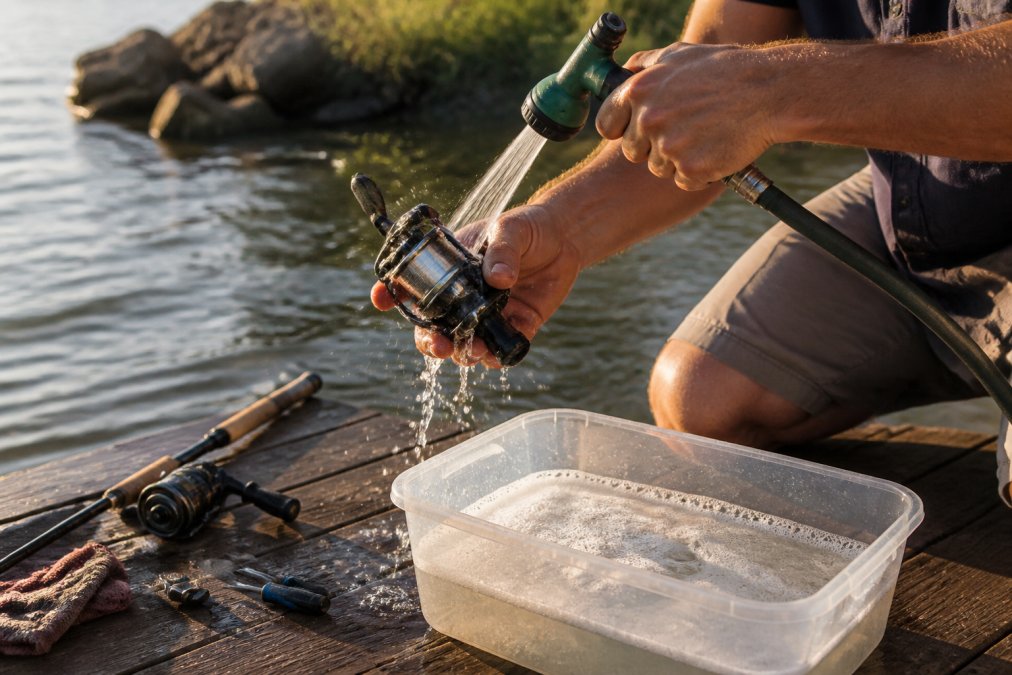
The Immediate Rinse
Do this within a few hours of leaving the water. The longer salt sits on the reel, the more damage it does.
- Remove the spool from the reel. This exposes the rotor and the internal areas where saltwater collects.
- Rinse the reel body and spool with a gentle stream of freshwater. Tilt the reel so water runs through and out, rather than pooling inside.
- Wipe down every surface with a damp microfiber cloth, paying attention to the bail arm, handle knob, and line roller. These areas collect the most salt.
- Dry the reel thoroughly with a clean cloth. Do not leave it wet, as trapped moisture accelerates corrosion.
- Store the reel with the drag backed off completely. This relieves pressure on the drag washers and prevents them from taking a set.
This quick rinse handles the surface salt and removes the immediate threat. It does not address the saltwater already inside the gear housing.
The Deep Clean
A deep clean requires disassembling the reel to access the internal components. This is where you remove old grease, inspect for corrosion, and apply fresh lubrication. The full process is covered in the next section, but the basic steps are:
- Disassemble the reel following the manufacturer's schematic.
- Clean each component with mild soap and water, then dry completely.
- Inspect every part for signs of corrosion or wear.
- Apply fresh grease to gears and drag washers.
- Oil the bearings and moving pivot points.
- Reassemble and test the drag and retrieve.
Deep Cleaning Spinning Reels: The Full Disassembly
Spinning reels are the most common saltwater reel type and the easiest to service at home. The process is straightforward if you work slowly and keep track of every part.
Start by removing the handle. Most spinning reels use a screw or nut to secure it to the drive shaft. Once the handle is off, remove the drag star or cap, then loosen the main body screws. The side plate lifts off to expose the gear housing.
Inside, you will find the main gear, the pinion gear, and the oscillation system that moves the spool up and down. Remove these and set them in your parts tray. Pay attention to the order they come out, because reassembly is the reverse.
The drag washers sit beneath the main gear or inside the spool, depending on the reel design. They are the heart of your drag system and often the first thing to fail from saltwater intrusion. Clean them with soap and water, dry them completely, and inspect them for wear. If they are glazed, cracked, or compressed, replace them.
Clean the gear housing thoroughly. Old grease mixed with saltwater forms a gritty paste that grinds down the gears. Wipe it out with a cloth, then inspect for rust or pitting. A light surface film is normal and cleans off easily. Deep pitting means the housing has started to corrode and needs more aggressive treatment.
The line roller on the bail arm is a common trouble spot. This small bearing guides your line onto the spool and takes a lot of abuse. If it does not spin freely, disassemble it, clean out the salt buildup, and oil it before reassembling.
Choosing the Best Reel Grease for Saltwater
Not all grease is created equal, and the grease you choose matters more than almost any other maintenance decision. The best reel grease for saltwater use is a synthetic grease designed for fishing reels, not a multipurpose automotive grease.
Synthetic greases offer better water displacement and resist breaking down in saltwater. They also maintain their consistency across a wider temperature range. Look for a grease labeled for reel use, with corrosion inhibitors built in.
The drag washers need a different treatment than the gears. They rely on friction to create smooth, consistent drag pressure, so they should be greased lightly or not at all, depending on the washer material. Felt washers are often greased, while carbon fiber washers work best with a thin coat of drag grease or nothing at all. Check your reel's schematic for the manufacturer's recommendation.
| Component | Lubricant | How Much | Why |
|---|---|---|---|
| Main gear | Synthetic reel grease | Thin, even coat | Reduces friction and protects against corrosion |
| Pinion gear | Synthetic reel grease | Light coat | Prevents wear where it meshes with the main gear |
| Drag washers | Drag grease or none | Minimal | Maintains smooth friction for consistent drag |
| Bearings | Synthetic reel oil | 1-2 drops | Allows free spinning without attracting grit |
| Line roller | Synthetic reel oil | 1 drop | Keeps the roller spinning freely |
| Bail arm pivot | Synthetic reel oil | 1 drop | Prevents stiffness in the trip mechanism |
A common mistake is over-lubricating. Too much grease attracts sand and grit, which turns into a grinding paste inside the gear housing. A thin, even coat is all you need. The grease is there to protect the metal and reduce friction, not to fill the housing.
Common Mistakes That Ruin Reels
The most damaging mistake anglers make is using a high-pressure spray to rinse their reels. That forceful stream drives water past the seals and into the bearings, pushing saltwater deeper where you cannot reach it. A gentle rinse or a bucket of water is always the safer choice.
Another frequent error is skipping the disassembly entirely. A surface rinse removes the visible salt, but the brine inside the gear housing keeps corroding the internal components. If you never take the reel apart, you are only doing half the job.
Storing a reel with the drag tightened is a slow killer. The pressure compresses the drag washers, and over months of storage, they take a set. When you finally need the drag, it will be jerky and inconsistent. Always back the drag off before storage.
Many anglers also neglect the line itself. Braided line is especially prone to holding saltwater against the spool, where it corrodes the spool lip. Rinsing the spool and letting the line dry before storage prevents this.

Signs of Salt Damage and When to Service
Salt damage does not announce itself with a warning light. It shows up as subtle changes in how the reel feels, and catching it early saves you from a costly rebuild.
A rough or grinding retrieve is the most obvious sign. If the handle turns with resistance or you feel a gritty sensation through the crank, the gears or bearings are already corroding. The retrieve should feel smooth and effortless.
A spool that does not spin freely when you cast indicates a seized bearing. The spool should spin with a smooth, even motion and come to a gradual stop. If it stops abruptly or feels tight, the bearing needs cleaning or replacement.
The drag is another early indicator. A drag that is jerky, sticky, or inconsistent has contaminated washers. Saltwater intrusion causes the washers to bind and release unevenly, which costs you fish when a strong run puts pressure on the line.
Corrosion on the exterior is the final warning. Rust spots on the bail arm, handle, or reel body mean the protective coating has failed. Once exterior corrosion starts, the internal components are not far behind.
| Sign of Damage | Likely Cause | What to Do |
|---|---|---|
| Grinding retrieve | Corroded gears or bearings | Full disassembly and cleaning |
| Spool does not spin freely | Seized spool bearing | Clean or replace the bearing |
| Jerky drag | Contaminated drag washers | Clean or replace the washers |
| Rust on exterior | Protective coating failure | Clean, dry, and apply protective coating |
| Stiff anti-reverse | Salt buildup on the mechanism | Clean and lubricate the anti-reverse bearing |
If you fish saltwater regularly, plan a deep clean at least twice a season. Anglers who fish every weekend should consider a monthly inspection. The time investment is small compared to the cost of replacing a reel that has corroded past the point of repair.
Long-Term Storage Preparation
Preparing a reel for long-term storage is different from routine cleaning. When you are done fishing for the season, the reel needs a complete service before it sits idle for months.
Start with a full disassembly and deep clean, following the process outlined above. Remove all old grease, clean every component, and inspect for any signs of corrosion. This is the time to replace worn parts, not after the reel has sat all winter.
Apply fresh grease and oil to all the appropriate components. A properly lubricated reel is far less vulnerable to corrosion during storage than a dry one. The lubricant creates a barrier between the metal and the air, preventing oxidation.
Reassemble the reel and back the drag off completely. Store the reel in a cool, dry place, away from temperature extremes. A climate-controlled room is ideal. Avoid storing reels in a garage or shed where they are exposed to humidity and temperature swings.
Loosen the drag, but do not remove the spool. Keeping the spool in place protects the spool shaft and the internal components from dust and moisture. Cover the reel with a cloth or store it in a reel bag to keep dust off the exterior.
For anglers in colder climates, this preparation is essential. A reel that goes into storage clean and lubricated will be ready to fish in the spring. A reel that goes into storage covered in salt will be a rusted paperweight by the time the ice melts. The extra hour of work now saves you from a full rebuild later. If you are looking to refresh your kit for the season, the fishing kits and tackle bundles at Leash the Wilderness are a solid starting point, and our rods and reels collection has field-tested options that hold up to saltwater abuse.
Saltwater reels fail because corrosion is a clock that starts ticking the moment the reel hits the water. A quick freshwater rinse after every trip stops the surface damage, and a full disassembly and re-lubrication twice a season protects the internal components where the real damage happens. Back off the drag, store the reel dry, and it will serve you for years instead of one hard season. At Leash the Wilderness, we carry gear we trust miles from the truck, and we stand behind reels and tackle built for real use. Shop our complete fishing kits and gear bundles with 20% off to keep your setup ready for the next trip.
Frequently Asked Questions
What is the best thing to clean fishing reels with after saltwater?
For a quick rinse, plain freshwater is the first step. For a deeper clean, use a dedicated reel cleaner or a mild dish soap diluted in warm water. Avoid harsh degreasers and solvents on the body and external parts. After cleaning and drying, apply a quality reel oil to moving parts like the bail arm hinge and handle knob, and use a proper reel grease on gears and drag washers. A soft toothbrush and microfiber cloth are ideal tools for removing salt buildup without scratching.
Is WD-40 good for cleaning fishing reels?
Standard WD-40 is a water displacer and solvent, not a lubricant. While it can help displace moisture after a rinse, it will wash away the factory grease and leave your reel dry. Using it as a primary cleaner can lead to increased friction and wear. It's better to use products designed for reel maintenance. If you use WD-40 to displace water, follow up immediately with a proper reel oil and grease on all relevant parts to ensure smooth operation.
Does salt water ruin fishing reels?
Yes, saltwater will ruin a fishing reel if left unrinsed. Salt is hygroscopic, meaning it attracts moisture. This trapped moisture causes oxidation and corrosion on metal components, including the gears, bearings, and bail arm. Salt buildup also creates friction and grit that grinds down moving parts. However, with a quick freshwater rinse after each trip and a periodic deep clean, a quality saltwater reel can last for many seasons. Regular maintenance is the difference between a reel that lasts and one that seizes.
How often should I perform a deep clean on my saltwater reel?
A quick freshwater rinse and dry is necessary after every saltwater trip. A full deep clean, which involves disassembling the reel, cleaning the internal components, and re-greasing, should be done at least once a season for a typical weekend angler. If you fish in saltwater more than once a week, or if you dunk the reel or fish in heavy surf, plan to deep clean it every two to three months. If you notice grinding, roughness, or a decrease in casting performance, it's time for a service.