

Quick Summary
Choose wading footwear by checking local sole rules, the manufacturer's fit chart, and the footwear's stated use. Sole traction varies by model and conditions; try your full wader, bootie, and sock setup before fishing.
- Decide first between wading boots, hiking boots and waders with integrated boots.
- Felt grips wet, algae-covered stone but soaks up water and may be restricted.
- Rubber with deep lugs handles mud, sand and gravel better and dries faster.
- Add studs only where rocks demand them, since they can damage soft streambeds.
- Size using the manufacturer's chart with your thickest sock and bootie.
Table of Contents
- Why Mountain Streams Are Harder on Boots Than Lowland Rivers
- Step 1: Decide Between Wading Boots, Hiking Boots and Waders
- Felt vs Rubber Wading Boot Soles for Rocky Streambeds
- Studded Wading Boots for Slippery Rocks: When They Earn Their Place
- Wading Boot Fit With Stockingfoot Waders and Neoprene Socks
- Ankle Support, Weight and Packability for Hike-In Water
- How to Clean and Dry Wading Boots Between Rivers
- Pick Your Boot Setup and Test It on Your Next Trip
- Frequently Asked Questions
How to Choose Mountain Stream Wading Boots Step by Step
Last Updated: October 27, 2026
Why Mountain Streams Are Harder on Boots Than Lowland Rivers
Mountain streams punish footwear in ways lowland rivers rarely do. The bottom is steep, rocky and often slick with algae, and the current can be fast and cold. A boot that works fine on a sandy riverbank can leave you sliding off a flat stone in a foot of water.
Think about what your boots face on a typical mountain stream. You step onto rounded cobbles, then onto angular rock with sharp edges, then into a pocket of silt. Each surface demands something different from the sole. Your boots also carry you over approach trails before you ever touch the water, so weight and comfort matter as much as grip.
This guide walks through decisions to consider. Work through them in order as you choose a boot setup for your water, trails and budget.
Step 1: Decide Between Wading Boots, Hiking Boots and Waders
Start with the question of what you are wearing in the water. The three main options differ in how they are worn and used.
- Wading boots attach to a separate wader or stand alone as a boot built for water.
- Hiking boots handle long approaches well but usually lack a sole made for wet rock. Many anglers wear them only for dry, short crossings.
- Waders with integrated boots combine waders and boots in one piece.
The Fishing Chest Waders with Boots have integrated boots and are listed as nylon and PVC. The listing does not state a verified waterproof rating or boot-grip specification. Review the selected size and supplier details before ordering.

Watch out: A boot that fits well in a store can feel tight once you add a thick sock and a wader bootfoot. Test your full setup before committing.
Felt vs Rubber Wading Boot Soles for Rocky Streambeds
Sole choice depends on the streambed and the rules where you fish.
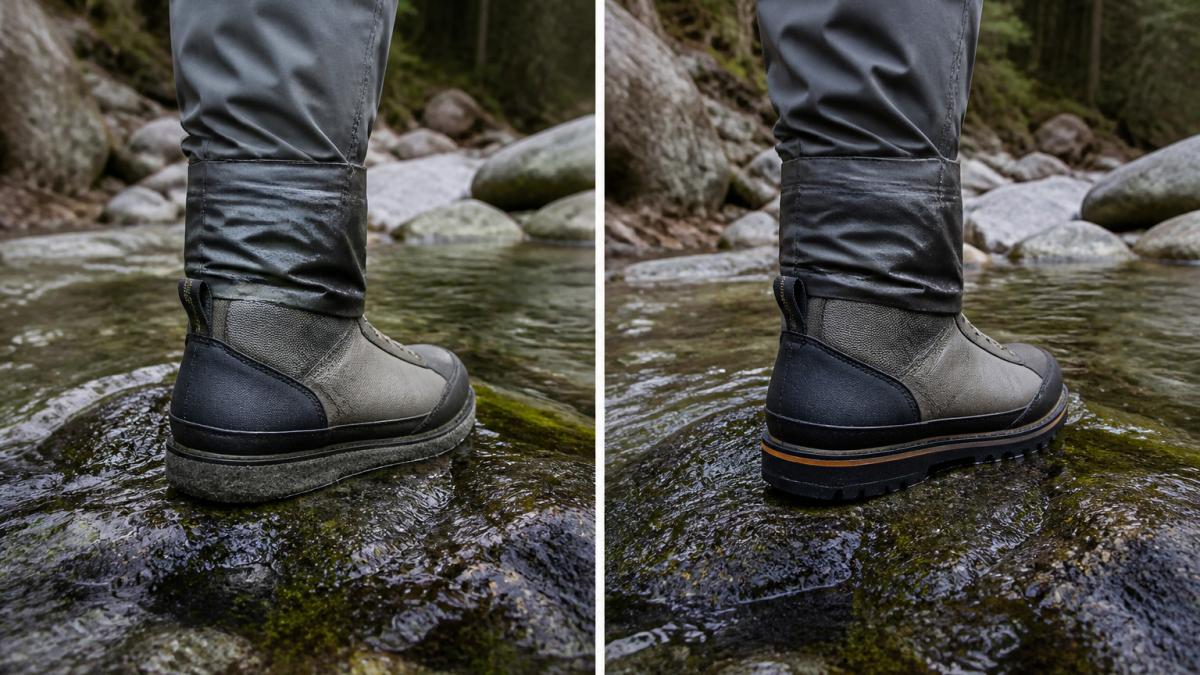
Felt soles. Felt and other fibrous materials can retain sediment and organisms. Local rules differ: Alaska prohibits felt-soled wading footwear in fresh water, while other jurisdictions may have different rules. Check the current regulations for each water you plan to fish. The Minnesota DNR overview of felt-soled waders and Alaska Fish and Game guidance describe state-specific rules and cleaning considerations.
Rubber soles. Rubber designs vary in tread, compound, and intended use. A product label alone does not establish how a boot will perform on a particular rock or streambed. Compare the exact model's construction and care instructions, and do not assume every rubber sole is permitted or suitable in every location.
Studs. Studs are an added feature on some models, but their suitability depends on the boot, substrate, and local rules. Check the maker's instructions and the regulations for your destination before selecting or installing them.
Use this comparison before choosing:
| Sole option | What to verify | Decision check |
|---|---|---|
| Felt | Local restrictions and the maker's cleaning instructions | Choose only where legal and where the maker provides care guidance |
| Rubber | The specific tread pattern and the intended use listed for that model | Do not infer grip from the word “rubber” alone |
| Studded | Whether the sole accepts studs and whether they are permitted locally | Follow product instructions and local rules |
Studded Wading Boots for Slippery Rocks: When They Earn Their Place
Some models offer metal or carbide studs, but their performance and compatibility vary by boot and conditions. Check the maker's instructions before adding or replacing studs, and review local rules for the water you plan to fish. Do not assume studs are allowed or appropriate on every streambed.
Wading Boot Fit With Stockingfoot Waders and Neoprene Socks
Fit matters for comfort. Follow the manufacturer's size chart and fit instructions.
The mistake almost everyone makes is fitting the boot with the wrong sock. A thin synthetic liner sock fits differently than a thick neoprene bootie or a wool sock. Fit the boot with the exact sock and wader bootie you will wear in the water, not your everyday socks.
Work through these checks in order, with the boot laced and your heel seated:
- Toe room. With your heel pushed back, you should be able to wiggle your toes and feel the front of the boot without your toes pressing it. Toes jammed against the front is a fail, especially on descents.
- Heel lift. Walk a few steps. Your heel should stay seated with minimal lift. More than slight lift means the boot is too long or too loose in the heel, and your foot will slide on steep ground.
- Ankle support. The boot should hold your ankle without pinching. A higher cut helps on rough trails and uneven stream edges, but only if the fit is close enough to actually support.
- Bootie seating. Your wader's stocking foot or bootfoot should sit flat inside the boot without bunching at the heel or under the arch. Bunching causes pressure points and cold spots.
- Circulation check. Lace the boot and stand for a minute. If your toes go numb or the top of your foot throbs, the boot is too tight, even if the length is right.
Use the manufacturer's size chart and fit instructions, not your usual shoe size. Wading boots are sized to accommodate a wader bootie, so your street size is often wrong. If you are between sizes, size to the larger foot and the thicker sock you plan to use, then confirm against the maker's chart.
Try the boot with each sock and bootie combination you expect to wear. A fit that works with a thick layer may feel loose with a thinner one, so recheck heel movement and toe room for each setup.
Ankle Support, Weight and Packability for Hike-In Water
Consider the approach distance and the gear you plan to carry.
For the walk to the water, compare the footwear you already own with the terrain and load. The linked Fishing Chest Waders with Boots listing describes integrated boots and nylon/PVC construction, with US shoe-size options. It does not list a verified boot-grip specification or waterproof rating, so confirm the selected size and details before ordering.
How to Clean and Dry Wading Boots Between Rivers
Boot care between waters matters for fit and for moving mud, plant fragments, or small organisms. Cleaning steps differ by region, so check local fisheries and invasive-species guidance before you travel.
- Before leaving a site, inspect the sole, tread, laces, and boot seams. Remove visible mud, sediment, and plant matter with a brush, following local directions.
- Separate removable parts, such as liners or insoles, when the manufacturer allows it. Let the boots and components dry completely before using them in a different waterbody when local guidance recommends drying.
- If you cannot fully clean and dry gear, check the destination agency's decontamination rules. Alaska Fish and Game describes clean, dry, and decontaminate steps for anglers; its guidance notes that heat or chemical methods may affect gear materials.
- Follow the boot maker's care instructions for cleaning products and drying temperatures. Do not assume that a rinse alone makes gear ready for another water.
Rules and recommended treatments vary by location and sole material. For example, Minnesota DNR explains that felt can retain material and may be difficult to decontaminate, while Alaska prohibits felt-soled footwear in fresh water. Read the current rule for the exact location you plan to fish, and inspect all equipment that contacts the water, not just the boots.
For routine storage, allow boots to dry as directed by the maker and check tread, laces, and any replaceable parts before the next trip. If you find a loose component or a damaged sole, contact the manufacturer or seller for repair guidance rather than assuming the boot will perform normally.
Do a Full Fit Check Before You Wader
Try the boots with the exact stockingfoot waders, booties, and socks you plan to wear. A boot that fits over a thin everyday sock may feel cramped with a wader bootie, while an oversized boot can let your heel lift. Check the boot maker's size chart and use the measurements it requests; do not assume street-shoe sizing transfers between brands.
Start with the heel seated at the back and lace the boot evenly. Your toes should have room to move without pressing into the front. Walk on level ground, then a gentle slope, and flex your ankle. Notice whether the heel lifts, the instep pinches, or the stockingfoot bunches beneath the arch. Re-lace once and repeat the check before changing sizes.
Inspect the sole pattern, boot construction, and care instructions for the exact model you are considering. Terms such as “rubber” or “felt” do not by themselves establish traction on every streambed. Check local rules for sole materials, then choose a route and pace that fit your footing. If the boot or wader listing leaves size, fit, or intended use unclear, contact the seller before buying.
Check the Product Listing Before You Order
Use the product page to confirm what the seller is actually offering. “Wading boot,” “hiking boot,” and “wader with boots” describe different setups. Check whether the listing is for a separate boot or an integrated wader, which size system it uses, what materials and sole options it names, and which parts are included. Compare those details with the manufacturer or seller's size chart rather than relying on a broad title or photo.
The linked Fishing Chest Waders with Boots listing identifies an integrated boot, nylon/PVC construction, and US shoe-size options 7–14. It does not provide a verified waterproof rating, sole-grip specification, or detailed fit measurements. Those omissions matter when you need specific performance or fit information. Ask the seller to confirm any detail you need before ordering, and do not treat an unlisted feature as confirmed.
For a separate wading boot, use the same checks: confirm that the exact model is intended to be worn with your wader type, then fit it with the stockingfoot and socks you will use. If the listing does not answer those questions, choose a listing with clearer information or contact the maker. The goal is a setup that fits your layers and follows the rules for the water you plan to fish.
Pick Your Boot Setup and Test It on Your Next Trip
Put the decisions together in this order:
- Choose your base system: wading boots with waders, an integrated waders-and-boots setup, or a hiking boot for short crossings.
- Pick the sole that matches your water and the regulations where you fish.
- Add studs only if your rocks demand them.
- Fit the boot with your actual sock or bootie.
- Check ankle support and weight against your hike-in.
- Plan your cleaning and drying routine before you need it.
Frequently Asked Questions
What should I look for in wading boots for mountain streams?
Consider the sole and fit for the conditions you expect. Follow the manufacturer's size chart and fit instructions.
Are felt or rubber soles better for rocky streams?
Check the rules for the water where you plan to fish before choosing a sole type.
Do wading boots need to fit differently with waders?
Follow the boot maker's size chart and fit instructions for your intended setup.
Can you use hiking boots for stream wading?
Check the manufacturer's size chart and fit instructions, and confirm the product's intended use before wearing it in water.
