

Quick Summary
For mountain waters, carry a small, deliberate set of trout fly patterns: dry flies for fish feeding on the surface, nymphs for subsurface riffles and pocket water, and streamers for high or off-color flows. Elk Hair Caddis, Parachute Adams, Stimulator, Pheasant Tail, Hare's Ear and Prince Nymph cover most conditions at elevation.
- Start with the situation: dries for rising fish, nymphs for riffles, streamers for high or cloudy water.
- Elk Hair Caddis (sizes 12-16) works over fast riffles where caddis are bouncing on the surface.
- Carry each pattern in at least two sizes before changing colors.
- A dry-dropper rig fishes the surface and drift lane in one pass when you don't know what fish want.
- Use 12-18 inches of tippet for the dropper and keep a Prince Nymph on the point for depth.
Table of Contents
- Why Mountain Water Needs a Different Fly Box
- 1. Dry Flies That Work on Fast, Cold Water
- 2. Nymphs for Subsurface Presentation in Riffles
- 3. Streamers and Attractor Patterns for High Water
- 4. Matching Pattern Size and Color to Your Water
- 5. How to Choose a Fly for Trout in Mountain Streams
- Rigging and Presenting Your Starter Fly Box
- Stock Your Mountain Fly Box Before Your Next Trip
- Frequently Asked Questions
7 Essential Trout Fly Patterns for Mountain Waters
Last Updated: October 30, 2026
Why Mountain Water Needs a Different Fly Box
Mountain streams don't behave like the freestone rivers most fly boxes were built for. Water runs faster and colder, it rises and drops with snowmelt, and the fish hold in narrower lanes.
So the goal is a smaller, more deliberate box. Fewer patterns, each one chosen for a specific job: a dry for the surface, a nymph for the riffles, a streamer for high or off-color water. Start with the trout fly patterns that cover those three situations, then fill in sizes and colors to match what you actually see in the water.
That's the approach this guide takes. It covers seven patterns and how to choose between them, with a focus on conditions you'll meet at elevation.
1. Dry Flies That Work on Fast, Cold Water
Dry flies earn their place when fish are looking up. In mountain water that window is narrow, often a short push of caddis or mayflies in the afternoon, so carry dries that float high, stay visible in chop, and cover the two or three hatches you're most likely to hit at elevation.
The core three, and what each one does:
- Elk Hair Caddis (sizes 12-16). A high-floating, bushy caddis imitation that skates and skitters well in riffles. It's the most forgiving dry for fast water because the elk hair wing sheds water and stays visible. Use it when you see caddis bouncing over the surface or when nothing specific is hatching.
- Parachute Adams (sizes 12-18). A mayfly generalist with a white post you can track in foam and glare. It covers the Baetis (blue-winged olive) hatches common on tailwaters and high-elevation streams, especially on cloudy afternoons.
- Stimulator (sizes 8-14). A big, buoyant attractor that doubles as a stonefly and hopper imitation. In mountain water it's your search fly for pocket water and the top of riffles, and it floats well enough to hold up a dropper nymph underneath.
Size first, color second. Carry each pattern in at least two sizes before you start swapping colors. Match the size to what you actually see on the water: turn over a rock, check the spider webs along the bank, and look at what's drifting in the foam line.
When not to fish a dry. If you've covered the likely water with two sizes and gotten no rises, don't keep changing dries. Switch to a nymph.
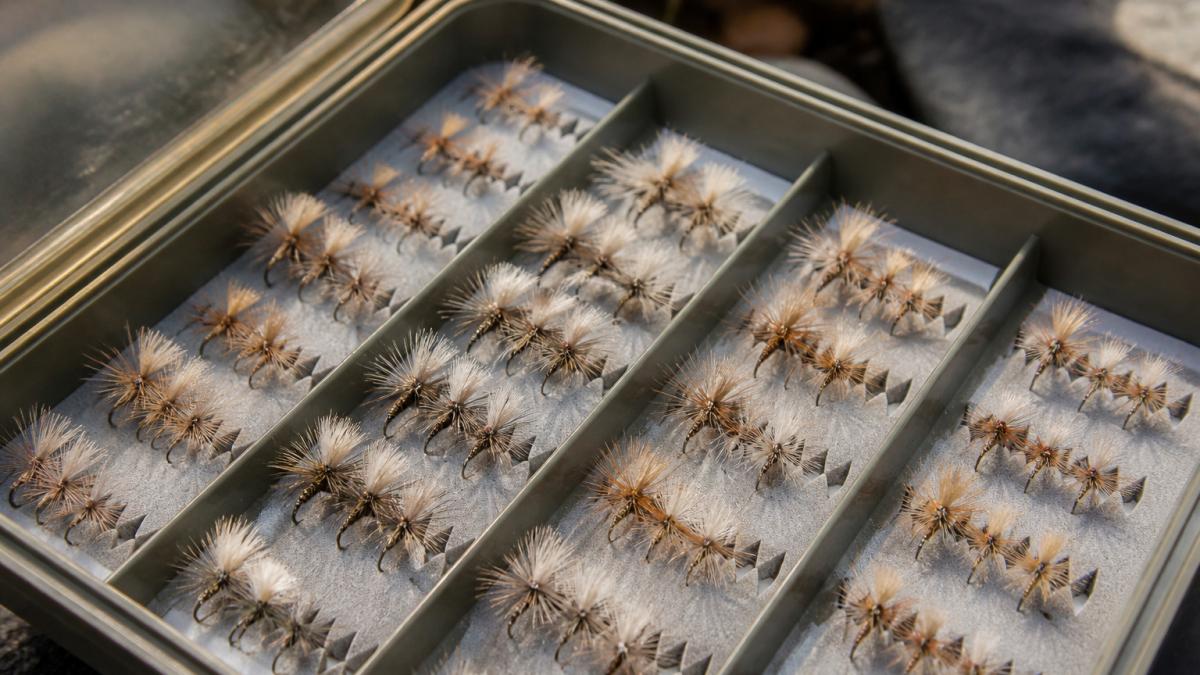
Here is how the three core dry patterns compare on size range and job.
| Pattern | Sizes | Best for |
|---|---|---|
| Elk Hair Caddis | 12-16 | Caddis over fast riffles |
| Parachute Adams | 12-18 | Baetis hatches, cloudy afternoons |
| Stimulator | 8-14 | Pocket water and riffle tops |
2. Nymphs for Subsurface Presentation in Riffles
Most trout feed below the surface, and in mountain water that's where you'll spend most of your time. Riffles and pocket water are good places to look because fish often hold just off the main current. Your job is to get a nymph down to their lane and drift it at current speed.
The core three, and what each one does:
- Pheasant Tail Nymph (sizes 14-18). A slim mayfly imitation that covers Baetis and small stonefly nymphs. It's the default subsurface fly on high-elevation streams where mayflies dominate. Fish it unweighted behind a heavier fly or with a small bead.
- Hare's Ear (sizes 12-16). A buggy, generalist nymph that reads as caddis, mayfly, or scud depending on how you fish it. The dubbing picks up air and sinks slowly, which suits slower pools and the tailouts of riffles. It's the fly to tie when you don't know what's in the water.
- Prince Nymph (sizes 10-14). A heavier, flashier attractor nymph with a peacock herl body and white biot wings. It sinks fast, which makes it your anchor fly in deep pocket water and high-gradient runs. Fish it on the point with a smaller Pheasant Tail or Hare's Ear on the dropper.
Weight and depth. Use a bead-head or a tungsten bead-head for the anchor fly, and adjust depth by moving your strike indicator up or down the leader, adjusted to the water depth. For a ready-made option for suspending bait or nymph-style offerings, check the buoyant hook kit on our site. If you're ticking bottom every few drifts, you're close; if you're snagging constantly, raise the indicator.

Current speed and drag. The single biggest mistake in riffles is letting the nymph drag. Mend upstream as soon as the fly lands, and keep the rod tip low to keep line off the water. A drag-free drift at current speed is the goal when nymphing.
Rigging for pocket water. In tight pocket water, skip the indicator and high-stick with a short line, 10-15 feet of leader, fly dropped into each pocket, rod tip high, and you feel the take rather than watch for it.
10PCS Buoyant Fishing Hooks Kit Double Hook Reverse Suspended Euro Rig →
3. Streamers and Attractor Patterns for High Water
When snowmelt pushes streams up and off-color, trout often won't hold for a delicate imitation. A streamer, which is a larger fly meant to imitate a baitfish or a leech, gives them something they can see and react to.
Strip it through the slower edges and along undercut banks. Use a faster retrieve in cloudy water and a slower one when the flows drop and the water clears.
4. Matching Pattern Size and Color to Your Water
Size and color decide whether a fly gets refused or taken.
A simple approach: start with a natural tan, olive, or brown in a size that matches what you see drifting or on rocks. If that fails after a few drifts, change the size first, then the color. Avoid changing both at once, or you won't know which one mattered.
5. How to Choose a Fly for Trout in Mountain Streams
Use this sequence on the water:
- Look at the surface. If fish are rising, start with a dry sized to the natural insects you see.
- Check the subsurface. If nothing rises, switch to a nymph and fish the riffles and pocket water.
- Assess the flow. If the water is high or cloudy, move to a streamer or a larger attractor.
- Adjust one variable at a time. Change size, then color, then weight, and note what works.
Pick the fly that fits the conditions in front of you.
Rigging and Presenting Your Starter Fly Box
Rig your leader for the water you're fishing. Heavier tippet suits high, fast flows and bigger streamers, while lighter tippet gives a more natural drift on clear, slow water. If you're fishing two flies, put the heavier one on the point and the lighter one on a dropper.
Presentation matters as much as the fly. Mend the line so the fly drifts at the speed of the current, and keep slack in the leader to avoid drag. Watch the indicator or the tip of your line for hesitations, which often signal a take.
Stock Your Mountain Fly Box Before Your Next Trip
Build a box around the three situations above: a few dries, a few nymphs, and a couple of streamers, each in a range of sizes. Keep it compact so you can carry it and find patterns quickly. For waterproof storage that keeps patterns organized and dry on the water, see this large capacity tackle box.
Gear matters too. A reliable spinning reel pairs well with a light rod when you're setting up a starter kit for mountain trips. A waterproof tackle bag helps keep your fly box and tools dry, and a well-organized tackle box makes it easier to find what you need.
Check each product's listing for exact contents and specifications before you order. Some kits list a range of piece counts, so confirm what you're getting.
Shop the 40L Waterproof Fishing Tackle Backpack → https://leashthewilderness.com/products/40l-waterproof-fishing-tackle-backpack
Frequently Asked Questions
What flies work best for trout in mountain streams?
Mountain streams usually reward a small set of proven patterns rather than a large box. Carry a few attractor dry flies for locating fish, a couple of weighted nymphs for riffles and pocket water, and one or two streamers for high or off-color water. Start with a few sizes of each rather than many colors. Match the size to the insects you see on the water, and check the maker's size listing when you buy hooks, since sizes are not standardized across brands.
Should you use dry flies or nymphs in mountain rivers?
Both have a place, and conditions decide which to fish first. Dry flies work when you see rising fish or insects on the surface, and they let you watch the take. Nymphs fish below the surface and cover more water in fast riffles, where trout feed on drifting larvae. If nothing rises, switch to a weighted nymph under an indicator and fish the seams and the tails of pools. Many anglers run a dry fly as an indicator with a nymph dropped below it.
What fly size should you use for trout in mountain waters?
Smaller is usually the safer starting point in clear, cold mountain water, where trout get a close look at the fly. Sizes 14 to 18 cover many common mayflies and midges, while larger attractors around size 10 to 12 can help you locate fish in faster water. Confirm sizing against the hook manufacturer's listing, because hook gauges vary between brands and styles.
How do you choose a fly for clear, shallow mountain streams?
In clear, shallow water, trout can see your leader and your presentation clearly, so pick patterns that sit naturally and avoid heavy splashes. Lighter, smaller flies and a delicate drift matter more than bright colors. Look at what is hatching or drifting, then choose a fly with a similar size and profile. If fish refuse a fly after a few drifts, change the size or the color before changing the whole approach.
Ready to build your mountain fly box? Start with a few dries, nymphs, and streamers in the sizes you're seeing on the water, and expand from there. Browse our tackle collection for storage that keeps your patterns organized and dry.
