

Table of Contents
- Why Durable Hunting Gear for Cold Weather Matters
- Understanding Cold Weather Hunting Clothing Systems
- Merino Wool Hunting Base Layers: Why They Outperform Synthetics
- Waterproof Hunting Boots for Winter Conditions
- Hunting Gloves for Extreme Cold: Dexterity vs. Warmth
- Insulated Jackets and Windproof Outer Layers
- Gear Durability for Different Hunting Styles
- Caloric Intake and Nutrition for Cold Weather Hunts
Last Updated: July 28, 2026
Why Durable Hunting Gear for Cold Weather Matters
When temperatures drop below freezing and wind cuts across open country, most hunters discover their regular gear wasn't built for what's coming. Durable hunting gear for cold weather isn't just about staying warm, it's about staying effective. The difference between a successful cold-weather hunt and a miserable one often comes down to how well your equipment handles moisture, wind, and extreme temperature swings.
Cold-weather hunting demands gear that performs under stress. Your base layers need to wick moisture away from skin while maintaining insulation. Your outer shell must repel water without trapping humidity. Your boots must grip ice while keeping feet warm and dry for hours in a tree stand.
What separates hunters who thrive in cold conditions from those who suffer comes down to understanding how layering systems actually work. Most hunters either overdress (trapping sweat and getting cold) or underdress (losing body heat too quickly). The solution is building a system where each layer has a specific job.
Understanding Cold Weather Hunting Clothing Systems
A proper cold-weather hunting clothing system works like a machine with three distinct parts. Each layer handles a different problem: moisture management, insulation, and weather protection.
The foundation starts with moisture-wicking base layers that pull sweat away from your skin. Mid-layers trap dead air space and provide insulation. Outer layers shield you from wind and water using breathable, waterproof materials. When all three work together, you can hunt comfortably in conditions that would stop most people.
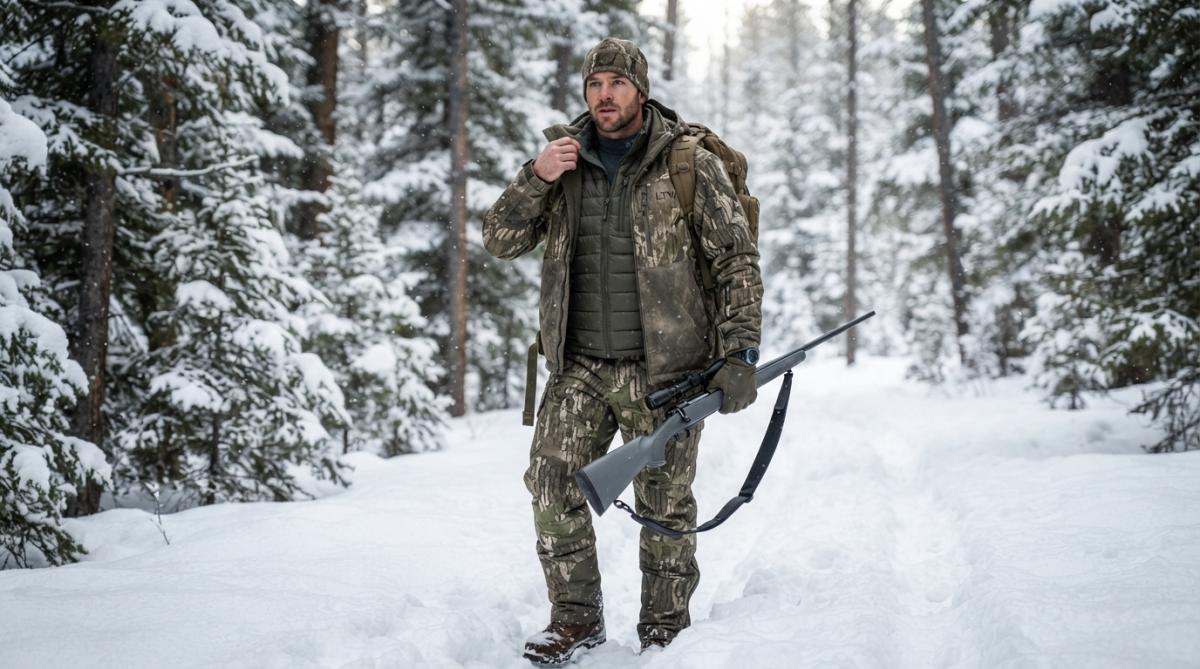
The Three-Layer Foundation
Base layers wick moisture. Mid-layers insulate. Outer layers protect from weather. This simple framework prevents the two biggest cold-weather mistakes: overheating during active movement and freezing during stationary periods.
Most hunters who struggle in cold weather skip one of these layers or use the wrong material. A cotton base layer absorbs sweat and stays wet, a recipe for hypothermia. A heavy insulated jacket without proper base layers traps moisture against your skin. An uninsulated shell jacket leaves you vulnerable once you stop moving.
The best approach is building a system where each layer is replaceable. You can wear a light mid-layer on mild days and swap it for a heavier one when temperatures plummet. This flexibility lets you hunt comfortably across a wide temperature range without carrying excessive weight.
Thermal Regulation and Moisture Management
Thermal regulation in cold-weather hunting comes down to controlling body heat production, heat loss, and moisture accumulation. When you're moving through the field, your body generates significant heat. When you settle into a tree stand, your heat production drops dramatically, and you need insulation to maintain core temperature.
Moisture management is the hidden variable most hunters overlook. Your body produces perspiration constantly, even in extreme cold. If that moisture gets trapped against your skin, it pulls heat away rapidly. Merino wool base layers excel here because they absorb moisture while remaining warm. Synthetic alternatives like polyester work well too, though they feel less comfortable against skin.
Breathability matters enormously. A jacket that doesn't breathe will trap moisture inside your layering system. Look for outer shells with breathability ratings above 10,000 grams per square meter per 24 hours (g/m²/24h).
Merino Wool Hunting Base Layers: Why They Outperform Synthetics
Merino wool has become the gold standard for hunting base layers because it handles the moisture problem better than any synthetic material. Unlike regular wool, merino wool fibers are fine enough to feel soft against skin, yet they absorb up to 30% of their weight in moisture while still maintaining insulation properties.
Merino wool naturally regulates temperature by absorbing and releasing moisture. When you're sweating, the fibers pull moisture away from skin. When you stop moving and cool down, the wool releases that moisture gradually, maintaining a dry microclimate. Synthetic materials wick moisture away quickly but don't absorb it.
Merino wool also resists odor naturally. Hunting often means days without proper washing, and merino base layers stay fresher longer than synthetics. For serious hunters who spend weeks in the field during cold season, that investment pays dividends in comfort and performance.
When choosing merino wool base layers, look for weight ratings. Lightweight merino works for active hunting with moderate cold. Midweight merino provides better insulation for stationary hunting.
Waterproof Hunting Boots for Winter Conditions
Your feet are the first place where cold-weather hunting fails. Wet feet lose heat 25 times faster than dry feet. Waterproof hunting boots designed for winter need three specific qualities: insulation, traction, and durability.
Most hunters choose between insulated rubber boots and leather boots with insulation liners. Rubber boots excel at keeping feet dry but can be cumbersome in certain terrain. Leather boots with removable insulation liners offer more versatility.
Insulation Types and Temperature Ratings
Boot insulation comes in three main types: Thinsulate, Primaloft, and down. Thinsulate is the industry standard, providing reliable insulation even when damp and maintaining flexibility in extreme cold. Primaloft offers slightly better warmth-to-weight ratio but costs more. Down provides exceptional warmth but loses all insulating properties when wet, making it unsuitable for wet hunting conditions.
Temperature ratings on hunting boots tell you the coldest conditions where the boot will keep feet warm during light activity. Most serious cold-weather hunters choose boots rated to minus-30 or colder. Insulation thickness of 8 to 10 millimeters provides good warmth without excessive bulk.
Traction and Durability in Snow and Ice
Winter hunting often means navigating snow-covered slopes and icy creek bottoms. Boot soles need aggressive tread patterns and materials that grip ice effectively. Vibram soles are the gold standard, maintaining flexibility in extreme cold while providing excellent traction.
Soles with deep lugs and angular edges bite into snow and ice better than shallow tread patterns. Look for boots with rubber that extends up the heel and toe areas, where most slipping occurs. Some premium hunting boots feature removable ice cleats that screw into the sole.
Durability determines how long your boots last through seasons of brush, rocks, and rough terrain. Full-grain leather uppers outlast synthetic materials by years. Goodyear welt construction, where the sole is sewn rather than glued, allows for sole replacement when they wear out, extending boot life significantly.
Hunting Gloves for Extreme Cold: Dexterity vs. Warmth
Hunting gloves present a fundamental trade-off: maximum warmth usually means losing trigger finger dexterity. The best cold-weather gloves find a middle ground by using thin insulation materials paired with strategic design choices.
Mittens keep hands warmest because fingers share body heat in a single chamber. Gloves offer better dexterity because each finger works independently. Most serious hunters choose convertible gloves with flip-back mittens, getting warmth when sitting and dexterity when it's time to shoot.
Glove insulation should match your hunting style. If you're actively moving, lighter insulation works because your hands generate heat. If you're stationary, you need more aggressive insulation. Synthetic insulation like Thinsulate works better than down for hunting because gloves inevitably get damp.
Grip matters enormously. Wet, frozen gloves make it nearly impossible to handle a rifle safely. Look for gloves with textured palm materials that maintain grip even when icy. Synthetic materials like rubberized neoprene grip better in cold, wet conditions than leather.
Insulated Jackets and Windproof Outer Layers
Your insulated jacket is the centerpiece of your cold-weather hunting system. It needs to provide serious insulation while remaining packable and quiet. Most quality hunting jackets use synthetic insulation like Thinsulate or Primaloft because these materials maintain warmth even if damp.
Down insulation provides exceptional warmth-to-weight ratio but becomes useless when wet. For hunting, where weather is unpredictable and moisture exposure is constant, synthetic insulation is the better choice.
Jacket construction matters as much as insulation type. Baffled construction divides the insulation into chambers to prevent shifting. Windproof outer shells should be quiet. Hunting jackets with loud, crinkly shells alert game to your presence. Look for soft-shell materials or jackets with fleece-lined outer shells that absorb sound.
Gear Durability for Different Hunting Styles
Cold-weather hunting gear needs to handle different stresses depending on your hunting method. Tree stand hunting and spot-and-stalk hunting demand different gear configurations and durability characteristics.
Tree Stand Hunting vs. Spot-and-Stalk Gear Needs
Tree stand hunting keeps you stationary for hours, sometimes in the same position for entire days. Your gear needs maximum insulation because you're not generating heat through movement. Bulky insulated jackets that would cause overheating during active hunting work perfectly for stand hunting.
Spot-and-stalk hunting requires constant movement across variable terrain. Your gear needs to breathe well because you're generating significant body heat. Heavy insulation causes overheating and excessive sweating. Lightweight, moisture-wicking layers work better because you can shed layers as activity level increases.
Most serious hunters actually carry different gear for different hunting styles. A complete cold-weather system might include heavy insulated bibs for stand hunting and lighter insulated pants for active hunting.
Field Repairs and Maintenance in the Backcountry
Quality cold-weather gear eventually needs repairs. A torn shell jacket, a separated seam, or damaged insulation can ruin a hunt if you can't fix it in the field. The best hunting gear uses construction methods that allow field repairs.
Seam-sealed jackets with taped seams are more durable than simple stitched seams. When a seam does fail, you can re-seal it in camp with a patch kit. Modern gear repair kits designed for hunting include patches, adhesive, and sealing tape that work in cold conditions.
Boots benefit from regular maintenance between hunts. Cleaning and drying boots thoroughly prevents material breakdown. Applying waterproofing treatments annually extends boot life significantly. Most quality hunting boots can be resoled when the original sole wears out.
Caloric Intake and Nutrition for Cold Weather Hunts
Most hunters overlook a critical factor in cold-weather performance: caloric intake. Your body burns enormous amounts of calories maintaining core temperature in extreme cold. Inadequate nutrition leaves you cold, tired, and unable to function effectively.
Cold-weather hunting increases caloric burn by 30-50% compared to moderate-temperature hunting. A hunter sitting in a tree stand in minus-20-degree weather might burn 4,000-5,000 calories per day just maintaining body temperature. Most hunters pack inadequate food, creating a massive caloric deficit.
The solution is planning nutrition around caloric density. High-fat foods provide more calories per ounce than carbohydrates or protein. Nuts, nut butters, fatty meats, and oils are essential cold-weather hunting foods. A handful of nuts provides 200+ calories in minimal weight.
Hydration matters equally. Many hunters become dehydrated in cold weather because they don't feel thirsty. Dehydration reduces your body's ability to maintain core temperature. Drink consistently throughout the day. Warm beverages are better than cold water because your body doesn't have to spend energy warming them. Frequent small meals throughout the day maintain energy levels better than one large meal.
Cold-weather hunting demands gear that works when conditions turn brutal. The layering systems we've covered, base layers, mid-layers, and outer shells, form the foundation of effective cold-weather performance. Quality insulated boots, gloves, and jackets complete the system. Leash the Wilderness specializes in field-tested gear designed for real hunting conditions. Our bundles combine proven cold-weather components into integrated systems that save money versus buying pieces separately. When you're miles from the truck in subzero temperatures, you'll appreciate gear selected for reliability, not hype. Explore Leash the Wilderness's cold-weather hunting bundles to build a system that keeps you warm, dry, and effective through the toughest seasons.
Layering Component |
Primary Function |
Best Material |
Replacement Frequency |
|---|---|---|---|
Base Layer |
Moisture management |
Merino wool or synthetic |
Every 2-3 seasons |
Mid-Layer |
Insulation |
Synthetic or wool blend |
Every 3-5 seasons |
Outer Shell |
Weather protection |
Breathable polyester |
Every 4-6 seasons |
Insulated Jacket |
Core warmth |
Synthetic insulation |
Every 5-7 seasons |
Hunting Boots |
Foot protection |
Insulated leather/rubber |
Every 3-4 seasons |
Gloves |
Hand warmth |
Synthetic insulation |
Every 2-3 seasons |
Frequently Asked Questions
What is the best material for durable hunting gear in cold weather?
Merino wool excels for base layers due to natural moisture-wicking and temperature regulation. For mid-layers, synthetic insulation or down fill provides reliable warmth in wet conditions. Outer shells need durable water-repellent (DWR) coatings and windproof fabrics like nylon or polyester blends. The key is layering materials strategically: merino wool next to skin, insulation in the middle, and breathable-yet-waterproof protection on top. Avoid cotton entirely—it retains moisture and loses insulating value when wet.
How do waterproof hunting boots for winter differ from regular cold weather boots?
Waterproof hunting boots feature sealed seams, insulation ratings (typically 200-1200g), and aggressive tread patterns for snow and ice traction. They prioritize durability in harsh terrain and mud. Regular winter boots often sacrifice these features for lighter weight or casual aesthetics. Hunting-specific boots also include quieter materials to reduce noise when stalking, articulated fit for tree stand comfort, and abrasion-resistant uppers that withstand brush and rocky ground. Check the temperature rating—boots rated for -20°F or lower handle extreme conditions better.
Why should I invest in merino wool hunting base layers instead of synthetic options?
Merino wool naturally regulates body temperature, wicking moisture away without feeling clammy—critical when you're stationary in a tree stand or moving during a spot-and-stalk hunt. It resists odor better than synthetics, reducing scent control concerns. Merino is also quieter and more durable under repeated washing. Synthetic base layers are cheaper and dry faster, making them better for high-intensity activity. For cold weather hunting where you're often still or moving slowly, merino wool's superior thermal regulation and moisture management make it worth the investment.
What's the difference between gear designed for tree stand hunting versus spot-and-stalk hunting in cold weather?
Tree stand gear prioritizes stationary warmth and pocket placement for easy access to rangefinders and calls while seated. You need maximum insulation because you're not generating body heat through movement. Spot-and-stalk gear emphasizes breathability and articulated fit to allow freedom of movement; excessive insulation causes overheating during hikes to the hunting area. Tree stand jackets often have larger, easier-to-use pockets; spot-and-stalk gear features streamlined designs to reduce snags on brush. Choose your layering system based on your primary hunting style to maximize both comfort and performance.
This article was written using GrandRanker