

Table of Contents
- Why Ultralight Combos Work for Trout
- Rod Action and Power Explained
- Ultralight Spinning Reel Drag Settings That Matter
- Line Weight and Test Strength for Finesse Fishing
- Trout Fishing Terminal Tackle Essentials
- Balancing Your Rod and Reel Setup
- Real Ultralight Combos That Work
- Frequently Asked Questions
Last Updated: September 23, 2026
Why Ultralight Combos Work for Trout
Trout don't need power. They need feel.
The best ultralight fishing combos for trout transmit every tap, every head shake, every subtle strike straight to your hand. That sensitivity is what separates a day of missed bites from a day of fish in the net. When you're working small lures, light line, and finesse presentations, a heavy rod kills your connection to what's happening on the other end.
The best ultralight fishing combos for trout pair a sensitive rod blank with a reel that won't overpower your cast. The goal isn't to throw far or land trophy fish. It's to present a lure so naturally that trout don't hesitate.
At Leash the Wilderness, we focus on gear that actually performs in the field. That means an ultralight combo needs to balance three things: enough backbone to set the hook and land fish, enough sensitivity to feel the bite, and enough finesse to throw small presentations without fatigue. Get those three right, and you'll fish longer and catch more.
Rod Action and Power Explained
Rod action describes where the rod bends when you load it. Rod power describes how much force it takes to bend.

For ultralight fishing, fast action is non-negotiable. A fast action rod bends primarily in the tip 6-8 inches, leaving the backbone stiff. That stiffness in the lower two-thirds of the rod gives you hook-setting power while the sensitive tip detects the lightest bites. Moderate action bends more of the blank, which feels slower to respond and masks subtle strikes.
Power rating on ultralight rods typically ranges from light to extra-light. Light power (1-3 lb lure capacity) handles presentations up to about 1/8 oz. Extra-light power (under 1 lb lure capacity) is for the smallest lures and thinnest line. Most trout anglers find light power more versatile because it still works with small crankbaits and spinners while keeping enough sensitivity for finesse work.
The 70.86" Light Power Fast Action Lure Rod from Leash the Wilderness is built exactly for this. Fast action blank, ultra-sensitive tip, light power rating. It's designed to feel the bite before you see it.
🛒 Shop the 70.86" Light Power Fast Action Lure Rod →
Ultralight Spinning Reel Drag Settings That Matter
A reel's drag system is what lets you land fish without breaking your line. For ultralight combos, drag tuning matters more than on heavier setups because you're working with thinner line and smaller margins for error.
Set your drag so a steady pull by hand takes effort but doesn't require a fight. A good test: pull line from the spool with steady pressure. Your drag should slip at about two-thirds of your line's rated breaking strength. If you're using 4 lb monofilament, your drag should slip around 2.5-3 lb of pull. If you're using 8 lb braided line with a 2 lb fluorocarbon leader, set your drag to slip at 1.5-2 lb so the leader breaks first and you don't snap the braid.
Most ultralight reels come pre-set too tight from the factory. Loosen it slightly before your first cast. You'll land more fish because your line won't snap under pressure, and you'll feel when the drag is actually working instead of the line just breaking.
Maintenance matters more than you think. Ultralight reels are lightweight because they use thinner metal and smaller internal parts. That makes them sensitive to grit, corrosion, and wear. A speck of sand in the drag system will cause uneven slipping. Salt spray or moisture left on the spool will pit the metal.
After each trip, rinse your reel with fresh water, not just the outside, but the spool and bail area where grit collects. Let it air dry completely before storing. If you fish saltwater or near salt spray, wipe down the reel body and spool with a soft cloth after rinsing. Once a season, apply a light coat of reel oil to the bail arm and handle, but avoid the drag system itself. Oil in the drag makes it slip unpredictably.
If your drag starts to slip unevenly or feels gritty, don't ignore it. Disassemble the drag stack (usually 3-4 felt and plastic washers), rinse each piece with fresh water, and let them dry. Reassemble in the same order. This takes 10 minutes and will restore smooth drag action. If you skip this, the uneven slipping will cause you to lose fish or snap your line on the hookset.
Gear ratio matters less for ultralight work than drag quality and maintenance. A 5:1 ratio retrieves line fast enough for most presentations. A 6:1 ratio helps in faster current. What matters more is a smooth drag, a reel body that won't corrode, and the willingness to rinse and dry your reel after every trip. Metal bodies handle repeated use better than plastic, especially if you're fishing multiple days a week. Budget reels with plastic bodies work fine if you maintain them, but they'll corrode faster in humid or salty conditions.
Line Weight and Test Strength for Finesse Fishing
Ultralight trout fishing demands a balance between strength and sensitivity. Line that's too heavy masks bites. Line that's too light breaks on the hookset.
Most ultralight anglers use 4-6 lb monofilament or 8-10 lb braided line. Monofilament has stretch, which absorbs shock and forgives imperfect hooksets. Braided line has zero stretch, which means every bite telegraphs instantly but also means you need better technique to avoid snapping off.
70.86" Light Power Fast Action Lure Rod →
For beginners, 4-5 lb monofilament is the safer choice. It's forgiving and still sensitive enough to feel strikes on small lures. For anglers with solid hookset technique, 8 lb braided line on a 2-3 lb fluorocarbon leader gives you the sensitivity of braid with the abrasion resistance of fluorocarbon near the lure.
Fluorocarbon leaders matter for ultralight work because they're nearly invisible to trout and more resistant to scrapes on rocks and debris. A 12-18 inch leader tied with a uni knot or improved clinch knot is standard. The leader should test about 50-75% of your main line strength so it breaks first if you get snagged, saving your main line and reel.
Trout Fishing Terminal Tackle Essentials
Terminal tackle is everything between your line and the lure: swivels, leaders, and small hardware that connect the pieces.
For ultralight trout combos, you need barrel swivels and snap swivels rated for light line. Oversized hardware telegraphs to trout and adds weight that kills delicate presentations. Micro swivels (size 10 or smaller) are standard. They prevent line twist without adding bulk.
The 187pc Ultimate Fishing Kit from Leash the Wilderness includes offset hooks, barrel swivels, snap swivels, swivel slides, three-way swivels, split shot weights, fishing beads, safety snaps, fishing leaders, and sinker weights. All stainless steel construction. For ultralight work, you'll use the smaller swivels and the split shot for weight adjustment.

🛒 Shop the 187pc Ultimate Fishing Kit →
Small split shot weights let you adjust presentation depth without changing your whole rig. A single split shot 18-24 inches above your lure gets it down slowly in shallow current. Two or three shot spaced along your leader work for faster water.
Most ultralight trout rigs use one of two setups: a simple leader-and-lure with no weight (for shallow, slow water), or a leader with small split shot and a lure below (for deeper or faster water).
Balancing Your Rod and Reel Setup
Balance is what separates a setup that feels good from one that causes hand fatigue after two hours.
🛒 Shop the 65" Carbon Fiber Fishing Rod →
Real Ultralight Combos That Work
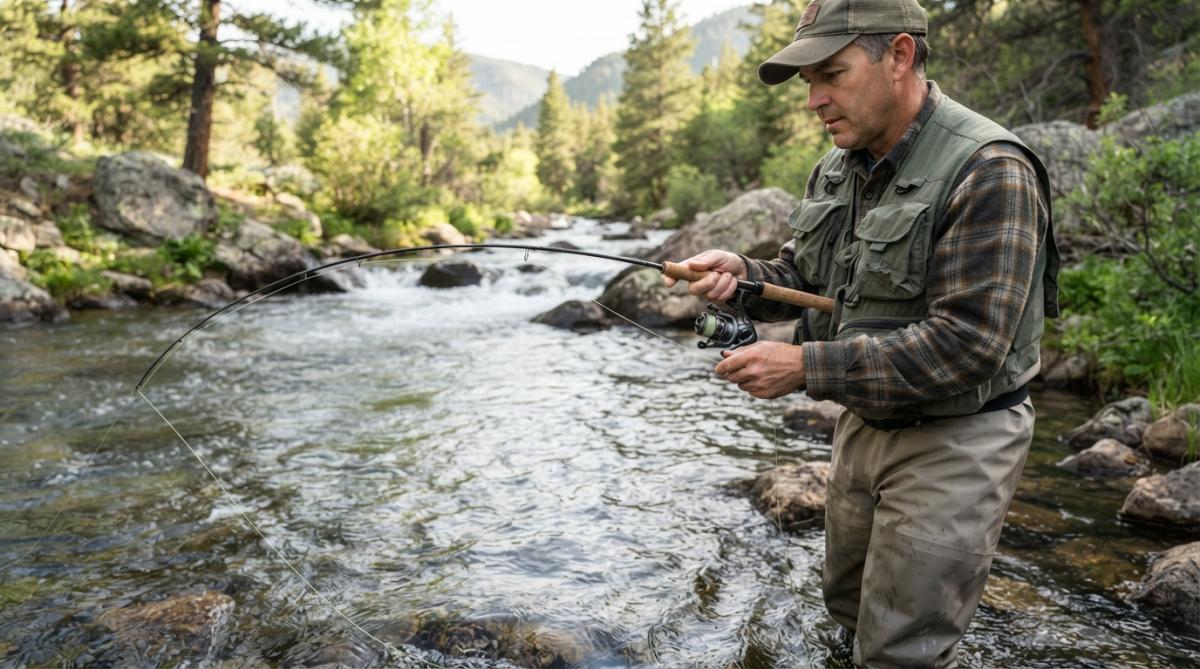
The 70.86" Light Power Fast Action Lure Rod paired with a 5:1 spinning reel spooled with 5 lb monofilament and a 2-3 lb fluorocarbon leader is a solid, proven ultralight combo for trout streams. The fast action gives you hook-setting power. The light power keeps presentations delicate. The monofilament forgives imperfect casts.
🛒 Shop the Pro Fishing Lure Kit →
🛒 Shop the 65" Carbon Fiber Fishing Rod →
Lure pairing summary:
| Lure Type | Best Combo | Why |
|---|---|---|
| Small crankbaits (1/16-1/8 oz) | Monofilament setup | Forgiving on hookset; natural action in slow water |
| Inline spinners (size 0-1) | Monofilament setup | Light weight; easy to cast; good for searching |
| Micro jigs (1/16-1/8 oz) | Braided setup | Sensitivity to bottom contact; better feel in current |
| Small spoons | Braided setup | Telegraphs vibration; works in deeper water |
| Soft plastics (2-3 inch) | Either setup | Versatile; monofilament for slow drifts, braided for active jigging |
Frequently Asked Questions
What is the best rod length for ultralight trout fishing?
A 65-70 inch rod is ideal for ultralight trout fishing. This length gives you the sensitivity you need for light lures and small baits while maintaining accuracy in tight streams and around structure. Shorter rods (under 65 inches) limit casting distance; longer rods make it harder to feel subtle bites. The 70.86" Light Power Fast Action Lure Rod hits the sweet spot for trout streams where you need both finesse and feedback.
Should I use 4lb or 6lb test line for trout?
Use 4lb test for clear water and pressured fish; use 6lb test for slightly stained water or when you're targeting bigger trout. The difference matters. Four-pound line transmits more feel through the rod, helping you detect light bites. Six-pound test gives you more margin if the fish runs hard into structure. Pair either with a fluorocarbon leader (2-3 feet of 2-3lb test) to stay invisible to the fish while keeping your main line strong.
Is ultra light gear actually better for trout?
Yes, but only if you match it to the conditions. Ultralight gear excels in clear water, small streams, and when trout are wary of heavy presentations. The sensitivity lets you feel strikes instantly, and the light lures look more natural. However, ultralight combos demand better technique, you can't muscle fish or make sloppy casts. If you're fishing murky water or larger rivers, a light-to-medium setup often works better. Know your water before committing to ultralight.
How do you balance a reel with an ultralight rod?
Match reel size and weight to rod power. An ultralight rod (light power, 6-10lb rating) pairs best with a compact spinning reel that weighs under 8 ounces. The reel should have a 1000-2500 spool size and a smooth drag rated for 8-12 pounds. If your reel is too heavy, it tips the rod balance forward and kills sensitivity. If it's too light, the combo feels unstable. Test the balance in your hand: the rod should feel neutral slightly ahead of the reel seat, not front-heavy or tail-heavy.