

Table of Contents
- What Makes a Dog First Aid Kit Work in the Field
- Essential Items for Canine First Aid
- DIY Dog First Aid Kit Checklist
- Common Trail Injuries in Dogs and How to Respond
- Kits for Different Activity Levels and Breed Considerations
- How to Choose the Right Dog First Aid Kit for Your Needs
- Building Your Field-Ready Kit: What Serious Outdoor Dog Owners Actually Carry
- Conclusion
Last Updated: August 4, 2026
When your dog is miles from the trailhead and suddenly limps or bleeds, there's no vet clinic waiting. This is where knowing the best dog first aid kits outdoors becomes the difference between a manageable situation and a real emergency. At Leash the Wilderness, we've spent years watching serious trail dogs get injured, and we've seen which kits actually perform when conditions turn rough. The challenge most outdoor dog owners face isn't finding a kit; it's finding one that's actually useful in the field instead of just looking good on a shelf.
What Makes a Dog First Aid Kit Work in the Field
A functional canine trauma kit isn't about having every possible supply. It's about carrying what you'll actually use, in weights and sizes that don't turn a day hike into a forced march.
The weight-to-utility ratio matters on the trail. A 5-pound kit with supplies you'll never touch is deadweight. A 12-ounce kit with sterile dressings, self-adherent wrap, tweezers for splinter and tick removal, and antiseptic wipes covers 90% of field injuries. The math is simple: lighter kits get carried; heavy ones get left behind.
Vet-approved supplies you can actually use separate real first aid from gear theater. Most commercial kits include items that look medical but require training or conditions you won't have in the field. Sterile gauze pads, self-adherent wrap (which sticks to itself, not fur), and a quality emergency blanket for hypothermia prevention are field-proven. Tweezers work better than improvised tools for tick removal. A muzzle, yes, a real one, belongs in every trail kit because pain makes even gentle dogs unpredictable.
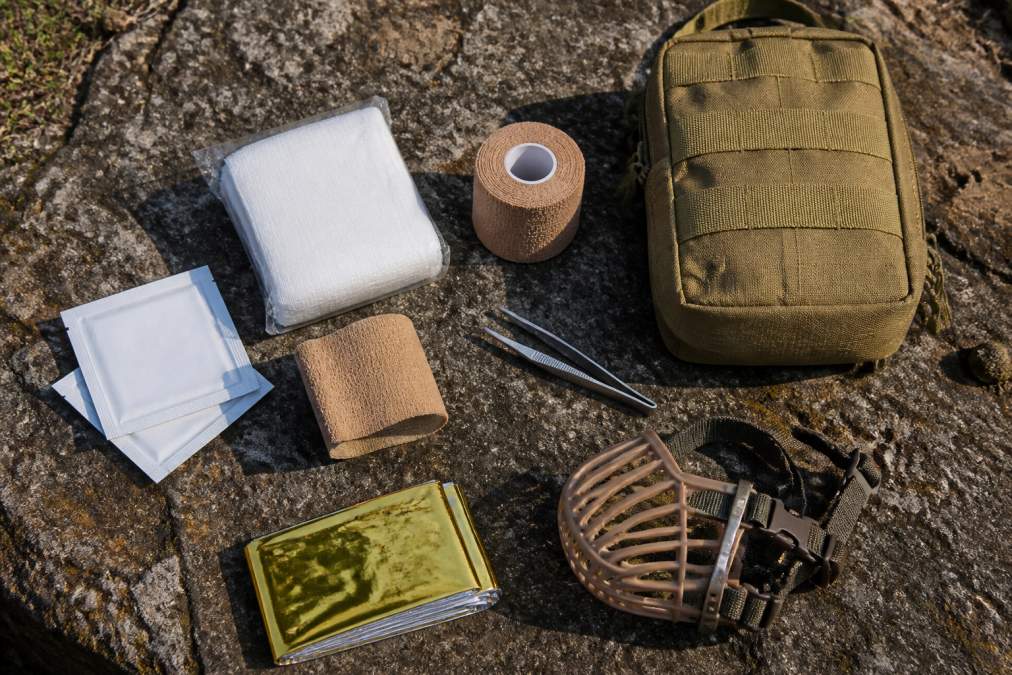
The difference between weekend gear and backcountry gear is redundancy and stabilization. Weekend kits assume you're 30 minutes from help. Backcountry kits assume you're not. That changes what you carry, more gauze, a tourniquet for serious bleeding, pain management options, and electrolyte replacement for shock prevention.
Essential Items for Canine First Aid
The core supplies you need before heading out form the foundation of any functional field kit. These aren't optional additions, they're the items that handle the injuries that actually happen on trails.
Wound care and bandaging basics start with sterile dressings. Gauze pads, non-stick pads, and self-adherent wrap (not traditional bandages, which stick to fur and cause pain when removed) are the essentials. Antiseptic wipes clean wounds without requiring water or irrigation equipment. Tweezers remove ticks, splinters, and debris. A small roll of medical tape secures dressings on legs and paws where movement is constant.
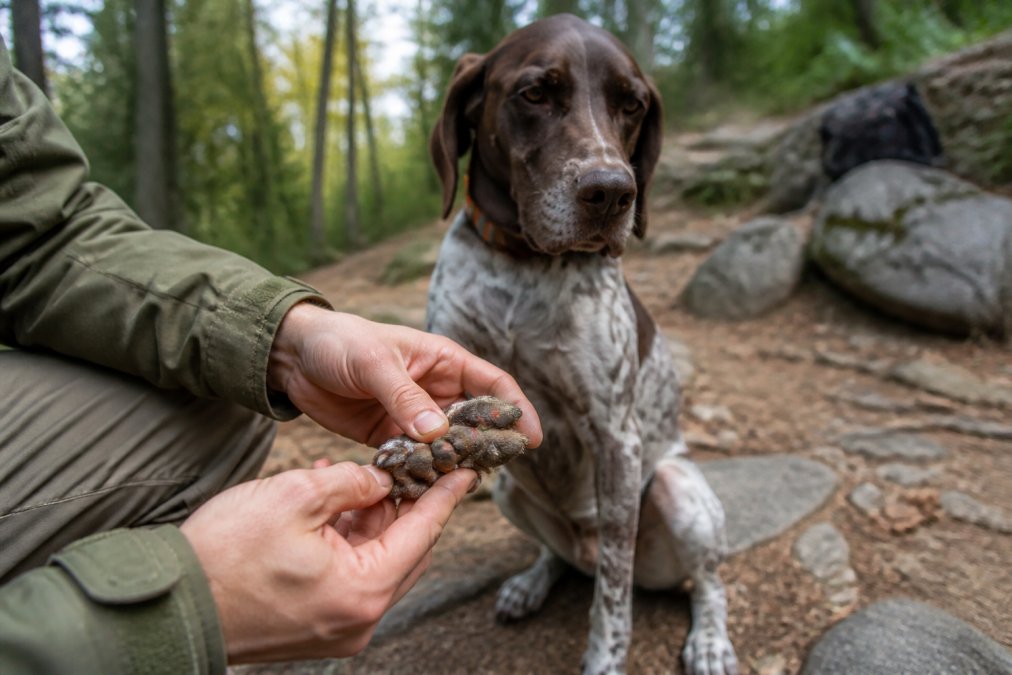
Paw protection and blister treatment prevent many injuries from worsening. Dogs' paw pads blister from sharp rocks, salt, and excessive distance just like human feet. Carry a blister treatment pad and consider protective booties if your dog has sensitive pads. For cuts on paws, self-adherent wrap works better than traditional bandages because it stays in place during movement and doesn't require removal of fur.
Emergency stabilization tools handle serious trauma. A tourniquet (a real one, not improvised) stops arterial bleeding that direct pressure won't control. A splinting material, even a rolled magazine works, prevents movement of suspected fractures. An emergency blanket prevents hypothermia, which kills injured dogs faster than most people realize. A muzzle keeps a pain-panicked dog from biting during treatment, including biting you.
| Supply | Purpose | Field Priority |
|---|---|---|
| Sterile gauze pads | Wound cleaning and dressing | Critical |
| Self-adherent wrap | Securing dressings on legs/paws | Critical |
| Antiseptic wipes | Cleaning without water | Critical |
| Tweezers | Tick and splinter removal | Critical |
| Emergency blanket | Hypothermia prevention | High |
| Tourniquet | Arterial bleeding control | High |
| Muzzle | Behavioral management during pain | High |
| Pain medication | Shock prevention and comfort | High |
| Electrolyte replacement | Shock and dehydration | Medium |
| Splinting material | Fracture stabilization | Medium |
Pain management belongs in every trail kit. Aspirin or ibuprofen (dosed by weight) reduces inflammation and helps shock. Stronger options like tramadol require a vet prescription but make the difference in serious injuries. Electrolyte replacement, a powder you mix with water, prevents shock and dehydration after trauma.
DIY Dog First Aid Kit Checklist
Building your own kit gives you control over weight, redundancy, and the specific supplies your dog needs based on breed, age, and activity level.
Core supplies you need before heading out:
- Two rolls of self-adherent wrap (2-3 inches wide)
- One package of sterile 4x4 gauze pads (at least 10 pads)
- One package of non-stick sterile pads (for open wounds)
- One small bottle of antiseptic wipes or solution
- One quality pair of tweezers (stainless steel, fine-tipped)
- One roll of medical tape
- One tourniquet (commercial or improvised from elastic)
- One emergency blanket (mylar, lightweight)
- One soft muzzle that fits your dog (critical)
- Pain medication (aspirin or prescription options) dosed for your dog's weight
- One packet of electrolyte powder
- One small flashlight (injuries often happen in low light)
- One pair of nitrile gloves
Expiration date management separates functional kits from dead weight. Antiseptic wipes dry out. Sterile pads lose sterility if packages are compromised. Mark your kit with a purchase date and replace antiseptic supplies annually. Pain medications have expiration dates, check them before every season. A kit that's been in your truck for three years with dried-out wipes isn't a kit; it's a liability.
Store your kit in a waterproof container with clear labeling. A small dry bag or tackle box works better than a backpack pocket because it keeps supplies organized and accessible. Include a laminated card with your dog's weight, any medication allergies, your vet's number, and the nearest emergency clinic on your trail route.
Common Trail Injuries in Dogs and How to Respond
Real trail injuries fall into predictable categories, and knowing the response for each one separates panic from action.
Cuts, punctures, and deep lacerations require immediate assessment. A small cut (less than half an inch, bleeding controlled with pressure in 30 seconds) gets cleaned with antiseptic wipes and left open if it's shallow. Deeper cuts or punctures need pressure with gauze for 3-5 minutes, then a sterile dressing and self-adherent wrap. If bleeding doesn't stop after 10 minutes of direct pressure, or if the cut is longer than half an inch, you're heading out immediately, this is a vet visit, not a field fix.
Sprains, strains, and limb trauma are common on uneven terrain. A dog that limps but puts weight on the leg has a sprain; one that won't touch the ground has something worse. Rest the leg with self-adherent wrap for compression (not tight enough to cut circulation), and keep movement minimal. If the leg is swelling rapidly or the dog won't use it at all, stabilize it with a splint and head out. A 10-pound dog with a fractured leg can't walk out; you're carrying or calling for help.
Allergic reactions and snake bite protocol require different responses. Allergic reactions (swelling around the face, difficulty breathing, hives) need immediate descent and vet care, there's no field treatment. Snake bites are rarer than most people think, but if you're in snake country, know this: keep the dog calm and immobilized, apply a compression wrap above the bite (not a tourniquet), and get to a vet. The wrap slows venom spread. Movement speeds it. Don't try to identify the snake or apply suction, both are outdated and dangerous.
Hypothermia kills injured dogs faster than most injuries. A wet, injured dog losing body heat is in critical condition. Use your emergency blanket, get the dog dry if possible, and provide warm (not hot) fluids if the dog can swallow. A dog shivering uncontrollably is in early hypothermia; one that's stopped shivering is in late hypothermia and needs immediate vet care.
Kits for Different Activity Levels and Breed Considerations
Weekend hiker versus backcountry working dog aren't just different activity levels, they're different risk profiles that demand different kit compositions.
Weekend hikers on marked trails within 5 miles of trailheads can carry minimal kits. A 12-ounce kit with sterile dressings, antiseptic wipes, tweezers, self-adherent wrap, and a muzzle covers most injuries. You're never more than an hour from help, so you don't need redundancy or advanced supplies. The goal is treating minor injuries and stabilizing until you reach the vet.
Backcountry working dogs, hunting dogs, herding dogs on remote property, or dogs on multi-day trips, need heavier kits. Redundant supplies (double the gauze, extra wrap), a tourniquet, pain medication, electrolyte replacement, and a splinting kit become essential. These dogs are working, often in rough terrain, often at distance from help. A hunting dog bleeding from a puncture wound in the backcountry needs more than basic supplies.
Breed-specific needs and size factors change what you carry. A 90-pound Labrador with thick fur needs larger gauze pads and more wrap than a 20-pound Border Collie. Large breeds are more prone to joint injuries and bloat (not treatable in the field, but recognizing it matters). Small breeds get injured more easily from falls and need lighter-weight wrapping materials. Senior dogs need pain management options because arthritis flares on long hikes. Calculate your dog's weight and note any breed predispositions, joint issues, breathing problems, or metabolic sensitivities, and adjust your kit accordingly.
How to Choose the Right Dog First Aid Kit for Your Needs
Choosing between pre-assembled kits and building your own depends on honesty about how much time you'll spend on preparation.
Training requirements before you need it separate functional kits from expensive placeholders. You don't need a veterinary degree, but you should know how to apply a tourniquet without cutting off circulation, how to wrap a paw without restricting blood flow, and how to recognize shock. Watch a 10-minute video on canine first aid. Practice wrapping your dog's leg with self-adherent wrap on a calm day. Know the difference between "this needs a vet visit" and "this is manageable in the field." Training takes two hours; panic in an emergency takes everything.
Portability and quick-access design determine whether your kit gets used. A kit in a backpack pocket where you have to dig through a dozen items to find gauze won't work in an emergency. A kit in a small dry bag clipped to your pack strap, clearly labeled, with supplies organized so you grab what you need instantly, that's a functional kit. Test the design on a short hike before a long one.
Building Your Field-Ready Kit: What Serious Outdoor Dog Owners Actually Carry
Pre-assembled kits versus DIY approach is a false choice. Most serious outdoor dog owners buy a base kit and modify it.
Pre-assembled kits save time and usually include items you wouldn't think to carry. A base kit from Leash the Wilderness includes vet-approved supplies organized in a compact format, which beats staring at a blank checklist. The advantage: everything is included, tested, and organized. The disadvantage: you're paying for items your specific dog might not need, and you have less control over weight and redundancy.
DIY approach gives you control but requires honesty about what you'll actually prepare. If you're the type to research, test, and maintain a kit, DIY is better. If you're the type to think "I should get first aid supplies" and then never do it, buy a pre-assembled kit and modify it.
Testing your kit before the emergency separates theory from reality. Take it on three short hikes. Use supplies on minor cuts. Learn what's hard to access, what you'll never use, and what's missing. A kit that's been tested is a kit you'll trust when it matters.
The gap between carrying a first aid kit and knowing how to use it is where most outdoor dog owners fail. A well-stocked kit sitting unused in your truck is dead weight. What matters is carrying it, maintaining it, training on it, and understanding your dog's specific risks based on age, breed, and terrain.
The Dog Care Kit from Leash the Wilderness is built for serious trail dogs because it includes sterile dressings, self-adherent wrap, tweezers for tick removal, and a muzzle, the supplies that actually work in the field. More importantly, it's designed for portability, so you'll carry it instead of leaving it behind. Get started with a tested first aid kit and the confidence that comes from knowing you can handle the injuries that actually happen on trails.
Frequently Asked Questions
What should be in a dog first aid kit for hiking?
A hiking dog first aid kit needs sterile dressings, gauze pads, antiseptic wipes, tweezers for tick removal, self-adherent wrap for splinting, pain management supplies, antihistamine for allergic reactions, and an emergency blanket. Include paw protection items like balm and booties. Pack it in a lightweight, waterproof container that fits in your backpack. Tailor contents to your dog's breed, age, and the terrain you'll cover.
What are the most common outdoor injuries for dogs on the trail?
Trail dogs commonly suffer cuts and punctures from rocks and branches, paw pad injuries from rough terrain, sprains from uneven ground, and tick bites. Less frequent but serious: snake bites, hypothermia, allergic reactions to plants, and canine trauma from falls. Knowing how to recognize and stabilize these injuries on-site can prevent minor issues from becoming emergencies miles from help.
How do I treat a dog's paw injury on the trail?
Stop immediately and examine the paw for debris, thorns, or punctures. Rinse with clean water if available. Apply antiseptic wipes and sterile dressings to cuts. For deep wounds, irrigate with clean water to flush the wound, then bandage with gauze and self-adherent wrap. If bleeding won't stop after 10 minutes of direct pressure, apply a tourniquet above the injury. Monitor for limping or infection signs and seek vet care when you return.
Do I need a separate first aid kit for my dog, or can I use human supplies?
You need a dedicated dog first aid kit. While some supplies overlap (sterile gauze, antiseptic wipes), human medications and dosages are often unsafe for dogs. Dog-specific items like paw balm, muzzles for trauma response, and appropriate pain management are essential. A dedicated kit ensures you have the right supplies in the right quantities and won't waste time searching during an emergency.
How often should I check and replace items in my dog first aid kit?
Check your kit before each trip and at least twice yearly. Replace any used items immediately after a trail injury. Rotate out expired sterile dressings, antiseptic wipes, and medications according to their expiration dates. Keep a checklist inside the kit so you know what needs restocking. A kit with expired or depleted supplies won't help when your dog needs it most.
This article was written using GrandRanker