

Table of Contents
- What to Look for in a Binocular Harness
- Types of Binocular Harnesses for Long Range Hunting
- Protecting Binoculars in the Backcountry
- Best Practices for Glassing Long Range
- Comfort, Durability, and Field Performance
- How We Tested These Harnesses
- Conclusion
Last Updated: August 18, 2026
What to Look for in a Binocular Harness
When you're glassing long-range terrain, your binoculars are only as effective as how you carry them. A best binocular harness for long range hunting does three things: it keeps optics accessible without fumbling, distributes weight so your neck and shoulders don't give out after hours of scanning ridgelines, and protects expensive glass from the abuse of backcountry travel. The difference between a mediocre harness and a field-tested one shows up on day three, when fatigue sets in and you realize your setup either works or it doesn't.
The right harness balances quick-detach accessibility with security. You need one-handed access so you can glass while keeping your other hand free for a rifle, rangefinder, or terrain. Weight distribution matters more than most hunters realize, a harness that hangs optics from your neck alone will exhaust you; one that spreads load across your chest and shoulders lets you hunt longer without pain.
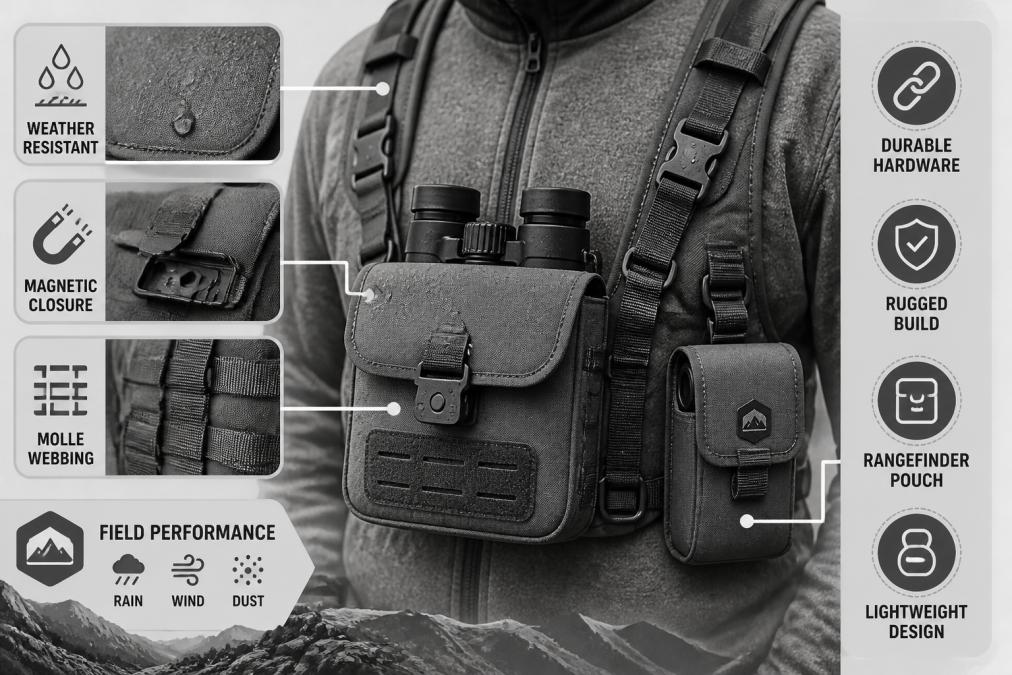
Look for weather-resistant materials that don't degrade in mud, rain, or dust. Molle webbing lets you attach rangefinder pouches, ammunition carriers, or other gear without buying separate accessories. Quick-detach mechanisms should be silent and magnetic, not noisy clips that spook game. The harness should also play well with layering, you'll be wearing different jackets across seasons, and a good harness adapts without shifting or riding up.
At Leash the Wilderness, we've tested harnesses across high-altitude hunts, desert glassing sessions, and wet coastal terrain. The ones that earned repeat use all shared these traits: they stayed put under load, kept optics secure without rattling, and let hunters focus on the hunt instead of fussing with gear.
Types of Binocular Harnesses for Long Range Hunting
Not all harnesses work the same way. The best choice depends on your hunting style, terrain, and how much gear you're carrying alongside your binoculars.
Chest Pack Harnesses
A chest pack harness mounts binoculars on your chest, keeping them at eye level and instantly accessible. This design excels for long-range glassing because the weight sits on your torso rather than hanging from your neck. You can drop your binoculars and let them rest against the pack without removing the harness, then raise them again in seconds.
Chest packs typically include molle webbing for attaching a rangefinder pouch, ammunition carrier, or small survival kit. This modular approach means you're not buying separate carriers for each piece of gear, everything clips to one system. The trade-off is bulk; a fully loaded chest pack adds noticeable volume to your profile, which matters in open terrain where concealment counts.
These harnesses work best for hunters who plan extended glassing sessions from one location. If you're scanning from a ridge, glassing into a canyon, or watching a water hole, a chest pack keeps your hands free and optics positioned for repeated use. The low-profile versions compress enough for backcountry travel, though they're heavier than shoulder-only systems.
Shoulder Harnesses
Shoulder harnesses suspend binoculars from a strap system that distributes weight across both shoulders. These are lighter and more compact than chest packs, making them ideal for hunters who cover ground frequently or need minimal load on their frame.
A good shoulder harness uses wide, padded straps to prevent digging into collarbones. The binoculars hang at mid-chest height, accessible without reaching down. Many designs include a quick-detach mechanism so you can drop the harness without removing it, the binoculars stay tethered but rest against your body instead of pulling on the straps.
Shoulder harnesses sacrifice modularity for simplicity. You're carrying binoculars and little else, which works fine if your rangefinder and other gear live in a pack or vest. They excel for mobile hunts where you're covering terrain and glassing opportunistically rather than settling into one spot for hours.
The ergonomic advantage is real: shoulder harnesses reduce neck fatigue on long days. Hunters who glass for eight hours straight often prefer this design over chest packs, even if they give up gear attachment points.
Hybrid and Modular Systems
Hybrid harnesses combine chest pack and shoulder elements. They might feature a small chest pouch for a rangefinder, with primary weight distributed across shoulder straps. These systems try to split the difference, offering some modularity without the bulk of a full chest pack.
Modular systems go further, letting you configure your carry based on the hunt. You might run a chest pack for a glassing-intensive day, then swap to a lightweight shoulder harness for a mobile stalk. The downside is cost; modular systems typically run higher than single-purpose designs because you're buying interchangeable components.
Modular harnesses make sense if you hunt varied terrain or switch between different hunting styles seasonally. The flexibility justifies the investment for serious hunters who demand the best binocular harness for long range hunting across multiple scenarios.
Protecting Binoculars in the Backcountry
Your binoculars are precision instruments, and a harness is only half the protection equation. Weather-resistant materials matter, neoprene, ballistic nylon, and treated canvas all shed water without absorbing it. Look for harnesses with sealed seams or welded construction so rain doesn't seep into gear pockets.
Dust and sand are silent killers of optics. A harness with a dust cover or rain flap keeps particles out during windy days or when you're moving through dry terrain. Some designs include a quick-access flap that lets you glass without fully removing the cover, reducing exposure time.
Impact protection comes from padding around the binocular housing. Foam-lined pockets absorb shock if you take a tumble or bump against rocks. The best harnesses position binoculars so they're protected by your body during falls, hanging at chest height rather than extended outward where they catch impacts first.
Moisture-wicking materials on the back panel prevent sweat buildup during exertion. This matters more than it sounds; a damp harness becomes heavy and uncomfortable, and moisture trapped against optics can fog lenses or promote fungal growth inside the barrel.
Field maintenance is easier with certain designs. Harnesses with removable pads or machine-washable components let you clean out dust and salt spray without disassembling the entire system. Non-rip fabric resists snags on brush and branches, extending the life of your gear in rough terrain.
Best Practices for Glassing Long Range
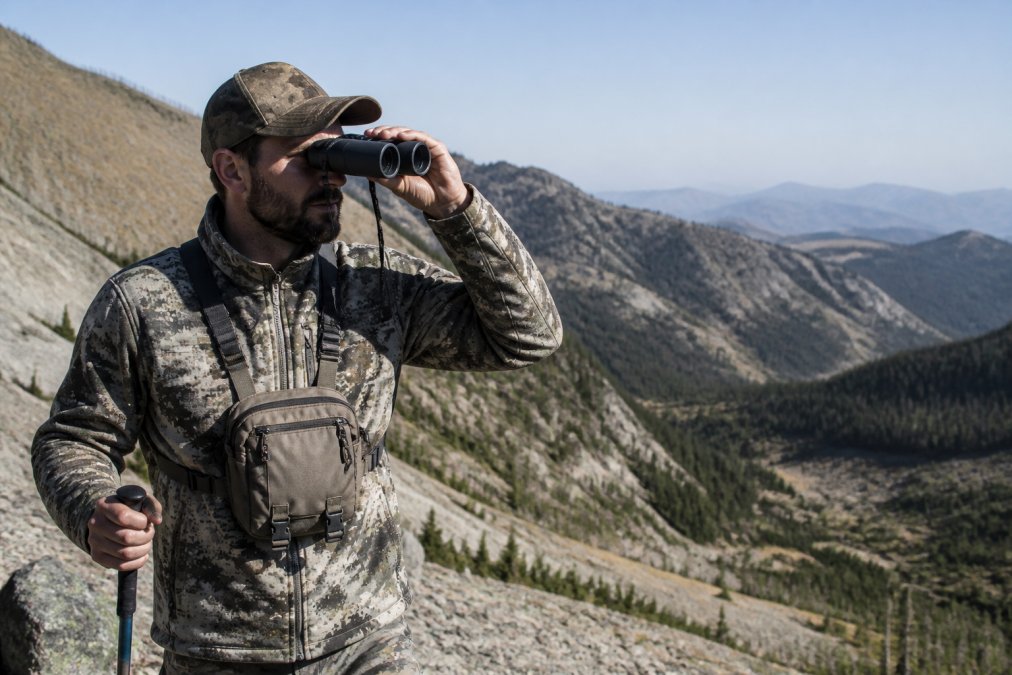
Glassing, the practice of scanning terrain systematically with binoculars, demands a harness that supports hours of use without fatigue. The best approach is methodical: pick a high vantage point, brace yourself against terrain, and scan in overlapping vertical strips, pausing to examine features closely.
Your harness should allow this without strain. A one-handed operation is essential; you'll hold binoculars to your eyes with one hand while your other rests on a rifle, tripod, or terrain. A harness that doesn't shift or require adjustment lets you focus entirely on the landscape.
Archery clearance matters if you hunt with a bow. Your harness shouldn't interfere with drawing or the bowstring's path. Some designs sit low enough that they clear the arm when you draw; others require you to rotate the binoculars out of the way. Test this before a hunt.
Glassing effectively also means managing gear weight. Long-range optics are heavy, quality binoculars weigh 2+ pounds, and adding a rangefinder, ammunition, and survival kit can load you with 15+ pounds across your torso. A harness that distributes this load evenly across your chest and shoulders lets you glass longer without exhaustion. Uneven weight distribution, such as binoculars hanging only from your neck, causes muscle fatigue and poor optics control.
Stability is the hidden benefit of a good harness. When optics are held steady against your body by a well-designed system, your image is sharper and your scanning is more efficient. A loose or poorly fitted harness causes movement, making distant details harder to resolve and tiring your eyes faster.
Comfort, Durability, and Field Performance
Comfort on day one isn't the same as comfort on day seven. A harness might feel fine during a two-hour test, but after eight hours of glassing or a full day of hiking, pressure points become obvious. Wide, padded straps are non-negotiable; narrow webbing cuts into shoulders and creates hot spots.
The padding should be firm enough to support weight without compressing flat after a few hours. Memory foam works better than cheap foam that collapses under load. Some harnesses use breathable mesh backing to reduce sweat buildup, which matters if you're hunting in warm weather or exerting hard during the approach.
Durability separates field-tested gear from marketing hype. Stitching should be heavy-duty, with reinforced stress points at strap attachments and quick-detach mounts. Seams should be sealed or welded, not just stitched, to prevent water intrusion. Hardware, buckles, carabiners, and attachment points, should be stainless steel or anodized aluminum, not cheap zinc that corrodes in salt air or high-altitude moisture.
Real durability shows up when you're five miles from the truck and your harness tears. Can you field-repair it? The best designs use replaceable components, you can swap out a damaged strap or pad without buying a new harness. Non-rip fabric resists tears better than standard nylon, and reinforced stress points prevent rips from spreading.
Harness tension and fitment matter for stability. Adjustable straps let you dial in a fit that keeps optics snug against your body without cutting off circulation. Some harnesses include load-bearing belts that transfer weight to your hips, reducing shoulder strain on all-day hunts. This feature alone can add hours of comfort.
Tripod compatibility is worth considering. If you plan to mount binoculars on a tripod for extended glassing sessions, your harness should have a quick-detach system that works with standard tripod mounts. This lets you glass handheld, then mount for stability during long observations.
How We Tested These Harnesses
Field testing reveals what marketing doesn't. We evaluated harnesses across three hunting scenarios: high-altitude glassing, mobile backcountry hunts, and extended ridge-sitting sessions. Each test lasted at least two full days, with multiple hunters wearing each harness to account for different body types and preferences.
We measured comfort by tracking when fatigue set in, where pressure points developed, and how weight felt after eight hours of continuous wear. We tested weather resistance by exposing harnesses to rain, dust, and temperature swings typical of backcountry conditions. We examined durability by inspecting stitching, materials, and hardware after field use, and by simulating field repairs to see how well designs held up.
Accessibility was scored on speed, how quickly a hunter could raise binoculars to eyes and how easy it was to operate with one hand. We tested quick-detach mechanisms for noise, reliability, and ease of use with gloved hands. We evaluated gear organization by counting attachment points, testing molle webbing strength, and assessing how well additional gear stayed secure during movement.
We also examined how well each harness integrated with different body types, layering systems, and hunting styles. A harness that works for a lean 160-pound hunter might not suit a 220-pound athlete with a broader frame. We documented fitment ranges and noted any designs that required significant customization.
The harnesses that earned repeated use across all three scenarios shared consistent traits: they distributed weight evenly, stayed quiet during movement, protected optics without excess bulk, and remained comfortable after extended wear. The ones that fell short typically failed in one area, comfort, durability, or accessibility, that became obvious only after hours in the field.
Conclusion
The best binocular harness for long range hunting keeps your optics accessible, your body comfortable, and your gear secure across full days of backcountry use. Weight distribution matters more than weight alone; a lighter harness that hangs from your neck alone will exhaust you faster than a heavier system that spreads load across your chest and shoulders. Weather resistance and durability separate gear that lasts from gear that fails when you need it most.
For hunters serious about long-range glassing, consider the Leash the Wilderness approach: field-tested gear that survives real-world abuse in rock, mud, and weather. The Hunters Optics Kit bundles quality optics with gear designed for backcountry performance, and the Deer Scouting Kit includes a complete optics system built for extended glassing sessions. Both are configured for hunters who demand reliability over hype, gear that works when the road ends and the real hunt begins.
Frequently Asked Questions
What is the best binocular harness for long range hunting?
The best binocular harness depends on your optics weight, hunting style, and terrain. Look for models with ergonomic weight distribution, weather-resistant materials, and one-handed access. Chest pack harnesses excel for glassing stability, while shoulder harnesses offer quick transitions. Test fit before committing, proper harness fitment prevents fatigue during long days in the backcountry.
How does a chest-mounted harness improve stability during glassing?
Chest-mounted harnesses position binoculars centrally on your body, distributing weight evenly across your torso rather than your neck and shoulders. This load-bearing design reduces arm fatigue during extended glassing sessions and allows your arms to steady the optics naturally. The low-profile positioning also improves balance on uneven terrain and integrates well with heavy optics and rangefinder pouches.
Are binocular harnesses worth the investment for backcountry hunters?
Yes, especially for long-range hunting where you'll spend hours glassing distant country. A quality harness protects your optics from weather, reduces neck and shoulder strain, and keeps binoculars accessible without fumbling. Field-tested harnesses with quick-detach systems and molle webbing integration also organize gear efficiently, which matters when you're miles from the truck and need reliable optics protection.
What features make a binocular harness ideal for long range hunting?
Look for ergonomic weight distribution to handle heavy optics, weather-resistant and non-rip fabric for durability, quick-detach systems for fast transitions, and molle webbing for rangefinder and accessory integration. Bino security features like silent magnetic closures prevent gear loss. Adjustable straps and breathable mesh ensure comfort during all-day glassing, while low-profile design maintains archery clearance and layering system compatibility.
A best binocular harness for long range hunting isn't just about carrying optics; it's about extending your hunting day, protecting expensive glass, and maintaining focus on the landscape instead of your gear. Choose one that matches your terrain, body type, and hunting style, and you'll glass longer, hunt smarter, and come home with better stories.
This article was written using GrandRanker